
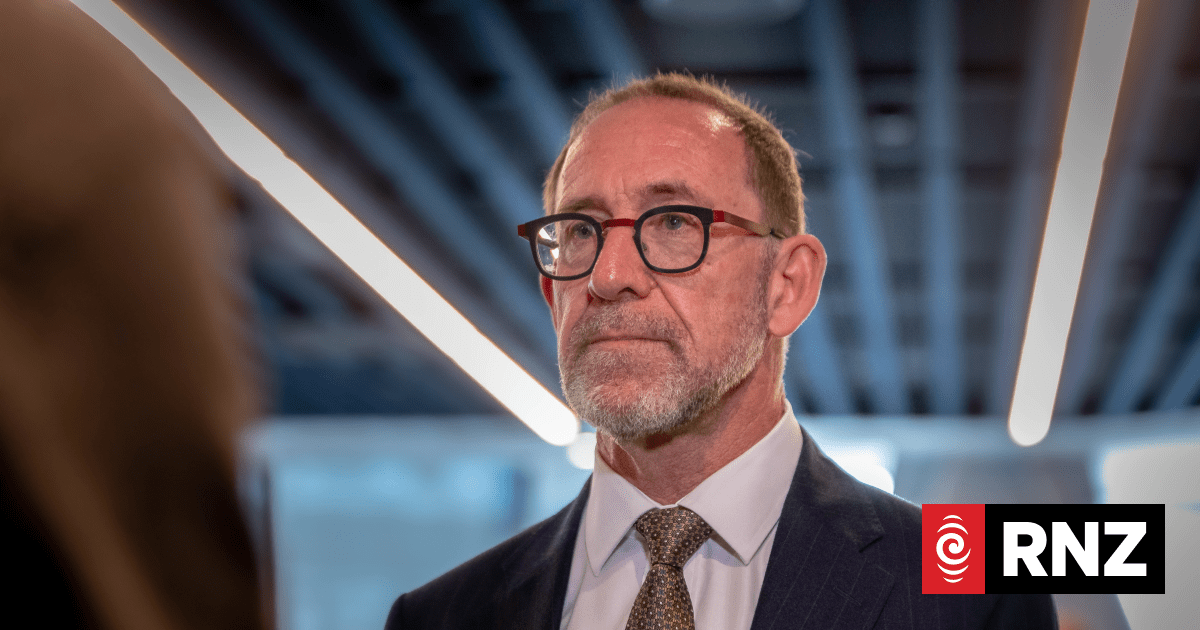
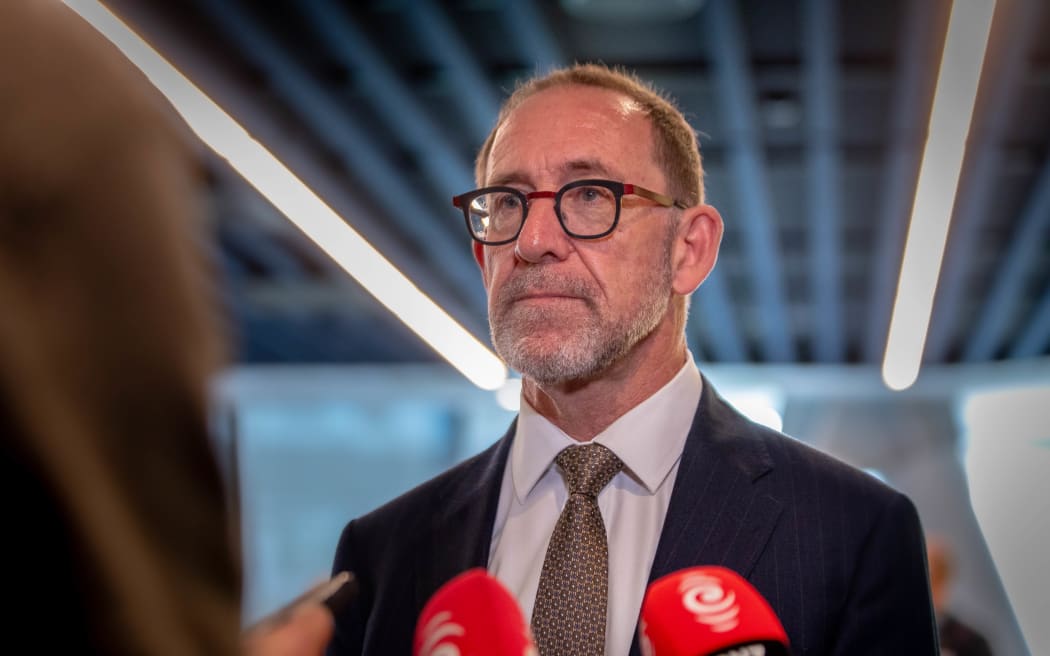
Wellington mayor Andrew Little.
Photo: RNZ / Mark Papalii
Wellington Mayor Andrew Little says he would vote for amalgamation if a referendum were held today.
The government has given councils a deadline of 9 August to come up with a plan for reorganisation to be delivered.
But Little said it was impossible to properly design and submit a proposal for a new council or councils by the government’s deadline saying the “creation of the Auckland Council followed a Royal Commission that ran for years” with a great deal of public engagement.
Despite that he said he was taking the government’s deadline seriously.
“For me, the bottom line is this: local people should decide the future of their local governments.”
The question was “how to protect local voices while governing how to protect local voices while governing shared assets, shared systems, and shared challenges more effectively”.
Little has laid out six principles that Wellington City will follow:
The public must decide: Any change to local governance arrangements needed public buy-in and Little said that his preference was for a referendum.
Local voice must be protected: Community-level representation must be real.
We should govern at the scale people actually live: Little said he did not supporting maintaining existing boundaries in a new structure.
Any regional solution must respect difference: Urban and rural communities had different needs and a one-size-fits-all model would be a mistake, Little said.
The case must be honest and evidence-based: Little said any case needed to be made honestly and he could not make a case for amalgamation solely on what it would do to rates.
Systems of democracy matter, including how it’s funded: Little said a review of the Local Government Act was needed to strengthen democratic accountability within councils.
“If a referendum were held today, I would vote for amalgamation,” Little said.
“On the evidence so far, I believe bringing the four metro councils together could give us the scale and coordination we are not achieving today.”
Little said the government could not expect significant changes in local government without broadening the revenue base, such as introducing a national bed tax that was nationally distributed or regional GST sharing.
“A region that is expected to plan for growth, invest in infrastructure, support resilience, and compete for jobs and capital needs access to broader funding tools than rates alone.”
Little said he did not believe amalgamation would cut rates but that a metro council would over time enable better cost management and service delivery.
Little said that councils were responsible for critical infrastructure “must be hardened against shared threats” and not left to each council’s ability to pay.
Sign up for Ngā Pitopito Kōrero, a daily newsletter curated by our editors and delivered straight to your inbox every weekday.