

Researchers at ETH Zurich have demonstrated a means of generating “perfect randomness” by using entangled superconducting qubits.
Creating true randomness is extremely difficult. Even the most sophisticated conventional random number generator can carry tiny biases. While in most everyday uses those biases are harmless, in cryptography — where the security of encrypted systems depends on unpredictability — even the most subtle pattern can become an exploitable weakness.
You may like
Random acts of qubits
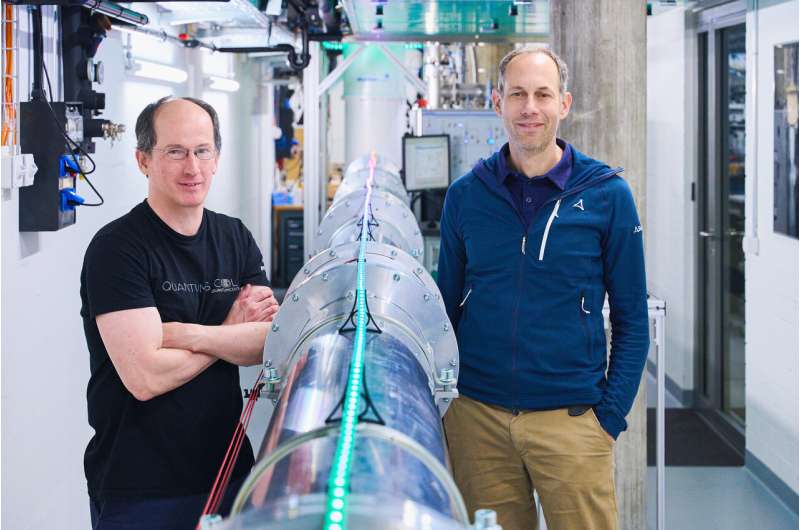
Andreas Wallraff and Renato Renner next to the 100-foot link connecting two quantum chips.
(Image credit: Kilian Kessler / ETH Zurich)
Practical randomness