
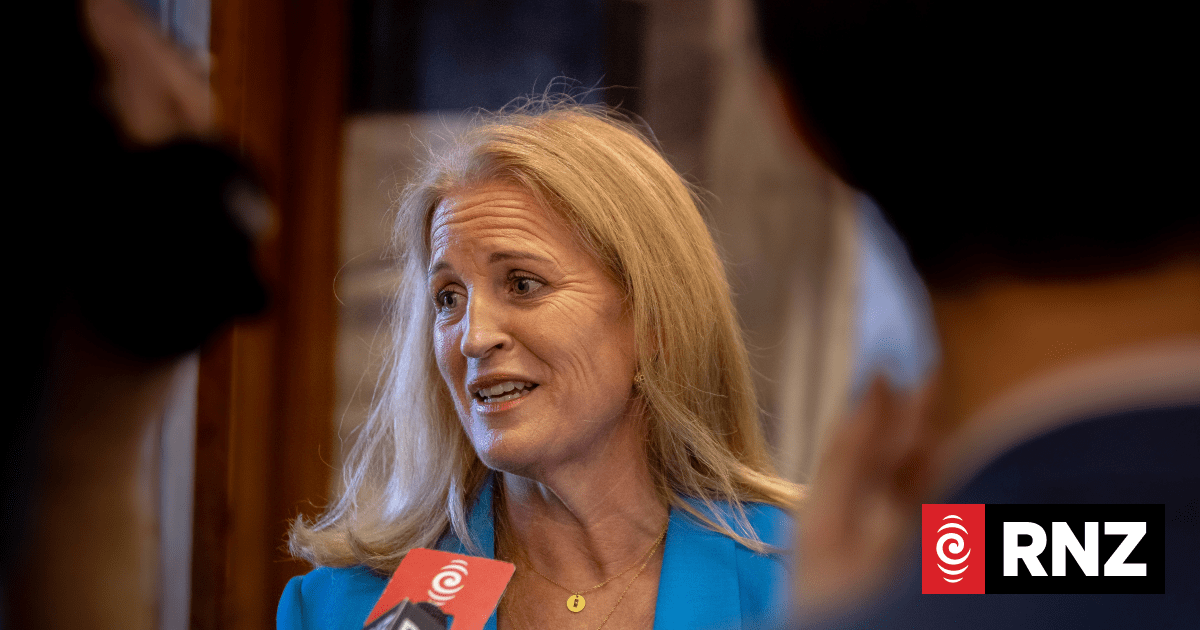
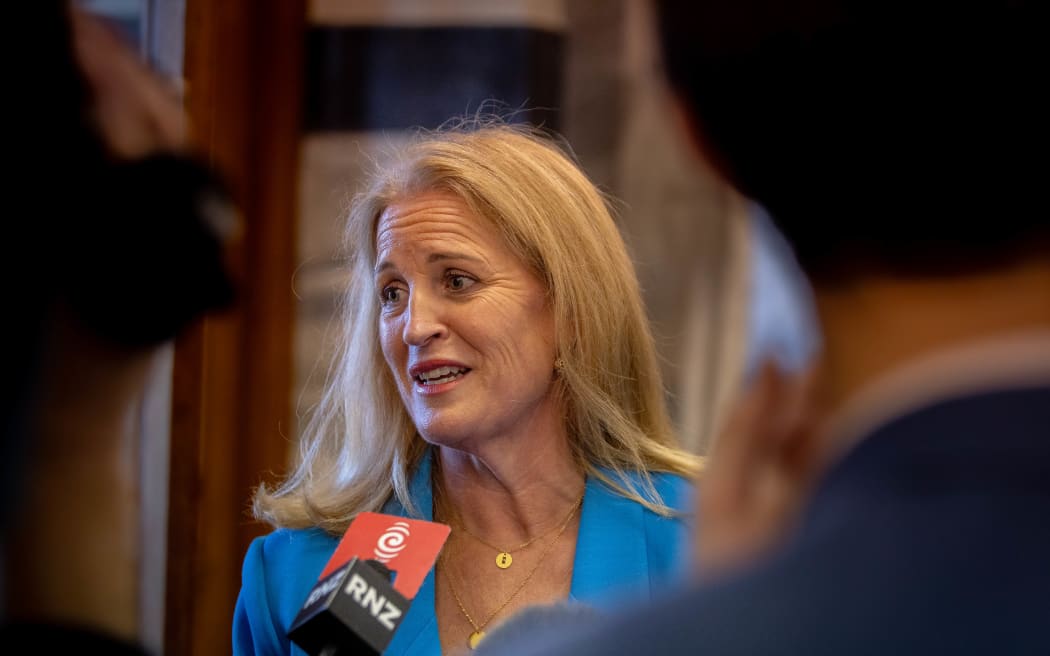
Louise Upston says the breach of process was a one-off and should be seen as such.
Photo: RNZ / Mark Papalii
Senior Cabinet minister Louise Upston insists the disappearing document debacle in the PM’s office is an “isolated incident” and says it is “disingenuous” to suggest otherwise.
But Labour MP Tangi Utikere says the case “does not pass the sniff test” and raises question about whether it was a deliberate cover-up.
The exchange on Thursday’s Morning Report politics panel comes after revelations a former top Beehive staffer used his personal Gmail account to conduct official business – meaning at least one document was not released under the Official Information Act when it should have been.
That document – which lobbied for changes to climate change legislation – was sent by Fonterra to Matt Burgess, who was the prime minister’s chief policy adviser at the time.
Upston told Morning Report the process was “clearly not good enough” and fell short of expectations.
“You’d expect that interested parties would talk to ministers and their staff on policy issues, but that information has to be recorded and transparent, so that it is on the record for everybody to see,” she said.
“Those expectations have been very clearly reinforced with all staff in the Beehive.”
Both the Department of Internal Affairs and the Ombudsman were now conducting separate investigations into the matter.
But Upston said the breach in process was a “one-off” and should be seen as such.
“There is no evidence that this is [anything] other than an isolated matter, and I think it is disingenuous to suggest otherwise.
“There is one individual in this instance who has not followed well-rehearsed and well-practiced procedure around recording meetings and recording documents that have been received.”
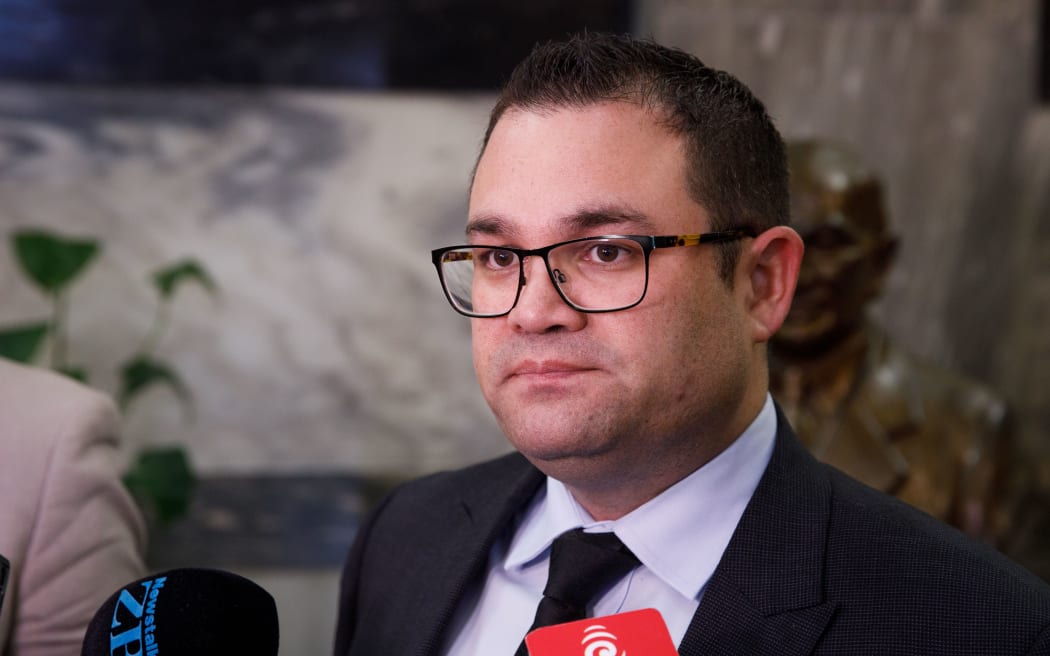
Tangi Utikere says the public will question if there has been a deliberate attempt to “hide the full extent of industry lobbying and influence”.
Photo: RNZ / Angus Dreaver
Labour’s Utikere rejected the framing and said the lack of a basic paper trail cast “a number of aspersions” on the prime minister’s office.
“This simply does not pass the sniff test,” he said.
Utikere said the more information that came to light, the more the public would question whether there had been a deliberate attempt to “hide the full extent of industry lobbying and influence”.
“We are talking about the prime minister, for goodness’ sake. Kiwis deserve to know the full extent of lobbying. They deserve to know transparency.
“If he can’t run his own office, it’s no wonder that he can’t run the country.”
Speaking on Wednesday, Prime Minister Christopher Luxon said he did not know why his former staffer had used a personal Gmail account, but it did not meet his high standards.
“We’ve got very professional staff who are well aware of their obligations, but that’s why we are putting full-court press on it,” he said. “It’s a good teachable moment, to remind staff of their obligations.”
Luxon reiterated that ministers had not been influenced by the lobbying efforts and were always intending to change the climate change framework to ensure it reflected the state’s intent, rather than the courts.
“It’s actually a no-brainer when you look at the substance.”
Burgess left the prime minister’s office in October last year and Parliament in January. Luxon has repeatedly refused to answer questions about the reasons behind Burgess’ departure.
Anti-corruption watchdog: Let the sun shine in
Transparency International New Zealand (TINZ) said the latest revelations proved the need for tougher rules around lobbying to “raise standards of political integrity and maintain trust in the practice of democracy”.
TINZ chair Anne Tolley – a former National Party minister – said the country lagged well behind its peers in regulating lobbying.
“We have seen the results over several parliamentary terms: where industries and other interest groups with deep pockets, friends in high places and easy access to power are unevenly influencing government policy. All without public visibility.”
TINZ executive director Julie Haggie told Midday Report she was deeply uncomfortable about the use of private emails and hard-copy documents being used seemingly to avoid scrutiny.
“It appears that a corporate interest, using non-scrutinised means, is able to then get legislation passed [under urgency] which is also not being scrutinised by the public.”
Haggie said New Zealand needed a public register of lobbyists with regular disclosure of their activities, as well as a cooling-off period for those moving between Parliament and industry.
“They’re going to have to put some hard checks on their own behaviour, because trust and [that assumption of integrity] just aren’t working.”
Tolley also objected to the sharp rise in Parliament’s use of urgency, with the current government using it for more than half of all legislation it had passed this term.
“This circumvents essential democratic practices such as public participation, independent expert advice, and integrity checks,” she said.
Transparency International New Zealand calculated that the coalition government had passed 57 percent of its bills under urgency.
That compared to 29 percent by the former Labour government and just 14 percent by the National government in its 2014-17 term.
Sign up for Ngā Pitopito Kōrero, a daily newsletter curated by our editors and delivered straight to your inbox every weekday.