


Listen to this article
Estimated 4 minutes
The audio version of this article is generated by AI-based technology. Mispronunciations can occur. We are working with our partners to continually review and improve the results.
A Quebec-wide initiative aimed at making health-care services more accessible to English speakers has officially arrived in the Montérégie West health network.
Known as “Projet ALLO,” the program uses the colour yellow to identify health-care workers who are comfortable helping patients in English.
In the CISSS de la Montérégie-Ouest, employees who volunteer to participate wear a yellow card behind their employee badge that says “Je parle français, English” (I speak French, English.)
“It’s really about informing and assisting English-speaking users when they’re coming to our facilities to access services,” said Karissa Clayberg, the English liaison officer with the CISSS.
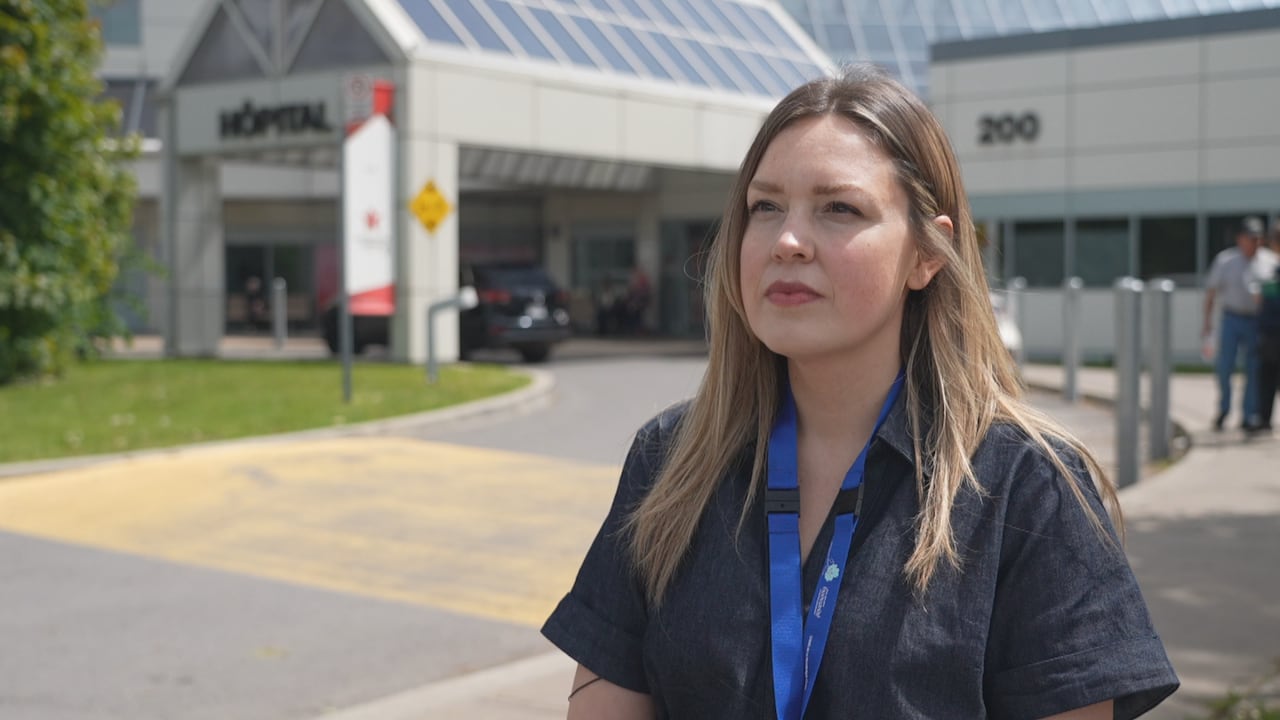 Karissa Clayberg is the English liaison officer with the CISSS de la Montérégie-Ouest and helped launch the program in April. (CBC)
While the initiative already exists in several Quebec regions, the Montérégie West, which stretches from La Prairie to Vaudreuil-Dorion, and includes facilities such as Hôpital Anna-Laberge, the Barrie Memorial Hospital, the Suroît Regional Hospital, and the new hospital under construction in Vaudreuil-Soulanges, only began implementing it in this spring.
Participation is voluntary
Employees who choose to wear the cards are signalling that they feel comfortable answering questions, helping patients navigate facilities or assisting in English when needed. The program is designed not only to help English-speaking patients, but also to assist staff members who may not speak the language themselves.
“We don’t always know what languages are spoken by our colleagues, so if they’re wearing it, it means I can call upon my colleague quickly to help me if I am unable to,” Clayberg said.
The initiative was developed in collaboration with the Montérégie West Community Network (MWCN), which helped finance the first batch of cards.
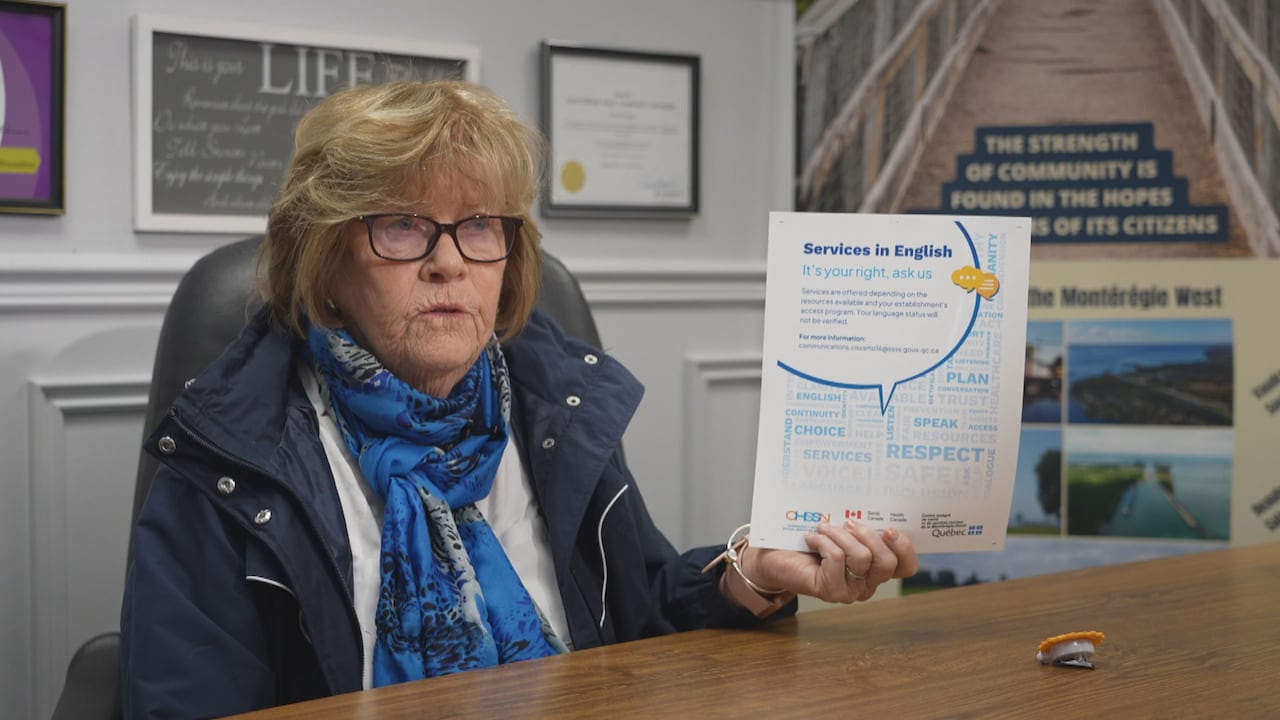 Pauline Wiedow of the Montérégie West Community Network says accessing health-care services in English is a right. (CBC)
The MWCN, which advocates for more than 100,000 English speakers across the area, said the goal of the program was to help connect people who were avoiding a trip to the hospital due to these barriers.
“The isolation, especially of seniors, who were dreading going to the hospital — who were waiting before they were going to the hospital and that became dangerous,” said executive director Pauline Wiedow.
‘Positive feedback’
Martha McComber, a local resident, says she’s in favour of the initiative.
“Not all of us are fluent. I try to speak some French to some people in establishments and in the hospital,” she said.
Timothy Church says a program like Projet ALLO could help prevent the kinds of situations he’s witnessed.
“In order to get information with the staff, sometimes they walk away and they have to go find an English worker to come and try and help you,” he said.
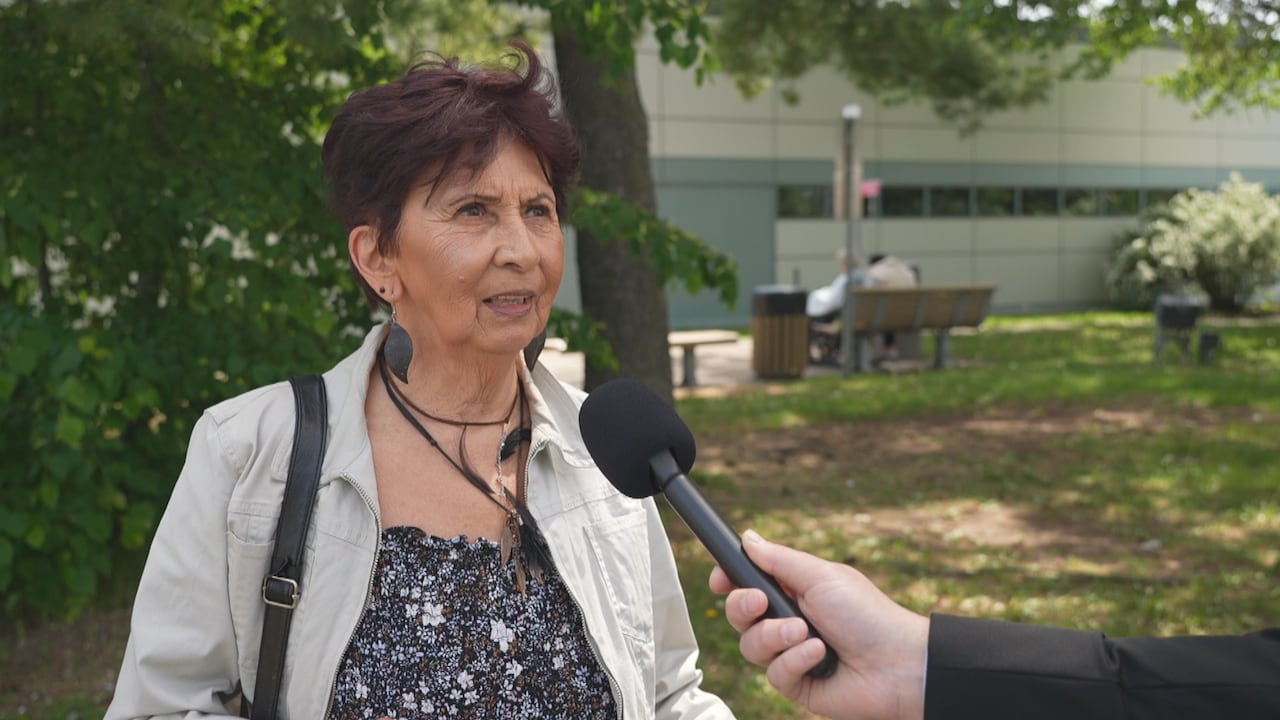 Local resident Martha McComber says the program is good, because Quebec is not just a French province. (CBC)
The broader goal is to eventually associate the colour yellow as the provincewide symbol for English-language assistance in health-care settings.
The project has been launched in other regional health-care authorities, including the Côte-Nord, Estrie, Abitibi-Témiscamingue and the Outaouais. In the Gatineau-area region, the initiative has been in place since September 2024.
“We’ve had very positive feedback on it both from users of the health service as well as employees,” said Kaara Brown, the Outaouais health network’s English-language liaison representative.
According to Brown, more than 2,100 yellow cards have already been distributed in the region, accounting for just under 20 per cent of the workforce.
“It helps users give them peace of mind that they’re going to find somebody who can help them out,” she said.
Brown acknowledged that public awareness remains one of the biggest challenges.
“That is the most difficult part though — getting it out there to people,” she said.