

Make better investment decisions with Simply Wall St’s easy, visual tools that give you a competitive edge.
PayPal Holdings (NasdaqGS:PYPL) is powering Hey Savi, promoted as the UK’s first end to end AI agentic commerce app.
The app connects shoppers with retailers including Debenhams Group, offering discovery to checkout journeys with native PayPal payments.
This launch positions PayPal’s technology at the core of AI driven shopping experiences across partner merchants.
For investors watching how payments companies respond to AI, this move shows where PayPal is placing its efforts. The company already sits inside many online checkouts, and Hey Savi extends that role into AI assisted product discovery and selection, an area that is getting more attention as consumers look for quicker, more tailored shopping experiences.
As AI agents begin to handle more of the buying journey, PayPal’s role in powering checkout and connecting merchants to these platforms may matter more to how the business evolves. The Hey Savi and Debenhams rollout provides a live example of how agent based commerce could look in practice and a reference point for tracking future PayPal partnerships in this area.
Wall Street’s queuing for one rocket. While SpaceX counts down to its IPO, other companies tied to the new space race are already in orbit. → 20 Compelling Space Companies watchlist · Global Space Race Investing Ideas screener · Scan the sector by valuation on Rocket Lab’s valuation page.
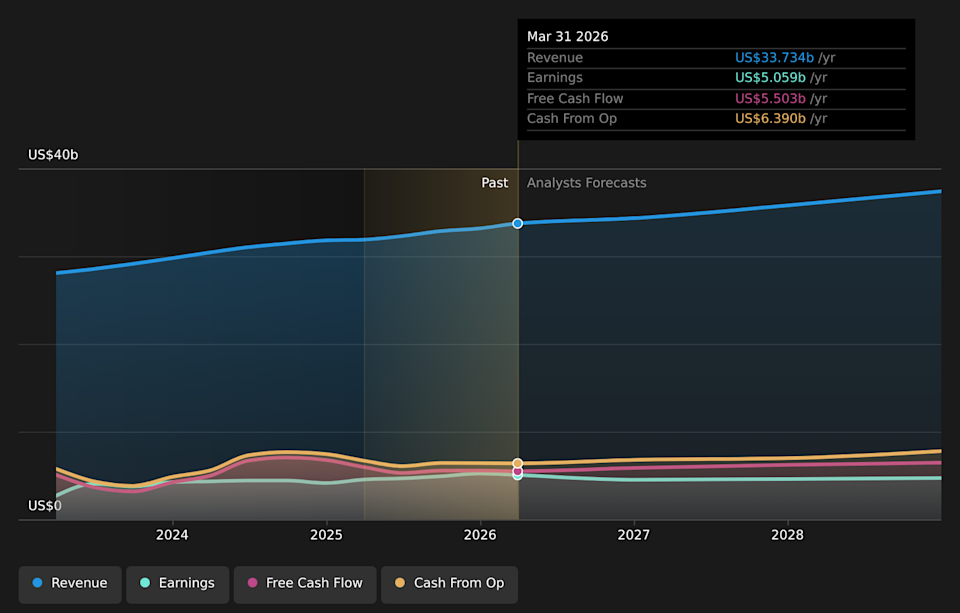 NasdaqGS:PYPL Earnings & Revenue Growth as at Jun 2026
We’ve flagged 1 risk for PayPal Holdings. See which could impact your investment.
This partnership puts PayPal in the middle of an emerging way to shop, where AI agents interpret shopper intent and then handle the entire path to purchase. Instead of just processing a payment at the end of a retailer’s checkout, PayPal is providing the rails that connect Hey Savi’s AI recommendations with Debenhams Group’s order systems and inventory data. For you as an investor, the interest lies in how reusable this “agentic commerce” stack is across other merchants and sectors, and whether it helps PayPal stay relevant as Amazon, Apple and Stripe push deeper into AI-powered retail journeys. Execution will matter, because PayPal needs to prove it can operate as a trusted data and payments hub inside third party AI apps without adding friction for shoppers or retailers.
The Risks and Rewards Investors Should Consider
⚠️ Earnings are forecast to decline on average by 1.4% per year over the next 3 years, so new AI-focused products like Agentic Commerce Services may need time before they meaningfully influence overall profit trends.
⚠️ Competition from other large payment and commerce platforms such as Stripe, Adyen and Apple Pay could limit how widely PayPal’s agent-based services are adopted if merchants prefer integrated solutions from existing providers.
🎁 PayPal is trading at 64% below one estimate of its fair value, which may interest investors who think AI-powered commerce partnerships can support the longer term business.
🎁 The company is assessed as offering good relative value compared with peers and industry, while also having earnings growth of 11.3% over the past year, giving it some financial flexibility to invest in new products.
What To Watch Going Forward
From here, the focus is on how quickly PayPal can scale this model beyond Hey Savi and Debenhams Group. Investors may want to track merchant sign ups to PayPal.ai, the number and type of AI platforms that integrate PayPal’s Agentic Commerce Services, and any disclosures on how much volume flows through these channels versus traditional checkouts. It is also worth watching how rivals like Stripe, Adyen and Apple respond, particularly if they launch their own AI agent partnerships targeting high intent shoppers.
To stay informed on how the latest news affects the investment narrative for PayPal Holdings, visit the community page for PayPal Holdings for updates on the top community narratives.
This article by Simply Wall St is general in nature. We provide commentary based on historical data and analyst forecasts only using an unbiased methodology and our articles are not intended to be financial advice. It does not constitute a recommendation to buy or sell any stock, and does not take account of your objectives, or your financial situation. We aim to bring you long-term focused analysis driven by fundamental data. Note that our analysis may not factor in the latest price-sensitive company announcements or qualitative material. Simply Wall St has no position in any stocks mentioned.
Companies discussed in this article include PYPL.
Have feedback on this article? Concerned about the content? Get in touch with us directly. Alternatively, email editorial-team@simplywallst.com