
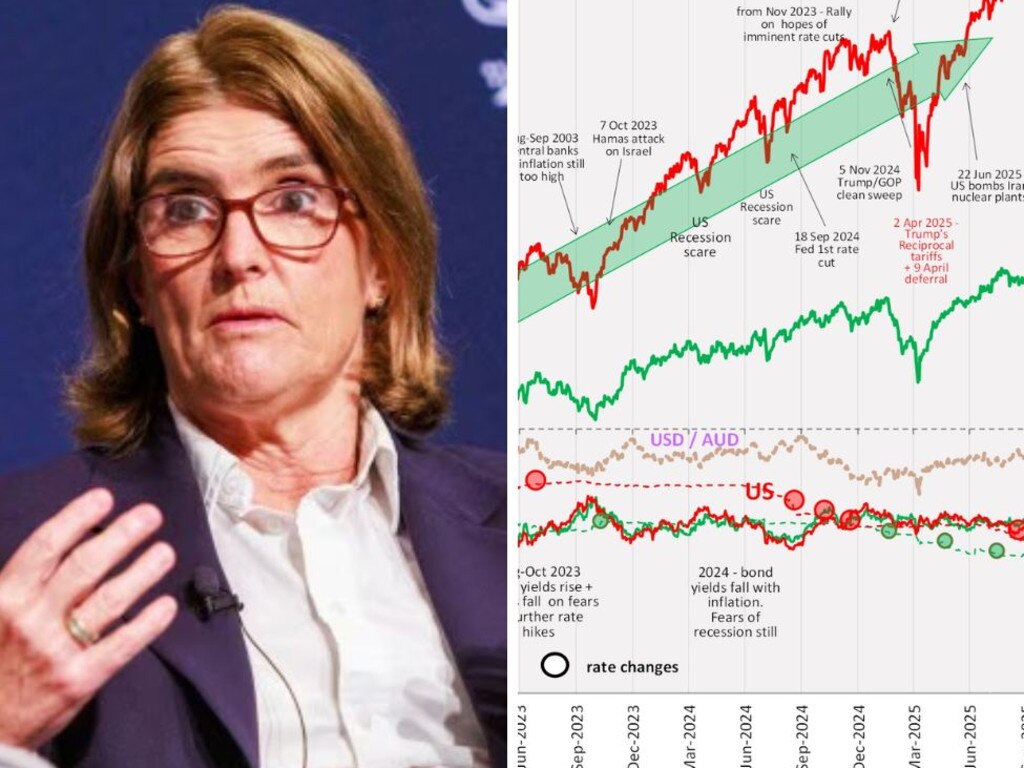

Families may be in line for relief at the next RBA meeting.
ANALYSIS
The noise around the RBA’s next rates decision all seems to be about how many more hikes we can expect this year, but really, the central bank should be considering going the complete other way and cutting in June.
If it doesn’t, it risks recession at the very least.
Inflation eased month on month in the most recent CPI figures, released by the ABS in May.
Meanwhile, the unemployment rate rose to 4.5 per cent, a figure the RBA reportedly was looking for before considering cutting again.
MORE: Man builds 15m tree on neighbour’s land
And unemployment may be on the brink of rising further, according to Dale Gillham, chief analyst at Wealth Within.
“Australia’s unemployment rate has risen to the highest level since 2021, and it could climb further as government spending slows, particularly given NDIS-related jobs have accounted for nearly one in every five new jobs created in recent years,” Mr Gillham said.
“At the same time, inflation is easing and oil has repeatedly failed to break above the US$100–110 range despite major Middle East tensions, reducing the risk of another inflation shock.”
RBA Governor Michele Bullock will front borrowers next week. Picture: Christian Gilles
Mr Gillham said the RBA now found itself in a challenging position.
“With households and businesses already feeling the impact of past rate hikes, the RBA risks turning a slowdown into a recession if it waits too long to cut rates,” he said.
Recent years have seen the RBA caught out waiting too long to move, according to some experts.
MORE: Secret Albo told new owners of his old home
Who can forget the famous suggestion in 2021 by former Governor Philip Lowe that the official cash rate would stay at 0.1 per cent until midway through 2024.
Thirteen rapid fire hikes later and the cash rate instead ended up at 4.35 per cent.
Pundits have since suggested the RBA waited too long to lower rates before it did so in February 2025, and then too long to raise them again.
It’s somewhat of a no-win situation for Governor Michelle Bullock and her board, but Mr Gillham said they need to be decisive this time around.
“This month’s interest rate decision is shaping up as one of the easiest calls the RBA has had in years, yet the policymakers sit frozen as the economy weakens around them,” he said. “The warning signs are already here, and the cracks in the economy are becoming impossible to ignore.
Dale Gillham, founder and chief analyst at Wealth Within.
MORE:Housing crisis causes new type of family home
“Higher interest rates have already crushed borrowing power, consumer confidence is fading, businesses are slowing hiring, and households are cutting spending. Proposed changes to negative gearing and capital gains tax are also weighing on investor confidence at the exact moment Australia is already struggling to build enough homes.”
While not many other voices are calling for a cut, the actions of Australia’s major lenders are taking a curious turn.
ANZ and Macquarie bank both cut interest rates last week, to two and three-year fixed rate products respectively. This is usually an indicator that they believe a downward rate movement is ahead. The revised forecasts of the big four show that ANZ believes the cash rate has already peaked and CBA is tipping the next rate movement is down, in the form of two cuts next year.
MORE:Risky home loan move to cost a million Aussies
The effects of rate hikes are “only just starting to hit the market.” Picture: Sam Ruttyn
“Interest rates work with a lag. The damage from previous hikes is only just starting to hit the economy and by the time the slowdown becomes obvious in the data, unemployment may already be out of control,” Mr Gillham said
“At some point, the focus must shift from fighting inflation to protecting growth because if unemployment keeps rising while productivity keeps falling, the economy won’t need another rate hike, it will need a rescue package.”