
Immorta Bio says the future of medicine may lie in restoring youthful biology and artificial intelligence could be the architect.
Modern medicine’s framework means waiting for a disease to appear, identifying what’s gone wrong and treating it. Heart disease gets one treatment; cancer gets another. Arthritis, dementia, kidney failure, etc. – each has its own specialist, its own drug pipeline and its own set of interventions. What if that framework is becoming outdated?
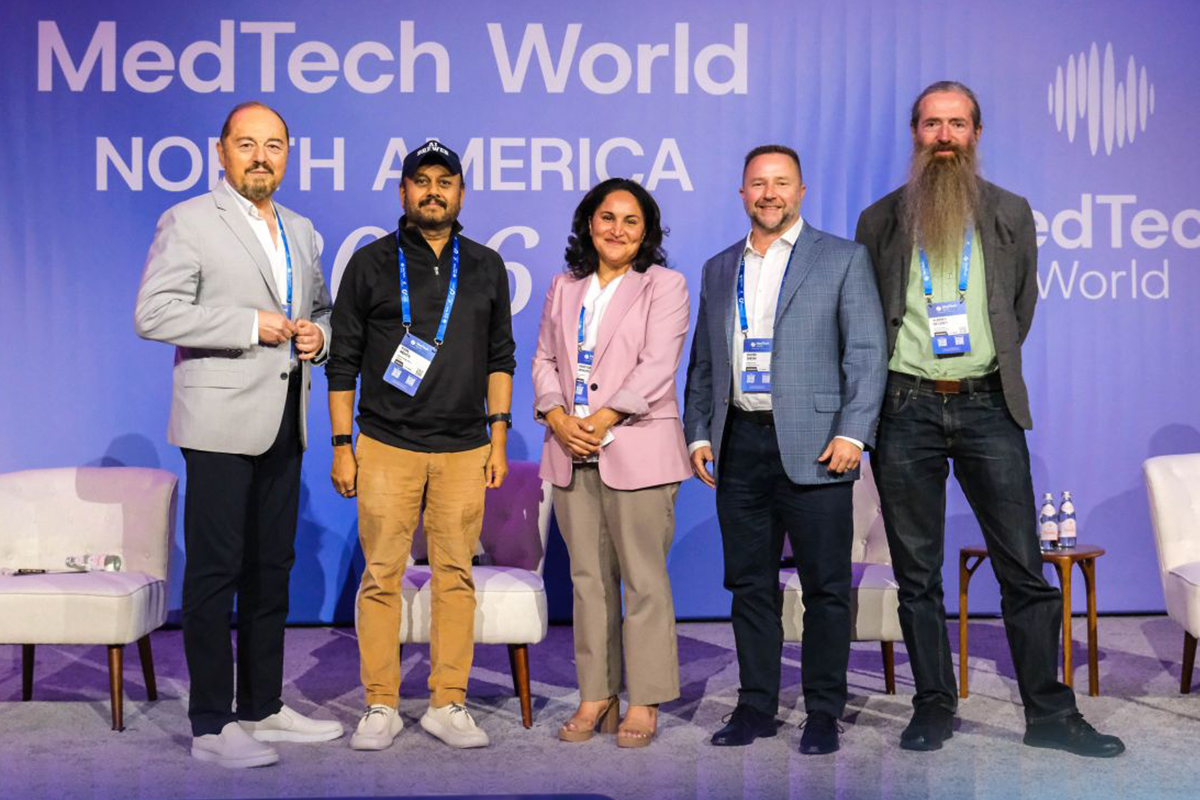
At MedTech World North America, a panel discussion featuring Immorta Bio Chairman and CEO Boris Reznik, PhD, explored a possibility that has long lived on the fringes of biogerontology but is increasingly entering the mainstream conversation: perhaps aging itself is the real target.
The panel, From Lab to Lifespan: AI, Aging & the Future of Longevity Innovation, brought together voices from longevity science, biotechnology, regenerative medicine and artificial intelligence, including longevity pioneer Aubrey de Grey. The core of the discussion was: if aging is the common driver behind many chronic diseases, what happens when medicine starts treating the biology of aging rather than its downstream consequences? For Immorta Bio, the answer increasingly involves AI [1].
From AI-assisted to AI-driven
Most industries are still figuring out how to use AI more efficiently. Biotechnology may be entering a different phase altogether. According to Reznik, we are moving beyond an era where AI simply helps researchers work faster and into one where it becomes part of the therapeutic discovery process itself.
“The future of longevity medicine will require a transition from symptom-focused medicine toward restoring youthful biology itself,” said Reznik. “Restoring youthful biology is fundamentally a personalized medicine challenge.”
Think of traditional medicine as tailoring clothing in a handful of standard sizes. Personalized longevity medicine, by contrast, attempts to create a custom suit for every individual. The problem is that each person’s biology contains trillions of data points, making true personalization extraordinarily difficult.
This is where AI enters the picture. Rather than merely organizing information, AI systems are increasingly being used to identify patterns across vast biological datasets, helping researchers pinpoint which interventions may work best for specific individuals. In theory, that could allow therapies to be designed around a person’s unique biological signature rather than around broad disease categories.
The prospect raises an uncomfortable but fascinating question: if AI eventually identifies the treatment, optimizes the treatment and personalizes the treatment, what becomes of the physician? Probably not obsolete. More likely, doctors become translators between increasingly complex biological intelligence and the patients who must ultimately make decisions about their care. The human element may become more important, not less.
The cellular clean-up crew
Immorta Bio’s therapeutic strategy centers on something intuitive. Say trying to renovate a house while it remains cluttered with broken furniture, damaged wiring and decades of accumulated junk. Adding new materials alone won’t solve the problem.
The company argues that aging works similarly. One challenge comes from senescent cells, often nicknamed “zombie cells.” These cells no longer function properly but refuse to die, lingering in tissues and contributing to chronic inflammation and dysfunction.
At the same time, the body’s regenerative machinery begins to falter. Stem cells, which are responsible for repair and renewal, gradually decline in both number and effectiveness.
Historically, these two areas of longevity research have largely evolved on separate tracks. Some companies focus on removing senescent cells, while others focus on stem-cell rejuvenation. Immorta Bio is attempting both.
Through its SenoVax platform, the company aims to target senescent cells. Through StemCellRevivify, it seeks to restore regenerative capacity. The underlying idea is that removing damaged cells while simultaneously replenishing the body’s repair systems could produce effects greater than either intervention alone.
Whether this dual-target approach becomes a breakthrough remains to be seen, but it’s a growing recognition that aging is unlikely to be solved through a single biological lever.
The 150-year-old human?
The most provocative moment in the discussion may have been one of the simplest. Reznik highlighted recently reported preclinical findings in which Immorta Bio’s integrated approach produced more than 70% mean lifespan extension and more than 80% median lifespan extension in validated aging models, alongside improvements in regeneration, inflammation, organ function and physical performance. It is important to emphasize that these are preclinical findings, not human outcomes. However, even entertaining the possibility opens up a conversation that extends far beyond biology.
If therapies emerging from longevity research eventually allow people to remain healthy for dramatically longer, we are not simply talking about adding a few years to life expectancy. We are talking about potentially reshaping society itself.
What happens to retirement if people remain biologically vigorous well into their ninth or tenth decade? What happens to education if careers stretch across 70 years rather than 40? What happens to housing markets, pension systems and workforce planning if 90 becomes the new 40?
These questions may sound premature, yet they are increasingly becoming part of the longevity conversation.
A new therapeutic paradigm
Immorta Bio Board Member Howard Brooks believes a larger shift is underway.
“We believe the future of medicine will increasingly focus on restoring youthful biology rather than treating diseases one at a time,” he said.
That vision remains ambitious, and significant scientific hurdles remain. Aging is among the most complex challenges in biology, and history offers plenty of examples of promising early-stage results that failed to translate into human success. Still, something notable is happening: AI, regenerative medicine, cellular reprogramming, senolytics and personalized therapeutics are no longer developing in isolation. AI is already influencing longevity research, and that is not a question anymore.
Now, the more interesting question is whether AI can help transform longevity medicine from a collection of intriguing experiments into a new framework for healthcare itself – one focused not on managing decline, but on preserving function.
If that happens, that could change both how long we live and how we think about aging.
Photograph courtesy of Immorta Bio