
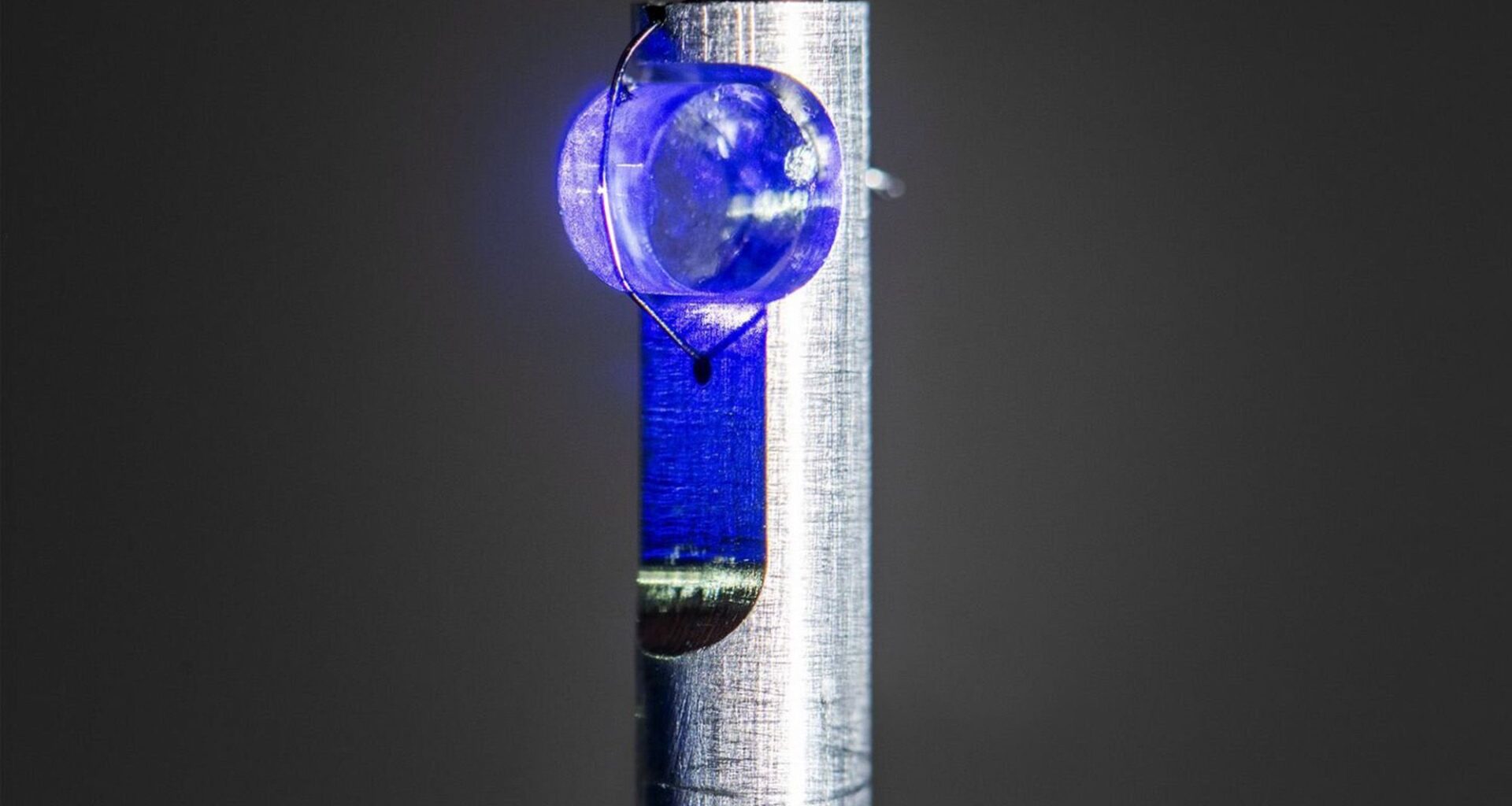
For decades, physicists have pursued a goal that sounds nearly impossible: to build a clock that keeps time using an atom’s nucleus rather than the electrons orbiting it.
Now, researchers have demonstrated the first functioning nuclear clock — an advancement that could eventually lead to more robust timekeeping devices and new ways to search for dark matter and physics beyond the Standard Model.
How is a nuclear clock different from an atomic clock?
You may like
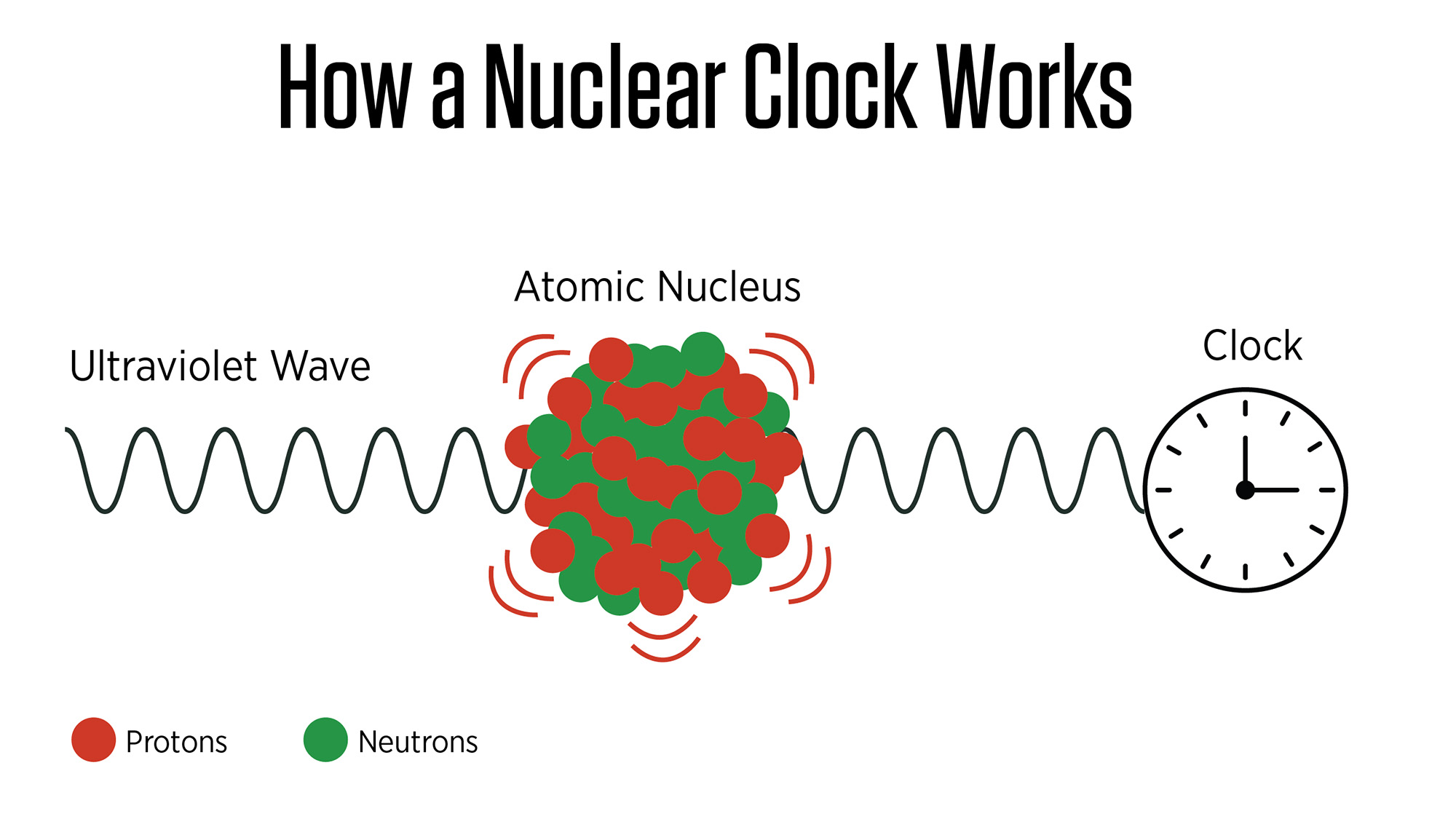
A diagram showing how a nuclear clock works.
(Image credit: N. Hanacek/NIST)
Why thorium-229 is special
What to read next
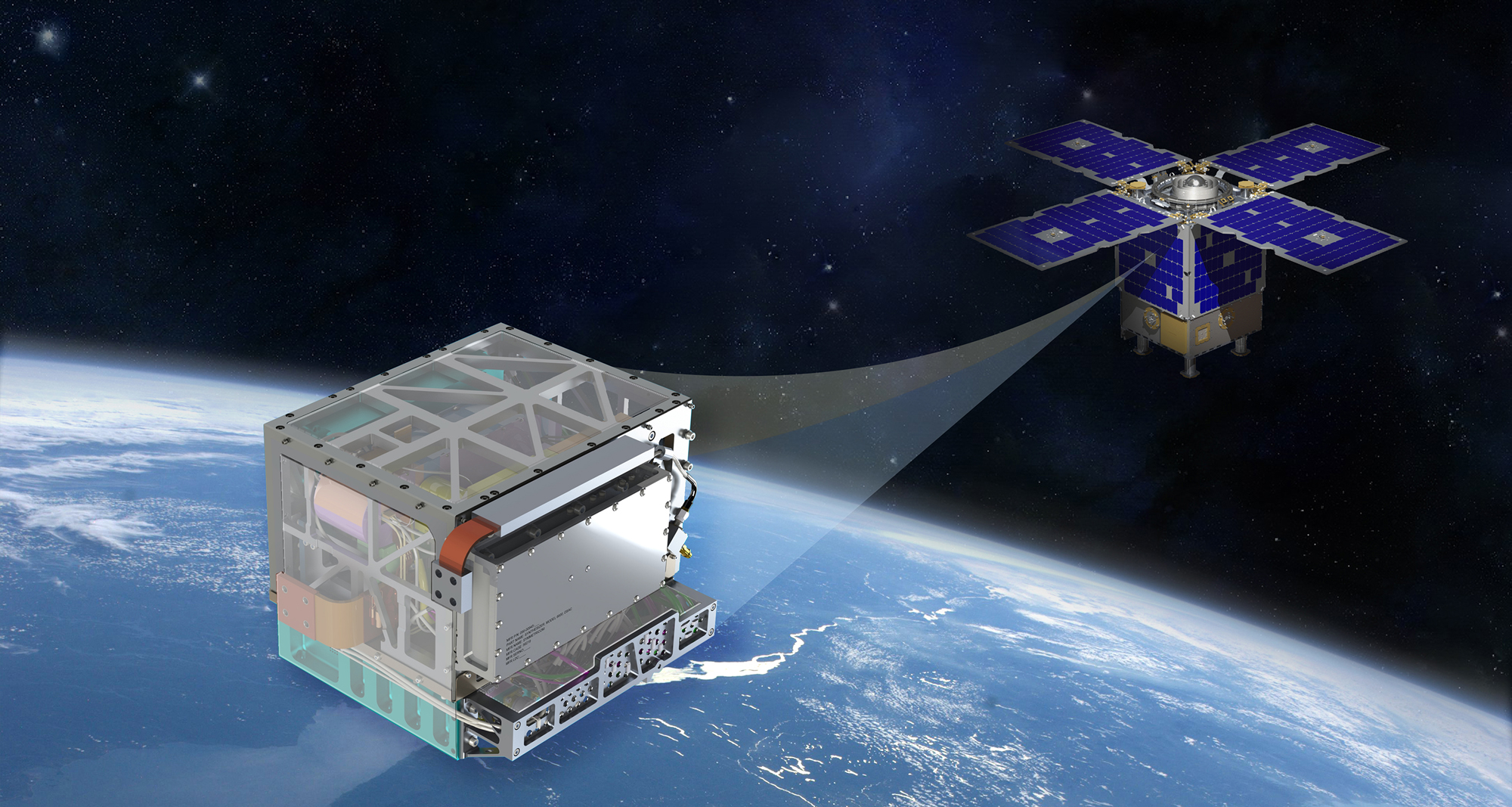
NASA’s Deep Space Atomic Clock, seen here in an artist’s illustration, was launched in June 2019 to use atomic clocks in space.
(Image credit: NASA)
Toscani, D. C. L., Riebner, T., Morawetz, I., Schneider, F., Sempelmann, N., Schlachet-Lépinay, J., Schaden, F., Bartokos, M., Kazakov, G. A., Beeks, K., Gerstenecker, B., Pimon, M., Lahs, S., Hellerschmied, A., Lercher, T., Premper, J., Niessner, A., Matus, M., Denker, H., . . . Schumm, T. (2026, June 3). A thorium-229 optical nuclear clock with feedback loop. arXiv.org. https://arxiv.org/abs/2606.04997