
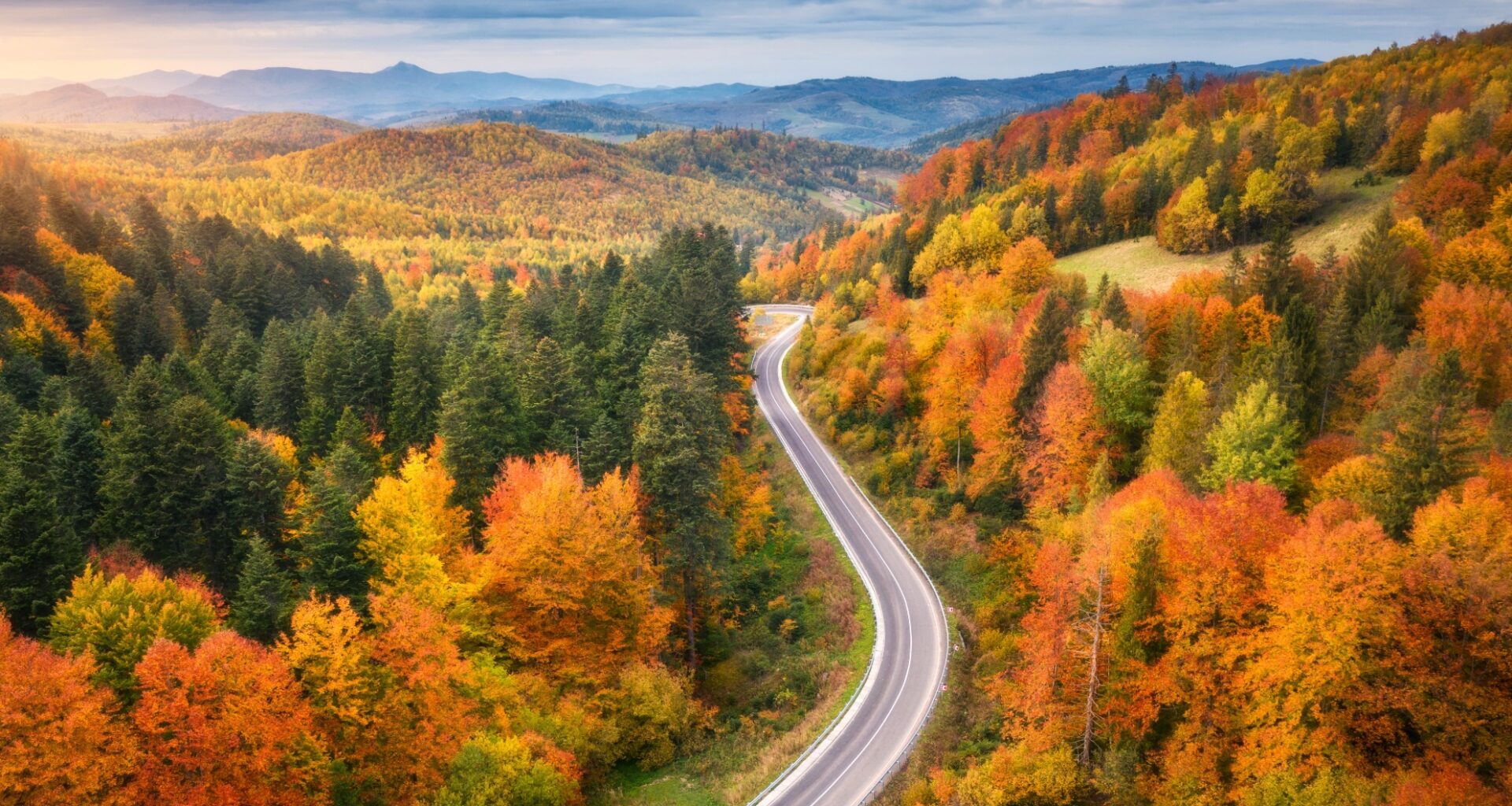
Every autumn, millions of people try to time nature’s biggest show. Travelers plan leaf-peeping trips, tourism boards issue peak-color forecasts, and park managers watch the hillsides for the first signs of red and gold.
Yet almost all of those predictions rely on a surprisingly simple measurement: how much green is left in the leaves.

As chlorophyll disappears, forecasters assume the brightest colors are about to arrive. A new study suggests they’ve been missing the real story.
In the fall of 2024, a NASA satellite called PACE tracked the actual red and yellow pigments developing inside leaves from space, revealing autumn’s color transformation in far greater detail than ever before.
Tracking leaves from space
Tracking fall color was never part of NASA’s plan for the PACE satellite.
Karl Huemmrich, a research professor at the University of Maryland, Baltimore County (UMBC), and his colleagues aimed its ocean-and-atmosphere sensors at forests instead.
What makes it work is how the sensor sees light. Instead of a few broad bands, it splits sunlight bouncing off leaves into hundreds of fine slices of color, with near-daily coverage of nearly the entire planet.
Other missions have mapped vegetation for decades, but mostly as a single measure of how green the ground is.
The study showed the satellite could pull far more from the land surface – the actual mix of pigments packed inside the leaves.
The chemistry of color
Leaf color comes down to chemistry. Through the summer, chlorophyll floods the leaves with green and hides everything else.
As the days shorten and that green breaks down, the other pigments finally show through. Hidden in plain sight all season.
Two pigments do the heavy lifting in fall. Carotenoids – the yellows and oranges – sit in leaves all season, masked by summer’s green.
Anthocyanins, the reds, appear to build up as the leaf shuts down for winter. Different timelines.
The team watched this unfold across the eastern United States in the fall of 2024. Satellite maps tracked the red signal climbing week by week, from early October into the third. A season, piece by piece, from orbit.
Tracking more than green
Older satellite measures mostly track one thing – how much green is left – so they register autumn as a slow fade. Helpful, but blunt. They tell you the season is ending, not the moment it peaks.
Until this study, no one had applied these pigment readings to fall color across the whole globe.
The methods date back to the early 2000s, yet PACE is the first to run them everywhere, over and over, through an entire season. That repetition is the real advance.
“PACE is the first mission that can measure these pigment indices over large areas, and repeatedly, so we can look at change through the fall,” Huemmrich said.
Better fall color forecasts
Sharper timing has an audience waiting. Leaf-peeping pulls millions of travelers onto back roads each fall, and one analysis estimates the season pours billions of dollars into rural towns.
Real-time color maps could steer those visitors toward the spots peaking right now instead of relying on a calendar guess made weeks in advance.
For small towns swamped every October, the same maps could help spread the crowds out.
Getting the timing wrong cuts both ways. Show up too early and the hills are still green; arrive too late and the color is already on the ground. A whole tourism week, gone.
Spotting stress before it spreads
The same signals carry warnings. Drought, heat, and insect outbreaks all change a leaf’s pigment balance, often well before the damage is obvious to anyone standing in the field.
Earlier research linked these pigment changes to how plants cope with stress and keep their food-making machinery running. Catching those changes early across entire regions could give farmers and foresters a real head start.
Because the satellite reads land, ocean, and air at the same time, the view extends beyond any single crop or forest.
Skye Caplan, a NASA data scientist and co-author on the study, has described it as a way to see the planet’s systems as one connected whole rather than separate entities.
The next generation of forecasts
What was missing before this work was any way to watch fall color itself unfold from space, pigment by pigment, almost anywhere on the map.
That gap is closed now, with a clarity that traditional greenness maps could never match. More years of data will sharpen that picture.
“I anticipate that as we accumulate more years of PACE data, we will be able to observe changes in the timing of peak color, which may be related to climate change,” Huemmrich said.
For now, the leaves keep their own schedule, and the satellite keeps watch overhead.
The difference is that the old guesswork is starting to give way to something a farmer or a weekend traveler can actually put to use.
The study is published in the journal Remote Sensing Letters.
—–
Like what you read? Subscribe to our newsletter for engaging articles, exclusive content, and the latest updates.
Check us out on EarthSnap, a free app brought to you by Eric Ralls and Earth.com.
—–