
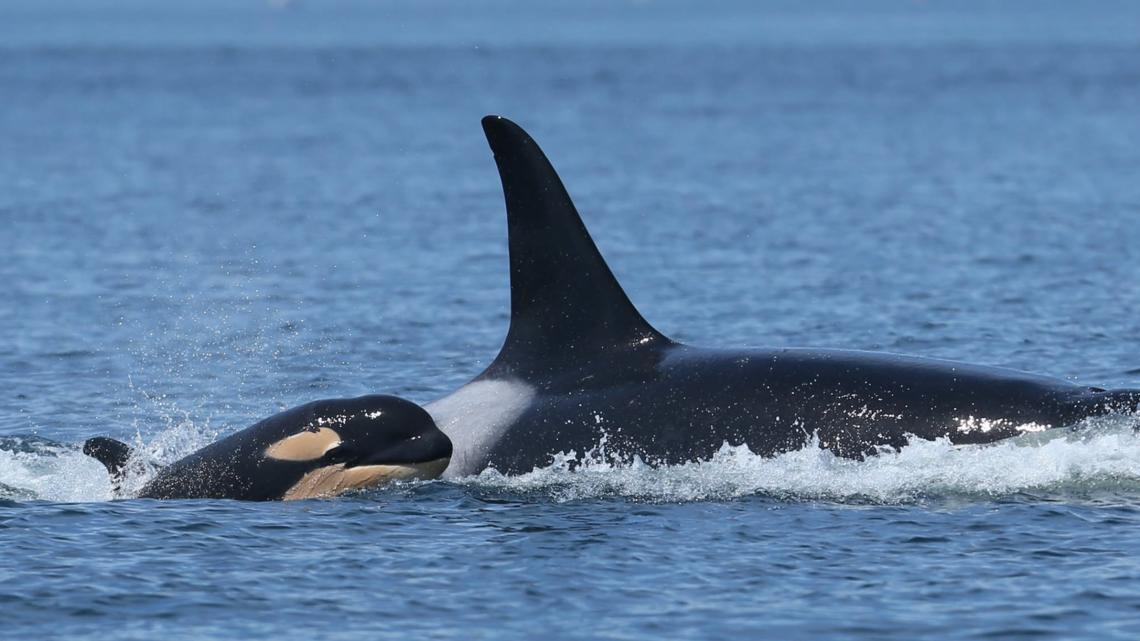
A new calf, L130, has been spotted with the endangered southern resident orcas’ L pod, sparking cautious hope among researchers as the whales struggle for survival.
SEATTLE — A new southern resident orca calf has been spotted.
The Center for Whale Research announced Wednesday that the calf, named L130, was spotted with the L pod June 14.
“We’re thrilled to welcome a new calf during our 50th year working with this endangered population,” the center said in a Facebook post. “Every calf is a reason for hope.”

This story continues below.
More in Science
Gray whale strandings up to 30 after additional whales found along coast
Researchers are working to determine which orca is the mother.
Based on the calf’s size, behavior, and morphology, NOAA Fisheries West Coast estimated it is between 1 and 3 months old.
This is the second calf born to L pod this year. In February, researchers spotted a calf, named L129, swimming with the pod near Race Rocks in the Strait of Juan de Fuca. At the time, the calf appeared very young, and researchers said further encounters were needed to determine its health.
The center did not say if L129 was spotted during the June encounter.
The southern resident orcas have struggled with their population sinking to the lowest level in decades. As of July 2025, which was the most recent census, there were 74 southern resident killer whales.
L pod is the largest of the three southern resident pods at 33 members. It’s followed by J pod with 27 members and K pod with 14.
While researchers say births are positive, they see it with caution optimism, as only about half of all calves make it to maturity. For example, during last year’s census period, four calves were documented, but two of them died.
Pollution, a lack of Chinook salmon – their preferred food – and boat noise, which makes it difficult to hunt, have contributed to the plight of the southern residents.
If the southern resident population were to recover at a rate of 2.3% each year, researchers would breathe a sigh of relief. However, surveys in recent years that have shown growth have been followed by decline, according to the Center for Whale Research.