

Listen to this article
Estimated 3 minutes
The audio version of this article is generated by AI-based technology. Mispronunciations can occur. We are working with our partners to continually review and improve the results.
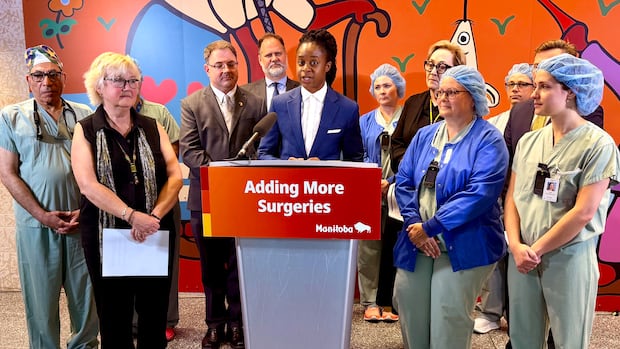
Manitoba’s health minister says the government is upping orthopedic surgery capacity by adding 200 more hip and knee replacement surgeries at health-care facilities across the province.
“We’re investing in building capacity right here at home,” Health Minister Uzoma Asagwara said at a news conference at Selkirk Regional Health Centre on Friday.
The province says 800 knee and hip replacement surgeries were performed at Selkirk’s hospital this past year. The NDP government first announced the 800-surgery expansion in November 2024.
Adding 200 more surgeries will cost the province $1.7 million, according to the 2026 provincial budget, released in March.
Dr. Edward Buchel, Shared Health’s provincial surgery specialty lead, said these new surgeries will be distributed between Boundary Trails Health Centre, Brandon Regional Health Centre, Health Sciences Centre, Concordia Hospital and Selkirk Regional Health Centre on a capacity basis.
The Selkirk centre will continue to perform 800 surgeries a year, he said.
Orthopedic surgeon Dr. Thomas Turgeon said upping surgery capacity in the province can reduce wait times and “change lives one joint at a time.”
“These procedures have profound impacts on patients’ lives, relieving pain, restoring function and improving quality of life — and in most cases, will last for the patient’s lifetime,” he said.
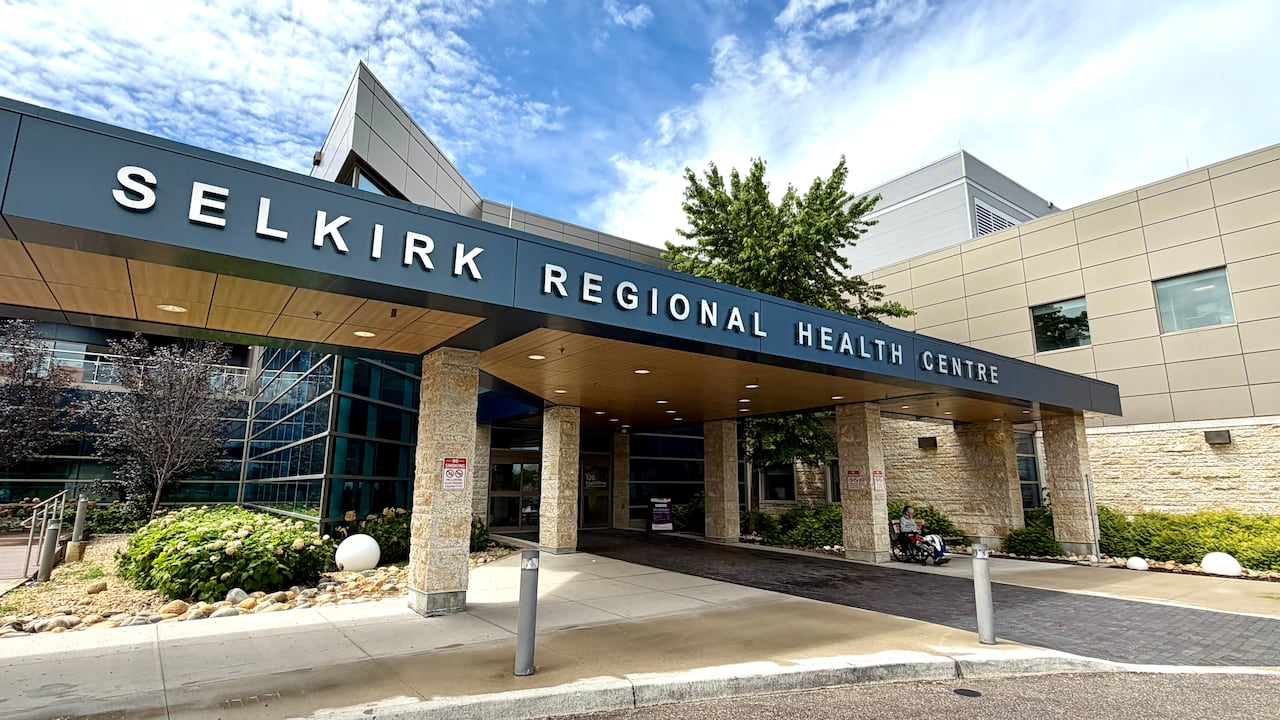 The province says 800 knee and hip replacement surgeries were performed at the Selkirk centre this past year. (Travis Golby/CBC)
Selkirk resident Melanie Shumilak, 68, had been living with arthritis pain for over a decade before she received knee replacement surgery earlier this year.
Pain forced her to wear two knee braces and rely on walking sticks during hikes, while taking medication daily. Pain prevented Shumilak from hiking up waterfalls on her trip to Iceland two years ago, she said during the news conference.
She got knee replacement surgery in April and is planning to get her other knee replaced later this year.
“I want my mobility back in both knees. So, I’m looking at having my second knee done in Selkirk in September,” Shumilak said.
“There are still many waterfalls that I want to climb.”
In 2025, 7,056 hip and knee replacement surgeries were performed in the province — a number Asagwara called “a record for Manitoba.” Most were outpatient procedures, the province said.
The province has recruited seven new arthroplasty surgeons in the last two years, and officials plan to offer positions to several new graduates, Buchel said.
He said adding more surgeries has reduced wait times.
The median wait time for hip and knee surgeries in Manitoba is 22 weeks, provincial health-care data for March shows. Buchel said that’s down from 39 weeks in March 2025.
But median wait times vary considerably across the province.
People getting surgery in Selkirk wait about eight weeks on average, while those in Brandon wait for more than a year, the data shows.
More than 5,000 Manitobans were on the waitlist for hip and knee surgeries as of March.