

Opinion
 Bec WilsonMoney contributor
June 20, 2026 — 5:00am
June 20, 2026 — 5:00am
Save
You have reached your maximum number of saved items.
Remove items from your saved list to add more.
AAA
We have all inherited a traditional idea of retirement and frankly I think we need to push on its boundaries because it really was designed for a different era.
Retirement was created in the early 1900s to get old people out of the workforce where they were slowing down the factory lines. Most people who made it to retirement arrived in poor health and didn’t survive long enough to enjoy it.
 Thanks to longer lives and superannuation, retirement today is a multi-stage period of life that could last 30 to 40 years.Getty Images
Then, over the next hundred years, it morphed to become a period of life: one where we largely expected to live a more quiet existence in old age, on a pension. But even that idea has been thwarted.
Thanks to longer lives and superannuation, retirement today is a multi-stage period of life that could last 30 to 40 years. On average, just a quarter of that time will be spent in poorer health.
A 65-year-old woman today is expected to live to 90 at the median and she has a one in four chance of living to 95. A 50-year-old should expect an even bigger bounty: a median life expectancy of 91, and a one in four chance of getting to 97, which will surely expand in their lifetime. That’s not a wind-down at the end, it’s multiple phases of life where you really get to come into your own.
For a growing number of Australians this new chance for a longer life, and new financial freedom via superannuation, is reshaping how midlife and retirement years are viewed.
And superannuation arrived just at the right time to make this possible.
In fact, superannuation climbing to meaningful contribution rates is what has given us the financial means to truly change things up and actually start to choose what those extra years can look like. For the first time, reaching your sixties doesn’t have to mean the beginning of the end. It can mean the beginning of something entirely new, fresh and exciting.
The numbers tell the real story.
According to ABS data, 10 years ago, 433,000 people over the age of 65 were still working. Today, that number is 732,000. And that’s in structured, measurable work. I can say confidently that many more find themselves earning from consultancy, retirement side hustles and freelancing, turning a lifelong passion into something that pays an occasional or regular pay cheque.
Related Article
And, according to new research by Australian Super and YouGov, the trend is only going to strengthen. Four in five working Australians want to earn an income through non-traditional sources later in life – doing away with the idea that retirement is a purely passive phase. Two-thirds expect to continue working in some capacity in retirement. And the big one, 87 per cent of people want to make money doing something they genuinely enjoy that makes money. Australians are rethinking retirement as we know it.
AustralianSuper head of retirement Jacki Ellis says the fund has watched this shift building for years. “The pace of change in what retirement actually looks like is mind-boggling,” she says. “The advancements we’re seeing are allowing social change to happen faster than it ever has before.”
For a growing number of Australians, this new chance for a longer life, and new financial freedom via superannuation, is reshaping how midlife and retirement years are viewed.
Increasingly, it isn’t actually about giving up work at all. It’s about giving up the wrong types of work for this stage of their life, moving towards the things they enjoy and feel passionate about and finding income to support their lifestyle and leisure for longer, before they draw heavily on their super. Some might say, that’s having a prime time of life, before you retire fully.
Some are turning decades of corporate expertise into consulting or freelance work they can pick up and put down around their travel and family goals. Others are finally giving their passion projects the time and space they deserve and discovering they can earn an income from making music, writing, styling or building online or offline communities.
Some are simply working a couple of days a week because they like it. They like the structure work gives them, the people they work with and the sense of being a part of something, not because they have to.
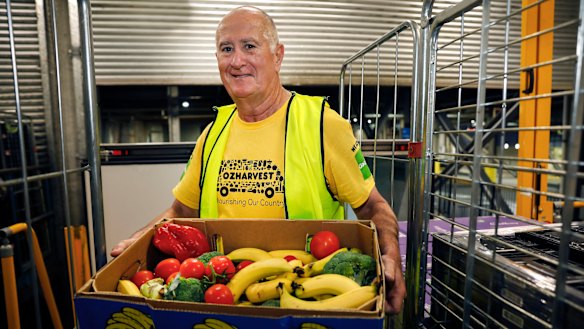 Ex-Qantas captain Geoff Blore now volunteers for OzHarvest Newcastle.Chris Elfes
Of course, wanting a different type of retirement and feeling confident enough to pursue it are two very different things. And 83 per cent of Australians admit to having real reservations about relying on non-traditional income sources in retirement. Which is completely understandable because nobody taught us how to do this.
Ellis thinks a big part of the problem is visibility. “You can’t be what you can’t see,” she says. “The more we can help members visualise what might be possible, help them understand how to try before they buy, transitioning gradually toward the ideas they have for their retirement, the more confident they become. Community, activity and purpose are just as important as the hard finances.”
Related Article
And she’s right. It’s all well and good to talk about reshaping your life in retirement, but what do you need to work through if you think you’d seriously like to do this?
First, understand your baseline financial situation and build the core parts of your retirement plan: how much you need and want to spend on everyday life, how much you can build in super before you start drawing from it, and when you would like to start stepping towards retirement, versus when you want to be fully retired and dependent on the age pension and super.
Then, contemplate your runway into retirement in stages and visualise a stage before you stop working altogether, when you pursue more flexible, passion-filled work or income sources. Consider how much income you could earn from that kind of work, and how much you might need to draw from your super to meet your income needs and lifestyle standards through that phase.
And then, think about how you could actually bring that to life. Do you need an ABN or a website, a qualification you don’t yet have or a client willing to give you a chance? Sketch out a simple plan, not a formal business document but an honest list of what needs to happen between where you are now and where you want to be. Think of it as the road map for your next adventure.
Finally, take it for a test run before you build your life around it. Take on a consulting client, write some freelance pieces, or offer to assist. You could even volunteer in the field you’re thinking about moving into. You’ll find out quickly whether the reality matches your hopes, and you’ll build the confidence to take the next steps if it does. Jacki Ellis calls it trying before you buy, and it’s the smartest thing you can do.
Bec Wilson is author of the bestseller How to Have an Epic Retirement and the newly released Prime Time: 27 Lessons for the New Midlife. She writes a weekly newsletter at epicretirement.net and hosts the Prime Time podcast.
Advice given in this article is general in nature and is not intended to influence readers’ decisions about investing or financial products. They should always seek their own professional advice that takes into account their own personal circumstances before making any financial decisions.
Expert tips on how to save, invest and make the most of your money delivered to your inbox every Sunday. Sign up for our Real Money newsletter.
Save
You have reached your maximum number of saved items.
Remove items from your saved list to add more.
 Bec Wilson is the author of How To Have An Epic Retirement and writes a weekly newsletter for pre- and post-retirees at epicretirement.net.From our partners