
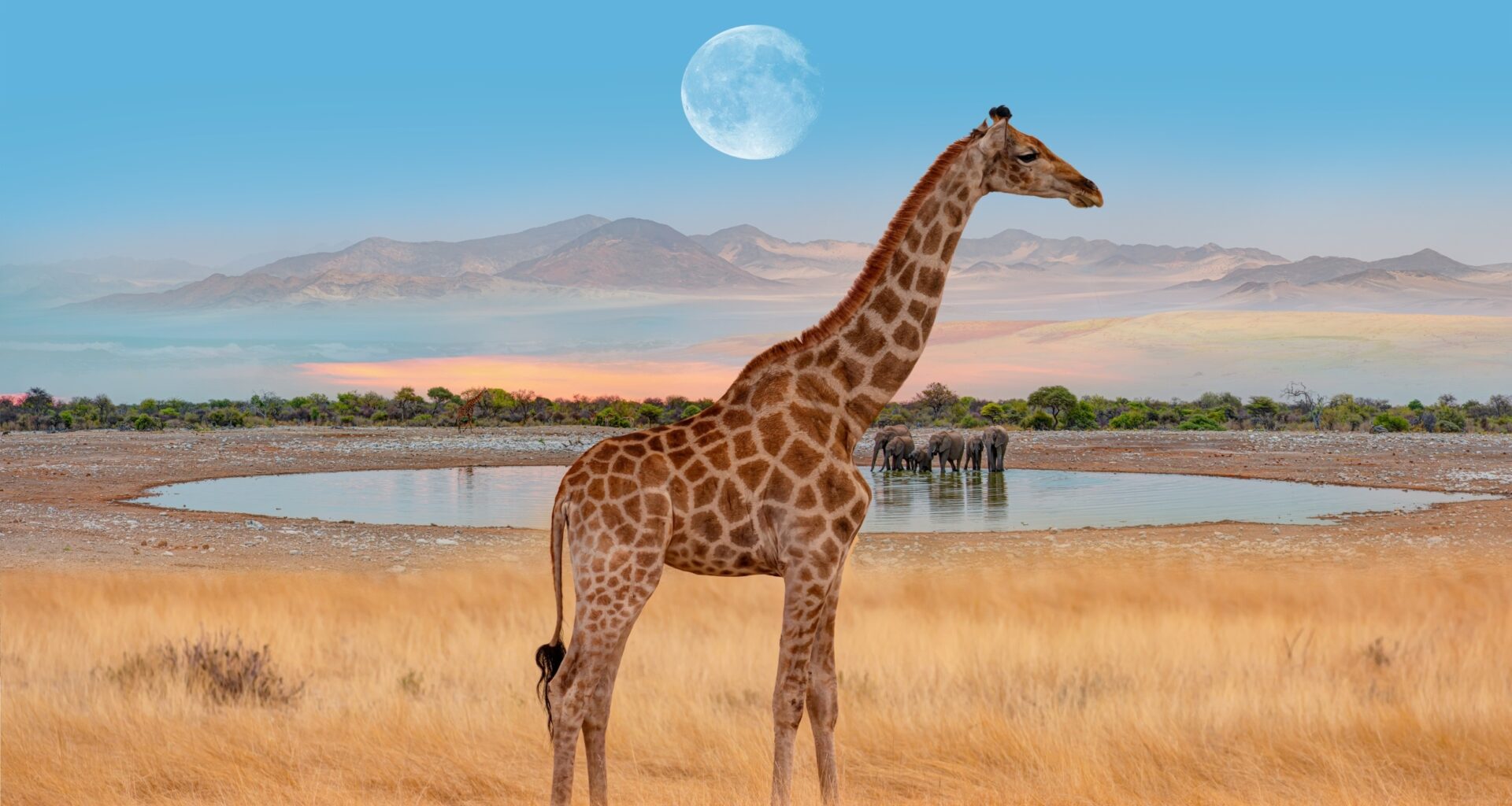
A giraffe can see a lion long before the lion ever notices it. From 18 feet up, the savanna spreads out below like a map.
That long view has made the giraffe one of Africa’s most familiar animals. Yet the species is far less safe than its slow, calm pace suggests.

Most of us picture giraffes as a permanent fixture of the plains. The truth is more fragile, which is exactly why one day each year is set aside for them.
A day for gentle giants
World Giraffe Day falls on June 21, the longest day of the year. The timing is a nod to the longest neck in the animal kingdom.
The Giraffe Conservation Foundation (GCF) launched the day in 2014. It remains the only group on Earth working solely on wild giraffes across Africa.
On Sunday, June 21, zoos, schools, and wildlife groups will host feedings, talks, and fundraisers to honor giraffes.
The event has grown well beyond its small start. What began as a simple awareness push now drives giraffe fundraising around the world.
Built for life up high
Almost everything about a giraffe is shaped by its height. A grown adult can strip more than 100 pounds of leaves from thorny trees each day.
Its tongue does much of the work. The dark, muscular tongue stretches up to 20 inches and shrugs off sharp acacia thorns.
Pumping blood up that neck takes real power. A giraffe’s heart can weigh as much as 25 pounds, enough to push blood all the way to the brain.
Reaching the ground is the harder trick. To drink, a giraffe must splay its front legs or bend deeply, which leaves it exposed for a few risky seconds.
A newborn already towers over most people. Calves drop nearly six feet to the ground at birth and stand within about an hour.
Soft hums and close bonds
Giraffes are calmer than lions or elephants, yet they are far from silent. At night, they trade low hums – contact calls that often dip below the range of human ears.
Their social lives are looser than they look. Giraffes drift between groups from day to day, though some bonds hold steady for years.
Mothers lean on one another to raise their young. Females form nursery groups and take turns guarding the calves while others wander off to feed.
Young males roam the most of all. They drift between groups as they test their strength and prepare to live on their own.
They seem to grieve, too. Observers have watched giraffes linger near a fallen companion for hours, sniffing and circling the body.
No two giraffes wear the same coat. Each pattern of patches is unique, much like a human fingerprint.
Trouble on the ground
For all their grace, giraffes are slipping away. Wild numbers have fallen by about 30 percent over the past three decades, a slide that GCF calls the “Silent Extinction.”
Roughly 117,000 giraffes remain across Africa today. Habitat loss sits at the center of the decline, as farms, fences, and roads carve up the open land they need.
Fragmented habitat has shrunk giraffe herds dramatically. A century ago, a typical group numbered 20 to 30 animals. Today, the average is closer to six.
Other pressures stack on top. Poaching for meat and traditional medicine, along with conflict in parts of their range, keeps the numbers under strain.
Drought adds one more layer of risk. Longer dry spells weaken the trees and dry up the water that giraffes rely on.
Programs that track and rescue giraffes
Can the trend be reversed? In some places, it already is. Recognizing that giraffes are not all the same has helped sharpen conservation efforts.
In 2025, scientists formally divided giraffes into four species, making it easier to direct protection where it is needed most.
The International Union for Conservation of Nature (IUCN) backed the move, giving the rarest giraffes their own clear status.
The Giraffe Conservation Foundation now runs programs in 21 African countries. Its Twiga Tracker project, the largest satellite-tracking effort of its kind, follows hundreds of giraffes to learn how they use the land.
Moving giraffes to safer ground is another key tool. One long-running rescue carried animals out of Uganda’s Murchison Falls, where oil drilling loomed, to calmer parks nearby.
Those moves have brought giraffes back to reserves left empty for decades. Local people lead much of the work, including the Twiga Walinzi, or “giraffe guards,” who partner with herders in northern Kenya.
Zoos play a part as well. Many fund field projects and send staff to help with giraffe moves in Africa.
How you can participate
You do not need to fly to Africa to help. The Giraffe Conservation Foundation hosts a fundraiser each year, and the 2026 drive stays open through the middle of July.
The money pays for real work on the ground. It supports rangers, protected habitat, and the careful moves that rebuild herds.
There are easier steps, too. Adopt a giraffe through a conservation group, or visit one at a nearby zoo.
Even a single post helps. Sharing the day with tags like #WorldGiraffeDay can reach people who rarely think about them.
Looking up, looking ahead
The story of the giraffe is still being written. Sharper science and steady community work have begun to slow the losses in several regions.
None of it happens without people who care. Every donation, share, and visit keeps the giraffe in plain view.
World Giraffe Day 2026 is a chance to join that effort. On the longest day of the year, it takes only a moment to look up and root for the tallest animal of all.
—–
Like what you read? Subscribe to our newsletter for engaging articles, exclusive content, and the latest updates.
Check us out on EarthSnap, a free app brought to you by Eric Ralls and Earth.com.
—–