
Spacecraft are no longer just visiting other worlds. They’re starting to bring pieces of them home.
NASA returned asteroid dust to Earth in 2023, and scientists hope Mars rocks will follow in the years ahead.

Those samples could reveal how planets formed, and perhaps even whether life ever existed beyond Earth.
But two researchers say there is another question we should answer first: What if one of those samples carries something alive?
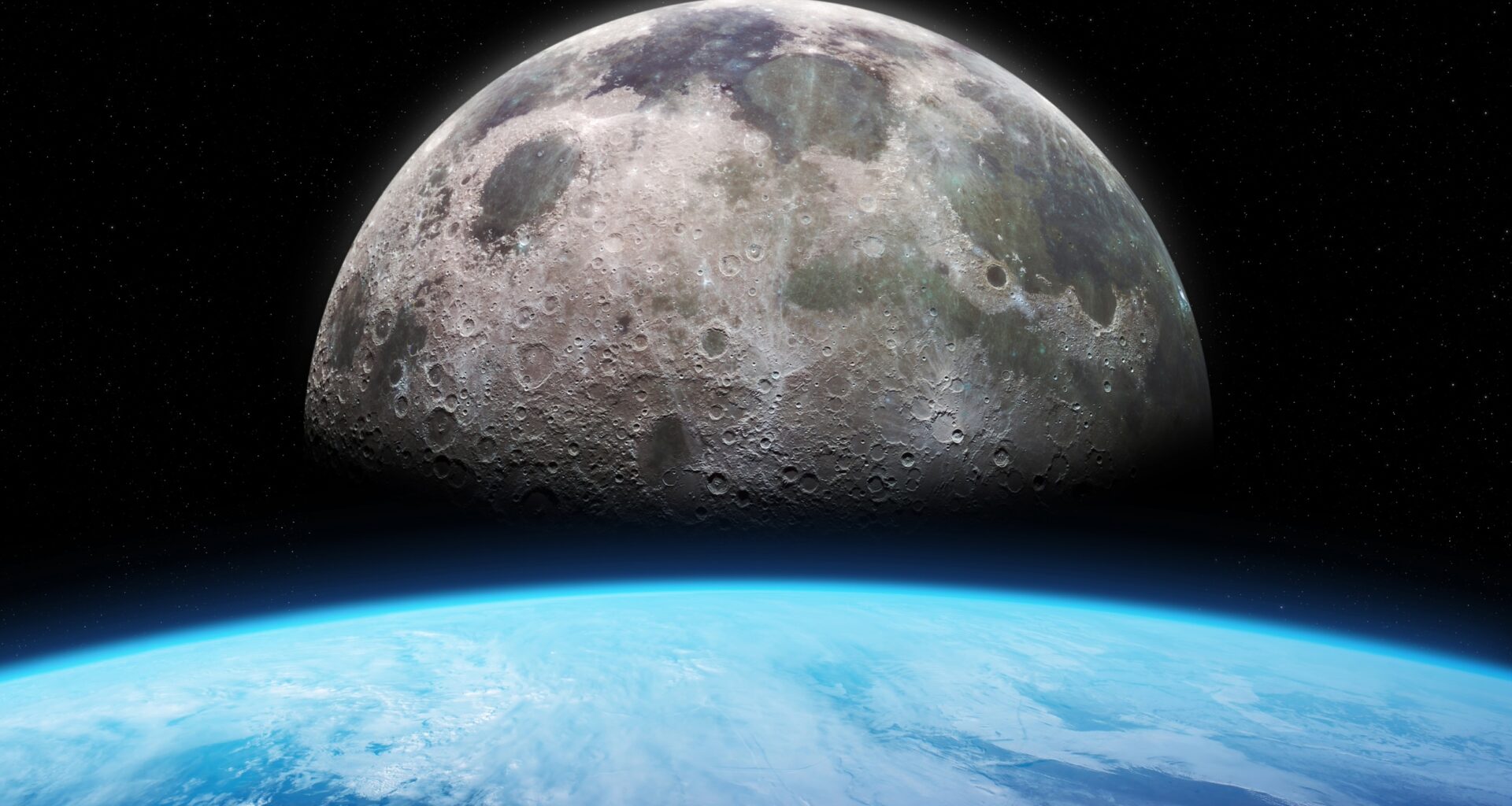
Instead of opening future space samples on Earth, they argue we should inspect them somewhere much safer: the moon.
Earth’s first line of defense
What they propose sounds like science fiction. Build a sealed lab on the moon, run it mostly by robots, and route every space sample through it before anything reaches Earth.
The argument comes from Frederick I. Moxley, who directs a private threat-analysis consultancy in Idaho, Strategic Threat Analysis and Research Laboratories.
His co-author, Anthony Ricciardi, is a biologist at McGill University who studies invasive species.
Their name for it is a biocontainment lab, a barrier between Earth and anything alive riding home with a sample.
Moxley describes it as a firewall, one built to stop any dangerous living organism before it ever reaches the planet.
Learning from past invasions
Ricciardi has spent his career studying what happens when a living thing turns up where it never belonged.
Rats reaching remote islands wiped out native birds, and mussels in ships’ ballast water now clog rivers across North America.
The damage adds up fast. One study Ricciardi co-authored found that the worldwide cost of biological invasions now rivals the toll from natural disasters such as storms and floods.
Now apply that reasoning to a microbe from Mars or an icy moon. It would land somewhere with no natural checks on it, facing native life that never met anything like it. A clean slate.
Microbes don’t quit easily
A common comfort says that anything born on Mars would simply die here, unable to handle our air and water. Earth’s own microbes keep poking holes in that comfort.
Take the bacteria living aboard the International Space Station. A paper tracking one species there found that its strains had changed into something genetically different from their relatives on the ground, seemingly pushed by the stresses of life in orbit.
That is not proof that life from another world could thrive here. No one has ever held an alien organism to test it.
But the claim that something could never survive here has been wrong before, and living things are stubborn.
The moon’s big advantage
Here is where the moon earns its place in the plan. Even the most secure labs on Earth are not perfect, and history is full of slips. Plenty of them.
Forgotten vials of smallpox once turned up in a storage room at a U.S. lab. An explosion later tore through a Russian facility holding the same virus. A leak from a moon lab has nowhere to go.
The moon brings a rare mix of qualities. Close enough to reach within days. Empty of any native life to put at risk, and remote enough that an escape would have nowhere to spread.
Robots could do the dangerous work while people stay home.
Space quarantine isn’t new
Quarantining the unknown from space is not a new instinct. When the Apollo astronauts returned from the moon, NASA sealed them inside a converted trailer for weeks, half-expecting lunar germs that never showed.
A special building in Houston, the Lunar Receiving Laboratory, handled the first moon rocks behind sealed glass.
Scientists even floated orbiting and lunar quarantine stations decades ago, though no one ever built one.
What Moxley and Ricciardi add is timing, and a reason to act now. Two things have changed since those old plans gathered dust.
Robots can run a remote lab, and NASA is now preparing a permanent base on the moon.
Samples are already coming
NASA’s Artemis program aims to return astronauts to the moon and, before long, a base camp near the lunar south pole. That moon base is exactly where Moxley and Ricciardi want a containment lab.
The clock feels real because the samples are coming. Asteroid dust now sits in clean rooms on Earth.
Meanwhile, probes keep eyeing icy moons where one study found organic compounds – the chemical building blocks of life – spraying from what is likely an underground ocean.
The rules meant to govern all this, a field called planetary protection, have not kept up.
More countries and private companies are racing to the moon and beyond. Many of their plans say little about screening what they bring back.
From proposal to reality
For now, it is just that: an argument in a journal rather than a blueprint with a budget. No alien microbe has ever been found, and the danger may prove imaginary – or not.
What the paper does is turn a vague worry into a concrete plan, pinned to a base already on the drawing board.
The study argues that the first line of defense belongs on the moon, and that decision should be settled before the rockets leave, not after.
If planners take the idea seriously, the consequences are concrete.
Samples from Mars or an asteroid might never touch Earth’s open air until they have been checked a quarter-million miles away. A building meant to guard this planet, sitting on another one.
The study is published in the journal Ambio.
—–
Like what you read? Subscribe to our newsletter for engaging articles, exclusive content, and the latest updates.
Check us out on EarthSnap, a free app brought to you by Eric Ralls and Earth.com.
—–