
Most of the poaching happened early in the morning, before light, but other times it was in broad daylight.
Aston said he saw a school group fishing the Ngongotahā Stream, down from the bridge near the entry to the village, and only metres away were two poachers.
While the Rotorua Daily Post was interviewing Aston this week, a local came up to him and advised of some trout hanging up in trees across the road.
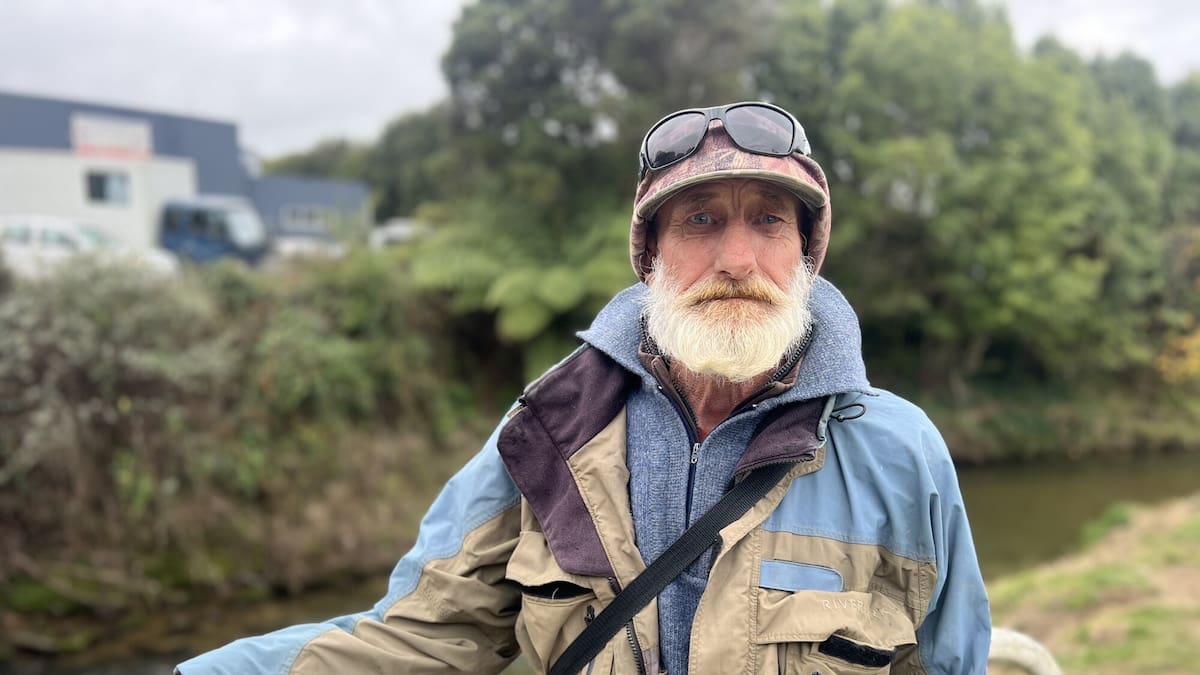
Simon Aston says locals are working hard to get young people interested in trout fishing so poachers should leave the Ngongotahā Stream alone. Photo / Kelly Makiha
Aston said the poachers often left them there so they were not caught leaving with more than their bag limit of eight. He said sometimes they caught up to 40 trout, and would return later to collect the rest.
“We have a lot of kids fish this part of the stream and we don’t think it’s very fair that the older people using roe out of trout [are] catching fish from this part of the river, and kids don’t get a chance to catch their fish.”
Aston said local fishermen tried to educate people, but some did not want to be educated.
“We have got a lot of kids who fish this stream and we want to keep them as safe as possible as well.”
Simon Aston says local fishermen have tried to educate people about the negative impact of poaching but some did not want to be educated. Photo / Kelly Makiha
Fellow club member Todd Ellery said the club was doing great things, including involving more women in fishing and its monthly “golden fish” award for submitted photos of people’s catches.
He said people who spotted poachers were usually not keen to approach them themselves.
“These days you don’t know what you’re in for … You see some guys down here and they have that many fish, they can’t carry them all.”
Ellery said it was a shame others didn’t respect the waterways.
New Zealand Fish & Game Eastern Region chief executive officer Arash Alaeinia said the Rotorua area had many prime and internationally visited fishing locations, with world-class trophy rainbow and brown trout in the lakes and waterways.
Trout season officially ends on June 30 and reopens on October 1.
Alaeinia said many anglers used fishing as a way to supplement their food basket.
The Ngo Trout Fishing Club already has hundreds of followers. Photo / Kelly Makiha
While poaching did occur, he did not believe it was getting worse. He said Fish & Game had officers doing regular patrols and also responded to tip-offs on the 24-hour 0800 POACHING line.
He said there were various ways in which people fished illegally, including using nets, spears, roe, bread, bait, taking more than the eight fish permitted (including a maximum of two brown trout) and fishing without a valid fishing licence.
“We have strict rules with severe penalties for those found to be breaking the rules.”
The penalties for a poaching prosecution through the court system vary, from forfeiture of all fishing gear, including vehicles or boats, to a fine of up to $100,000 fine or a two-year jail term.
“We often prosecute offenders who have purposely and regularly broken the law.”
He said Fish & Game received no funding from the Government and was funded through anglers and hunters buying licences.
This season’s adult licences included a local rate of $125 for the whole season, with a day licence costing $25.
Kelly Makiha is a senior journalist who has reported for the Rotorua Daily Post for more than 25 years, covering mainly police, court, human interest and social issues.