
(Solving one of humanity’s oldest ‘missing person’ cases)
“It is now possible for researchers to recover DNA from somebody who leaned on a wall 20,000, 30,000, or 40,000 years ago—isn’t that crazy?!” says National Geographic Explorer Genevieve von Petzinger, a rock art specialist with the FIRST-ART Team, the international group behind the discovery. “You’re hanging out in a cave, and 40,000 years later, a bunch of humans get to meet you, which is like the coolest thing ever.”
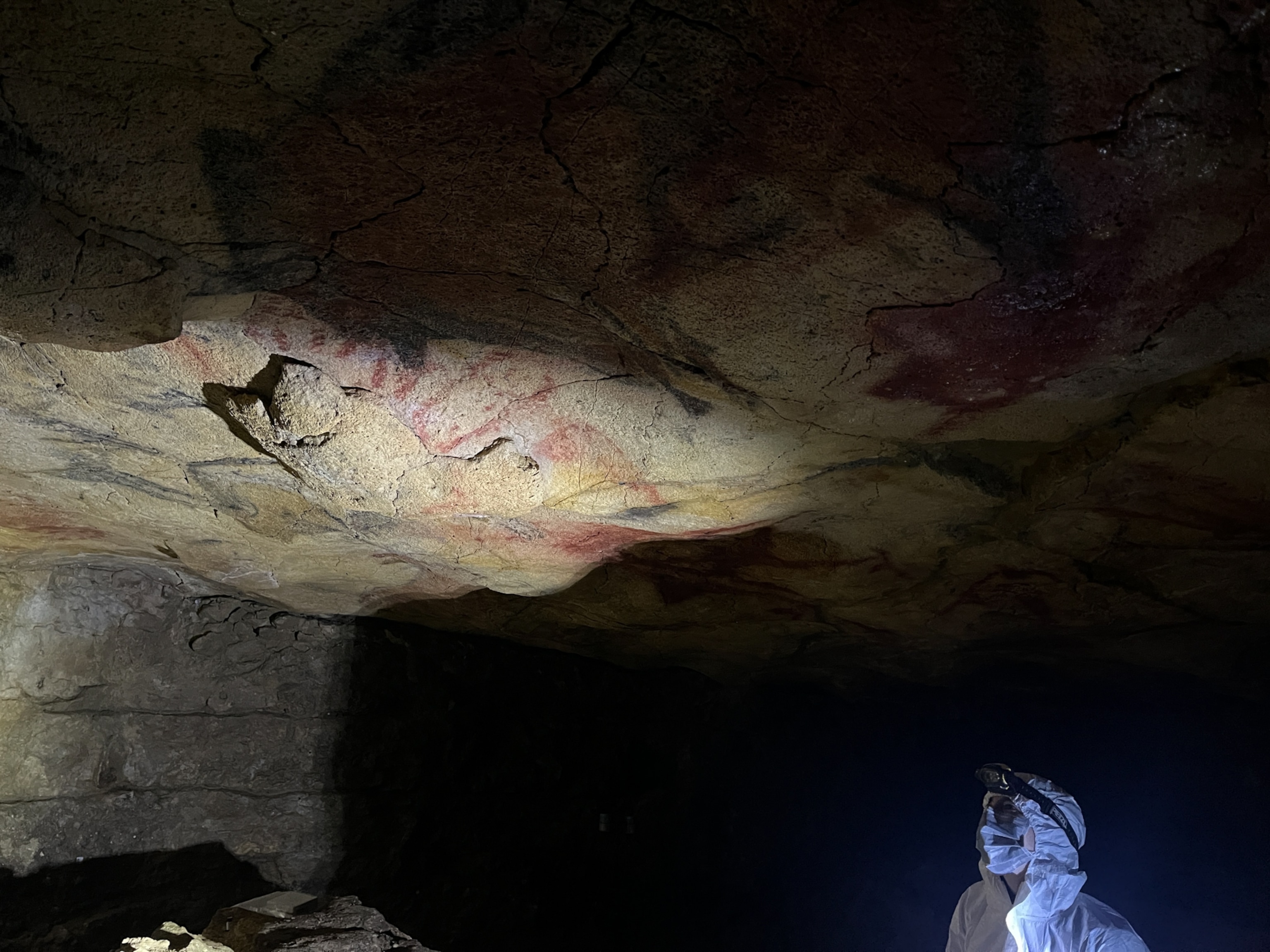
One of the caves the team analyzed for potential ancient human DNA was Altamira Cave, famous for its bison imagery.
Matthias Meyer
Cave exploring
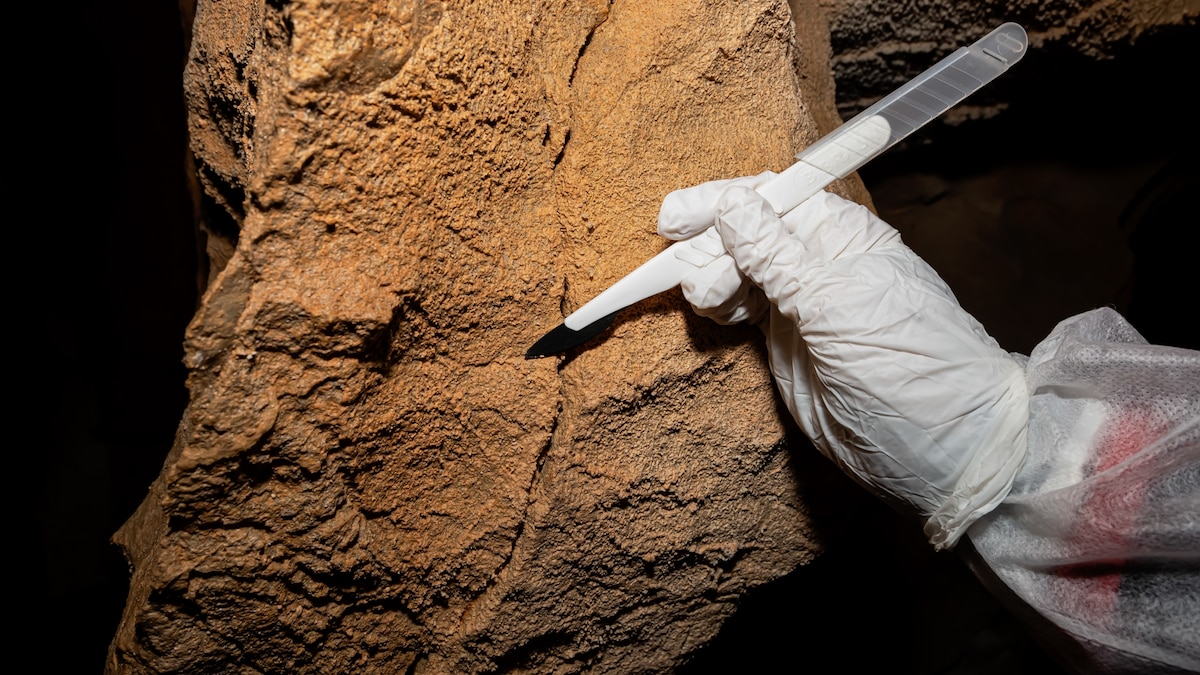
To collect samples for the project, Alba Bossoms Mesa, a doctoral researcher at the Max Planck Institute for Evolutionary Anthropology in Germany and lead author of the paper, and other members of the FIRST-ART team ventured into 11 caves in Spain and Portugal. They took 54 samples from 24 different rock art panels, including hand stencils, simple lines and dots, as well as from pigment that fell off the iconic red bison imagery found on the ceilings of Altamira Cave in Spain. They also sampled adjacent parts of the cave walls that were clear of pigment. Most samples were collected with sterile disposable scalpels to scrape or cut directly from the wall and by individuals wearing two layers of gloves and face masks.
Of the 24 rock art panels, they found that only one pigmented sample contained ancient human DNA. That sample came from an unassuming red dot found in Escoural Cave in Portugal known as “Panel 11.” The sample was covered in calcite, a carbonate mineral that naturally forms in caves and drips down their walls, locking in rock art like a mosquito in amber and protecting it from contamination.
Scientists examine a rock wall in Nerja Cave in Andalusia, Spain, during a later field expedition to extract ancient human DNA from rock art that was not part of the new paper.
Video by Genevieve von Petzinger
From that sample of red pigment and calcite, they found ancient human DNA belonging to a Homo sapiens who lived at least 4,000 to 5,000 years ago, though likely much older, potentially during the Upper Paleolithic period (between 12,000 and 50,000 years ago). They were unable to determine the sex of the individual. The sample also showed no signs of animal DNA, indicating that the genetic remains were from direct contact with a person. It’s unclear whether the DNA came from the pigment itself or the layer of calcite in the sample.