
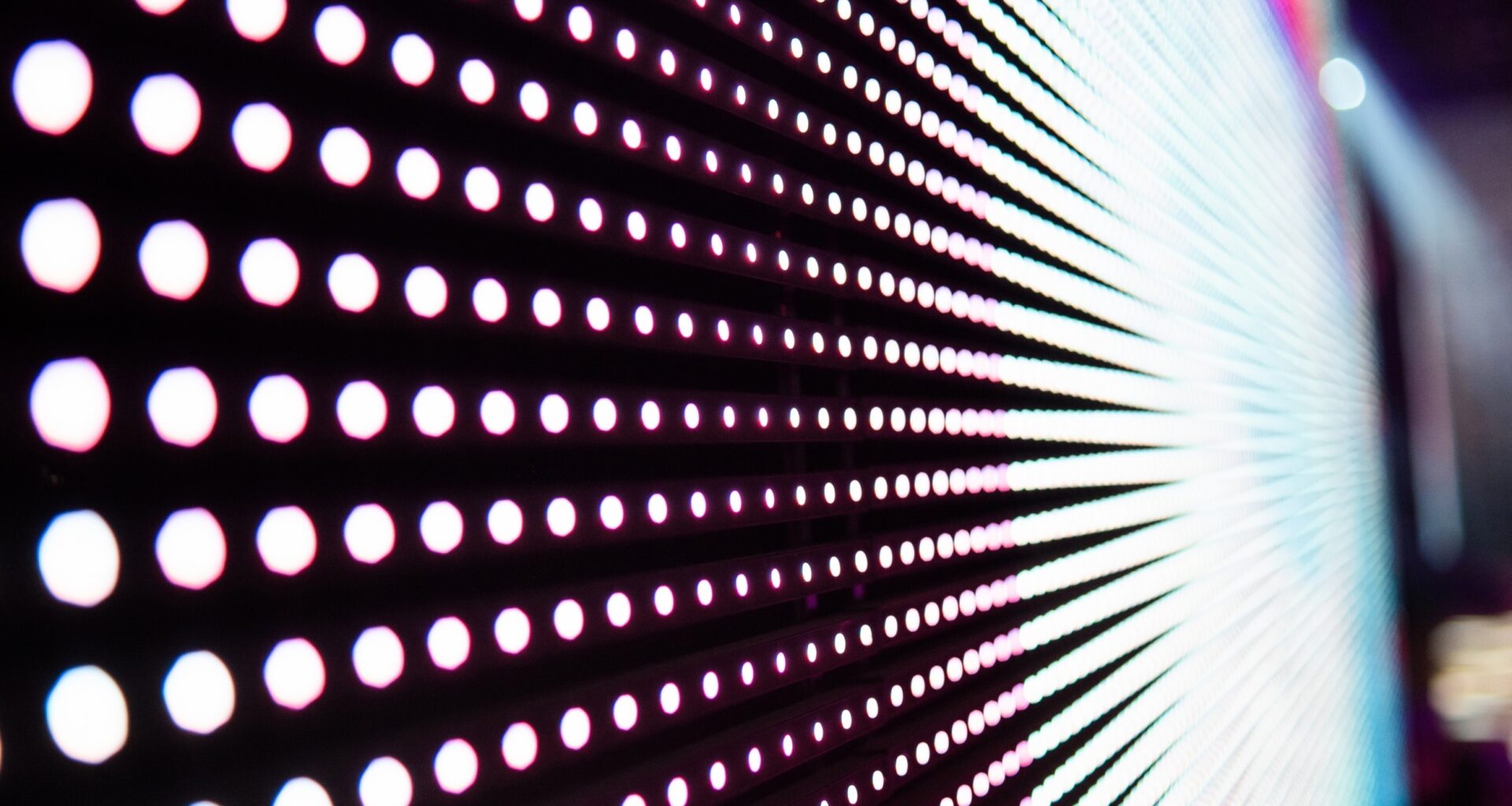
On a phone in selfie mode, two separate surfaces are doing opposite jobs. The screen glows to show your face, while a small camera beside it soaks up light to capture you, each made of its own dedicated dots.
Those two kinds of dots have stayed separate since the word pixel appeared almost a century ago – one to show, one to see.

A team in Switzerland has now made a single dot that does both, reading things about light that ordinary pixels throw away.
Breaking an old rule
The research was led by David J. Norris, a professor of optical materials engineering at the Swiss Federal Institute of Technology Zurich (ETH Zurich).
The team calls their invention Fourier pixels, reflecting the mathematics behind every design.
Today’s pixels track just one feature of light, its brightness, and stop there. Light actually carries far more, woven into the timing and tilt of its waves.
These new dots do both halves of the job, reading the light that lands on them and creating the light that leaves.
All of this is achieved from one small patch of surface. No pixel had ever pulled off both directions at once.
Each pixel sits on a sheet of silver scored with shallow, wavy ridges.
When light hits a finely lined strip at one edge, it becomes a ripple of energy racing sideways along the metal, a so-called surface wave.
As that ripple travels, it meets the sculpted ridges and scatters back out as ordinary light. Where the waves reinforce each other, the light brightens. Where they cancel each other out, darkness appears.
That push and pull, called interference, draws the pattern the pixel was built to make.
To build a chosen image, the team works backward, using a standard piece of math to calculate the exact ridge pattern.
Those wavy surfaces are then carved with nanometer-scale precision using a fabrication method developed in an earlier study by the same lab.
More than brightness
Brightness is only part of what the Fourier pixels can handle. They control the polarization of light, the direction its wave wiggles as it travels.
The pixels can also shape its phase, the timing of the wave’s crests and troughs.
By tuning the surface, the researchers made beams with a dark hole punched clean through the middle. Others twisted as they traveled, their polarization winding slowly around the axis.
The same approach also works across the visible spectrum, allowing the dots to build full-color images.
Handling brightness, phase, and polarization together, on one element, is what older devices could never manage.
Some could bend a wave’s phase, others could filter polarization – but never all three at once, until this pixel.
Reading light backward
Run in reverse, the same hardware senses instead of creating light. Incoming light becomes surface waves and mixes on the pixel with a second, steady reference wave.
A camera then photographs the interference pattern they create together.
From that pattern, the team reads back the phase and polarization of whatever light arrived – the very features a normal camera throws out. An ordinary sensor records only how bright each point is, nothing more.
That phase sensor proved so sensitive that the experiment’s own gear became the limit.
Its readings barely drifted, and what little drift appeared seemed to track tiny wobbles in the laser feeding the pixel, under a tenth of a degree.
One pixel, many roles
Folding all of these jobs onto one small structure was the biggest payoff.
A single pixel, no larger than the ones already packed into cameras and screens, could read brightness, phase, and polarization at once and produce them too.
One device put both directions to work at the same time. It measured the phase of incoming light while focusing a spot of outgoing light, and because the focus moved with whatever arrived, the pixel could correct its own output on the fly.
Designing the Fourier pixels is oddly simple. The standard math needs no heavy computer modeling, and the group reports going from a fresh idea to a working device in roughly a day.
From pixels to smart surfaces
The clearest target is a class of chips called camera-displays, surfaces that watch and show at once.
One could capture your face on a video call from behind the very pixels showing the other person, or feed holographic displays.
Because the surface itself does the math, a grid of Fourier pixels could one day react to an incoming image and answer with light of its own, without a computer in between.
That would allow a flat chip to both sense and respond in a single step.
The study is published in the journal Nature.
—–
Like what you read? Subscribe to our newsletter for engaging articles, exclusive content, and the latest updates.
Check us out on EarthSnap, a free app brought to you by Eric Ralls and Earth.com.
—–