
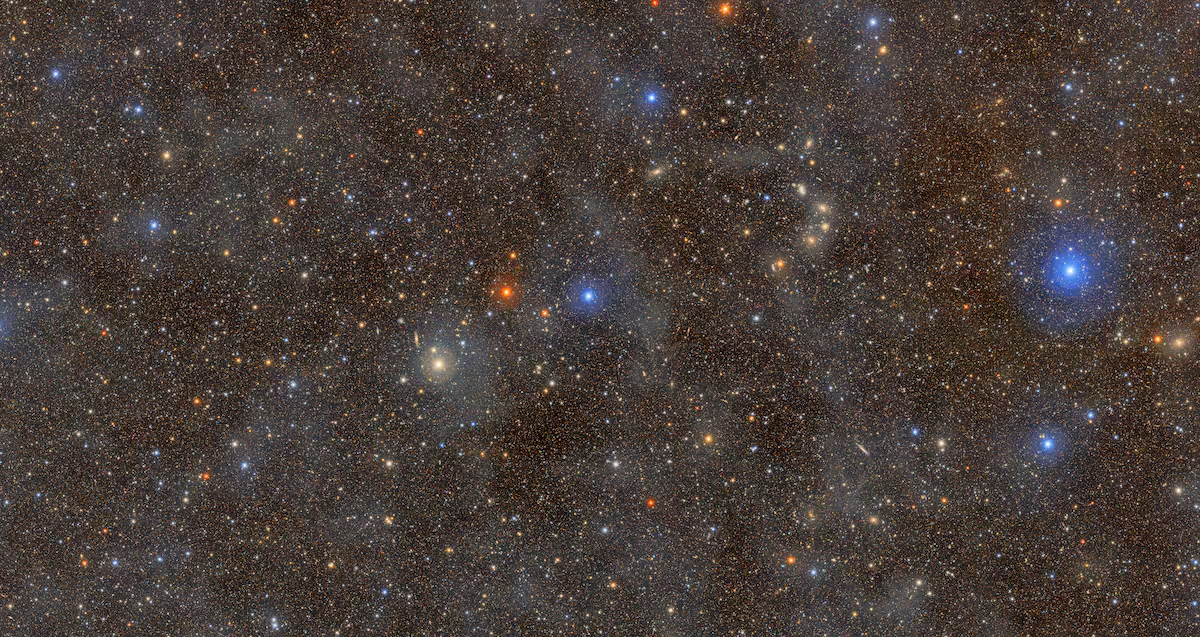
It is a basic fact in modern astrophysics that we don’t know what most of the universe is made of. The familiar objects around us that are made of matter and energy — people, planets, stars — account for only about 5 percent of what there is. The rest, the theory goes, is dark matter, which helps hold the universe together, and dark energy, which is thought to be responsible for the universe’s accelerating expansion. But what these invisible phenomena are made of is barely understood.
These are the questions the Vera C. Rubin Observatory hopes to illuminate with a decade-long survey of the universe that began Monday night. By taking a comprehensive time-lapse of the sky over the Southern Hemisphere, the telescope will create an open dataset of unprecedented scale and detail for astronomers — and for the public — to zoom in on for further investigation.