
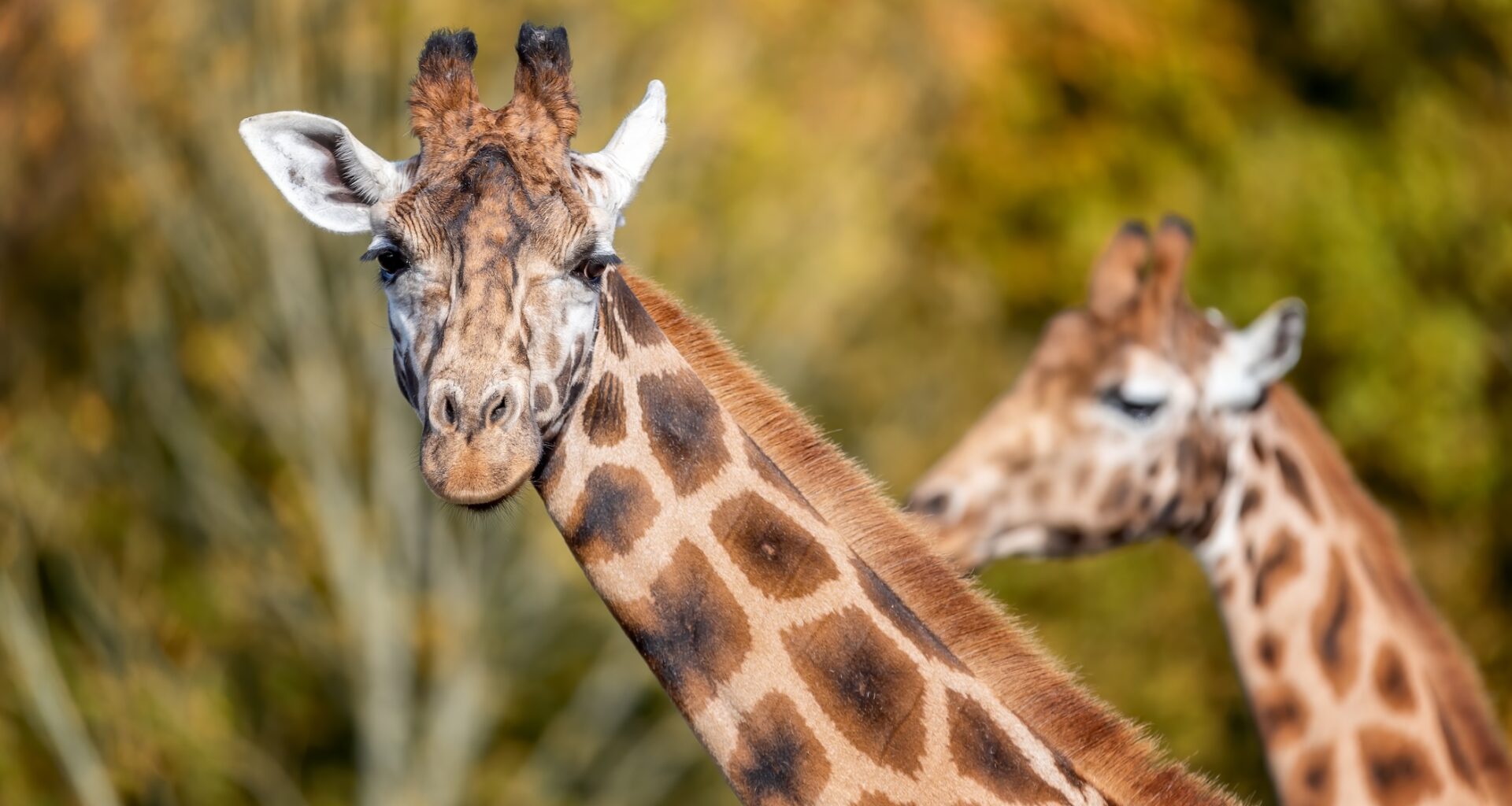
A new study has found that giraffes can carry out a simple kind of addition in their heads.
Four giraffes at a Spanish zoo watched carrots dropped into hidden piles of food they could no longer see, then reliably reached for the pile holding more.

That choice only makes sense if the animals were tracking the amounts and combining them in their minds.
The finding places giraffes among a small group of species, mostly primates and birds, known to add up quantities hidden from view.
This weakens the old idea that such number skills belong to humans and their nearest relatives.
Testing giraffe math
The experiment was done at the Barcelona Zoo. Iker Loidi, a researcher at the University of Barcelona (UB), set four giraffes in front of a low table holding three closed containers.
Giraffes belong to the ungulates – the hoofed mammals – a group no one had tested on this kind of hidden number task before.
Loidi set three tubs on a low table, two yellow and one green. The yellow pair held carrot pieces the giraffes had briefly seen; the green one held the carrots he would add. Each tub opened only toward Loidi, so once the lids came down the animals could not see inside.
He opened the two yellow tubs for five seconds, then closed them. Next, he tipped one to three carrots from the green tub into a single yellow one, piece by piece. He touched both yellow tubs briefly so neither stood out, then lifted them for the giraffe to choose.
The giraffes never saw the combined pile. To choose well, they had to hold both starting amounts in memory and update one of them as the carrots dropped in.
That hidden result was the whole point of the design, since a giraffe still able to see the food might simply compare what sat in front of it.
Addition comes easily
In the adding task, all four giraffes chose the larger pile more often than chance would predict, landing on the right tub about two-thirds of the time.
The results showed the giraffes were not simply guessing. They managed this while combining up to three carrots into piles that reached five, a range that matches what some monkeys manage under similar tests.
The picture changed when the task ran in reverse. When Loidi removed carrots from a pile instead of adding them – the equivalent of subtraction – the giraffes did no better than a coin flip. They also failed a harder version in which carrots were taken from one pile and moved into the other.
That split lines up with how numbers work in people. Subtraction tends to be harder than addition. It also shows up later as children learn to count. It leans on brain regions tied to slow, deliberate thought rather than quick automatic processing.
“These results are consistent with what we observe in humans: there are individual differences in numerical problem-solving and, in general, subtraction is more difficult than addition,” said Loidi.
Curiously, newborn chicks have passed the very transfer task that stumped the giraffes. An earlier study linked this to their need to track siblings clustered around the mother.
Testing real addition
A skeptic might ask whether the giraffes were adding at all, or just following a hand. The team built its analysis to catch this shortcut.
An animal could score well simply by picking the tub Loidi had last touched in the adding trials – or avoiding it in the removing trials.
Two of the four giraffes – Nakuru and Yalinga – succeeded only in the trials that the touching trick could explain.
The other two, Nuru and Njano, kept choosing correctly even when following the touched tub would have led them to the wrong choice. That suggests real mental computation in at least those two animals.
Nuru also stood out in another way. She has excelled in earlier giraffe number experiments, including one study showing the animals pick the larger of two food piles in line with a basic law of perception.
Individual differences like these turn up across primates, dogs and other animals tested on quantity.
Why giraffes might count
Number skills of this sort probably did not evolve so giraffes could solve carrot puzzles.
In the wild, giraffes live in loose herds that split apart and regroup, and they browse on scattered trees, especially acacias dotted across the savanna. Keeping rough track of how many and how much may help them feed and stay safe.
The scattered diet, in particular, could reward an animal that estimates where food is and in what amount.
Guesswork costs energy. Earlier work already showed giraffes making choices based on which option most often delivered a favored treat – a kind of rough statistical reasoning reported in a 2023 paper.
Beyond one species
What the work adds is concrete. Until now, giraffes were known to compare amounts they could see.
This experiment shows at least two of the giraffes can combine quantities hidden from view, without leaning on a simple cue.
“These findings help challenge an overly anthropocentric view of cognition and highlight the importance of studying a wider diversity of groups and species,” said Loidi.
The next steps are to test more animals and tease apart whether giraffes track the number of items or their total bulk, which would reveal how far this number sense reaches.
The study is published in Scientific Reports.
—–
Like what you read? Subscribe to our newsletter for engaging articles, exclusive content, and the latest updates.
Check us out on EarthSnap, a free app brought to you by Eric Ralls and Earth.com.
—–