
It also features a new offence for anyone who had the intent to injure a first responder or Corrections officer, with a maximum punishment of up to seven years in prison.
The coalition agreement between National and NZ First included the introduction of bespoke legislation with a specific offence for assaulting first responders and prison officers. The agreement item also stated that the punishment would include “minimum mandatory prison sentences”.
However, the current bill does not enforce minimum mandatory sentences.
It includes an offence for unexpected blows to the head or neck, commonly known as coward punches. Should a coward punch result in a death, it could lead to a manslaughter conviction and, if not, imprisonment of up to 15 years.
Like the first responders item, the coalition agreement included a commitment for new legislation that housed a specific offence for coward punches. However, the item did not reference minimum mandatory sentences.
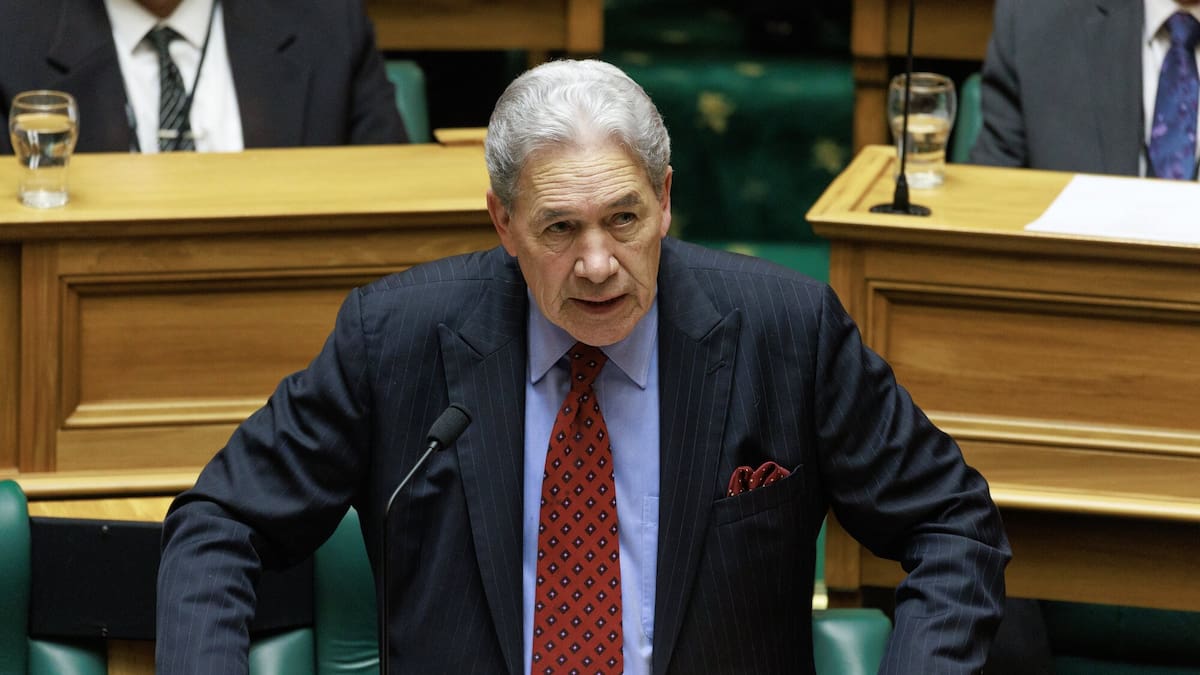
Winston Peters will likely campaign on harsher penalties. Photo / Mark Mitchell
Peters told the Herald he was “seriously disappointed”, given NZ First’s “long-standing policy” of introducing minimum mandatory sentences.
“This new law creates a new offence but doesn’t deal with the concern of the weak sentences being handed out,” Peters said.
“Without serious sentencing changes, it makes this new coward punch law tantamount to pointless window dressing.”
Peters’ calls for further reform were somewhat reflected by members of the justice select committee after they had received public submissions on the bill. Their commentary on the bill noted that Parliament’s Office of the Clerk had advised that amending the Sentencing Act 2002 was necessary to implement mandatory minimum sentences, but that fell “outside the legislative scope” of the Crimes Amendment Bill.
NZ First could have blocked the bill by not supporting it through the House and opted to reform the Sentencing Act. However, that wouldn’t be possible before this year’s election.
Select committee members also noted concerns from submitters that the coward punch offence would be “unlikely to be prosecuted because it would be harder to prove than the existing manslaughter offence and could create confusion and add complexity”.
“Some of us share their concerns about the risk that juries might be unable to reach a majority verdict, undermining the ability to get convictions.”
As such, some members recommended the manslaughter offence be removed. Peters claimed his party had fought to retain it.
“We are seriously frustrated and disappointed about these aspects of the watered-down law changes and will be tabling amendments in the House to address this.
“We will be campaigning in the election on these changes if they are not made.
“Those parties who use ‘tough on crime’ as a soundbite don’t cut it if they don’t back it up.”
Adam Pearse is the Deputy Political Editor and part of the NZ Herald’s Press Gallery team based at Parliament in Wellington. He has worked for NZME since 2018, reporting for the Northern Advocate in Whangārei and the Herald in Auckland.