
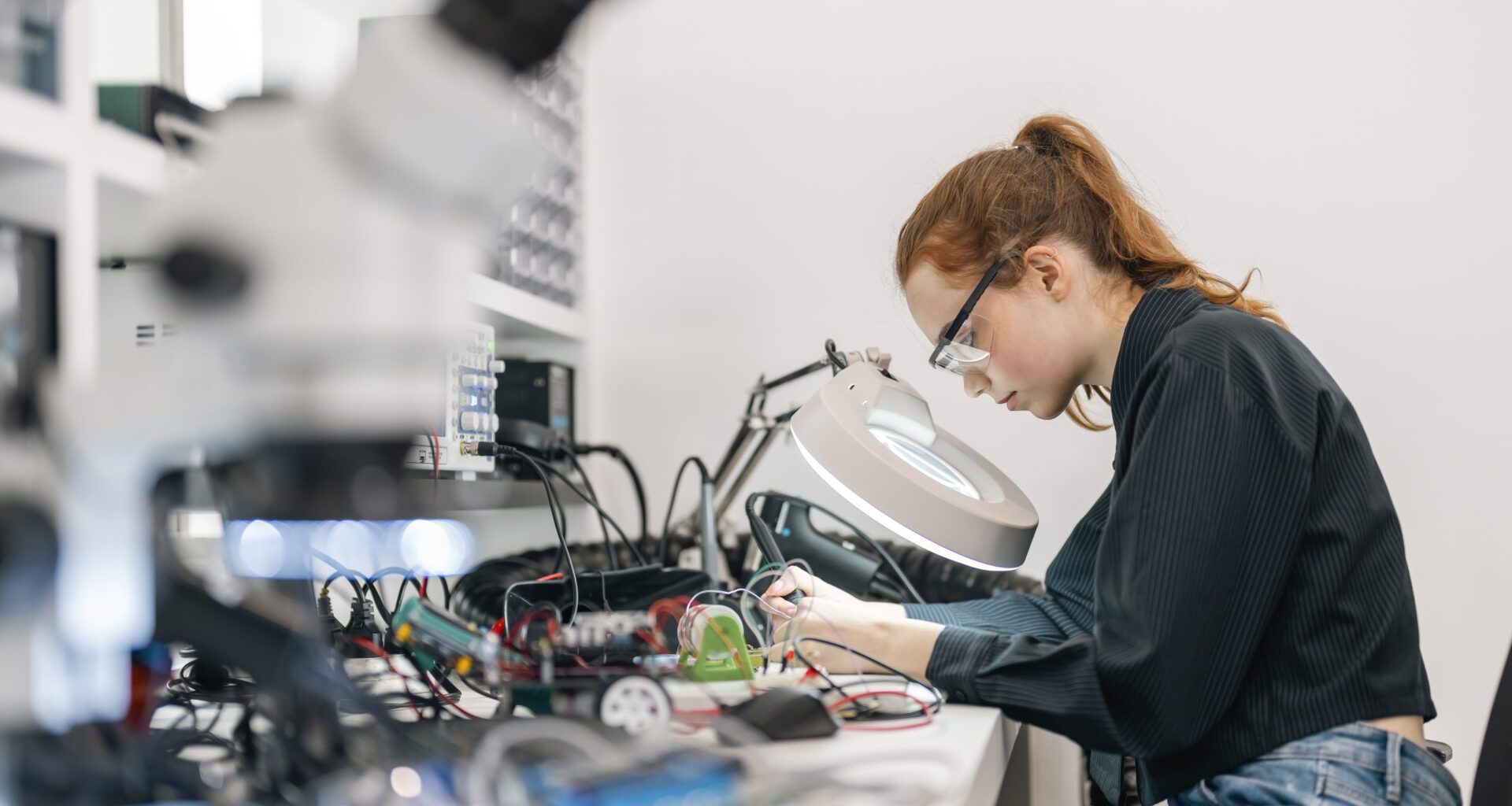
Reinstating funding for polytechnics would support not just “bigger, shiny research and science projects” but also economic development opportunities in the regions, the Opportunity Party says.
It also plans to incentivise the New Zealanders leaving for overseas opportunities in droves to return home after gaining valuable experience by wiping three years of interest incurred on their student loan during their time away.
Opportunity released its new economic policy last week, focused on reinstating funding for research and polytechnics, investing in small businesses, and giving more powers to the Commerce Commission to increase market competition.
But while some have touted the policy’s direction, tackling key issues in the New Zealand economy, an economics professor has labelled it “incoherent”, concerned it is one of many being pumped out by minority parties, targeting small groups of New Zealanders for votes rather than real investment for the median voter.
A welcome investment for cash-strapped polytechs
Tertiary Education Union national secretary Amy Ross said the reinstatement of an $80 million funding cut from polytechnics was a step in the right direction, but the devil would be in the details.
The disestablishment of megapolytechnic Te Pūkenga, initiated by the coalition Government, led to the tightening of belts for individual polytechnics to become financially viable and remain open as standalone entities, resulting in significant job losses and courses being cut across the motu.
Ross said the sector had lost one in five people since 2022, with the number of tutors and senior tutors dropping 25 percent in three years.
Polytechnics were integral to regional areas and a closure would mean the loss of a central community hub of education in the local community, she said.
“In the regions, having local community-based education keeps those communities alive and is a vibrant hub of those communities.”
 Opportunity Party leader Qiulae Wong is optimistic its new economic policy will resonate with Labour and National. Photo: Opportunity social media
Opportunity leader Qiulae Wong said it was best placed to understand the needs of the businesses in the region.
“A lot of our policy is focused on the bigger shiny research and science projects but we also recognise that smaller businesses in regions also need support and it’s not always about cutting-edge science.”
As councils considered amalgamation, polytechnics and economic development agencies could fill the gap “in a hyper local sense”, Wong said.
Ross said the biggest need was the investment in more staff, more teachers and more support structures for students. She was cautiously optimistic to find out more detail on how the $80m funding would be allocated.
Constant underfunding of the sector meant there was little job stability – both for staff and courses.
“I was talking to a member the other day who said that there are 17 people in her polytech who have been on fixed terms for longer than 10 years, and that is a sign of a sector in crisis where you can’t have permanent employment.”
‘Incoherent’ policy – economics professor
However, Auckland University professor of economics Robert MacCulloch questioned the policy’s sole focus on polytechnics when universities in other tech-driven countries played a key role in innovation.
“They seem to want to build up these sort of tech clusters, well, in the United Kingdom, that’s built around Cambridge University – they’ve got a Silicon Valley around Cambridge, driven by the science expertise of Cambridge being one of the world’s top universities in science; there’s a cluster of biotech and things around Oxford; in California around Stanford; there’s none of that there.”
 Auckland University professor of economics Robert MacCulloch said the Opportunity Party’s new policy was ‘incoherent’. Photo: University of Auckland
MacCulloch did not believe scrapping interest rates on student loans would entice Kiwis living overseas, some of whom were earning seven-figure salaries at the likes of Google and Microsoft.
“I thought overall it’s an incoherent document, they talk about somehow transforming us into a high-tech economy. The tech that we’re using, in terms of say the transformation of artificial intelligence, is entirely being driven overseas. It’s not being driven by anything that is happening here, and Opportunity won’t change that.”
MacCulloch accused parties of operating like businesses and targeting only a certain group of customers, knowing they had no chance of securing majority support.
Political parties, all polling between 5 and 30 percent, were putting out “hundreds of pages of policies, and nearly none of them will be implemented”, he said.
“I think the game is, ‘Look, provided 20 percent of the country are on board with our view, that’s all we care about, because you know, then we’ll be in Parliament and we’ll be very influential’.”
‘Strong policy’ but no way to fund it
Max Rashbrooke, senior research fellow at Victoria University of Wellington’s school of government, said the policy focused on big problems in Aotearoa’s economy, and he supported lifting investment in research and development.
Opportunity has pledged to re-commit to the previous Labour government’s target – scrapped by the coalition – to spend 2 percent of GDP on research and development within the next decade, but with a long-term objective to reach 3 percent by 2050.
However, Rashbrooke questioned the way in which the policy would be funded.
Wong said the $1.33 billion price tag associated with the economic policy would be paid for by its tax policy, which was calculated to result in a surplus of $4b.
Rashbrooke questioned whether the party could secure support for a universal basic income – a key part of its tax policy – given it was “extraordinarily expensive” and required an “extraordinarily large amount of tax”.
 Max Rashbrooke, senior research fellow at Victoria University of Wellington’s school of government, said the policy targeted key economic issues in Aotearoa but questioned the way in which it would be funded. Photo: Hagen Hopkins/Max Rashbrooke’s website
A blanket sum of $20,000 would go to every New Zealander, regardless of their income level – which he deemed unnecessary for the country’s millionaires and insufficient to make the country’s poorest any better off.
He was also unsure how the party proposed to pay for huge amounts of investment needed across health, education, social housing and conservation.
Opportunity hopeful for political support
Wong was hopeful – though perhaps optimistic – the new policy would strike a chord with both Labour and National.
“We want higher growth, higher productivity, which means better wages and better jobs and better living standards for New Zealanders, and so Labour and National should see that as a priority.”
Wong, having spent nearly a decade in London herself, saw value in New Zealanders venturing overseas and gaining experience and skills – provided they returned to our shores and contributed to the economy.
“It’s becoming harder and harder to attract them back when our economy is not doing so well so anything that we can do to incentivise that is a good thing,” Wong said.
“The trade-off of writing off that interest we think will more than pay itself back in skills and experience of people coming home.”
Wiping off up to three years of interest incurred on New Zealanders’ student loan debt while overseas was estimated to cost $95m.
Separately, the party would restore funding to core sciences and ensure future contestable research funds included the humanities and social sciences, as well as funding early- and mid-career researchers at a cost of $400m.
It will also allow claiming back as a tax credit up to 25 percent of the cost of rolling out high-tech solutions, like AI and digital platforms, new plant and machinery and networked or autonomous equipment at a cost of $600m.
If a tax reset wasn’t on the cards with a potential coalition partner, its economic policy would be the priority, Wong said.
“It’s really important that we invest to grow in New Zealand, we can’t just rely on continuing to cut services and budgets and expect that we will have the kind of growth that will turbocharge the economy for the next few decades.
“We do need to prioritise some investments, and we think that these are really important for New Zealand to set ourselves up for success.”