
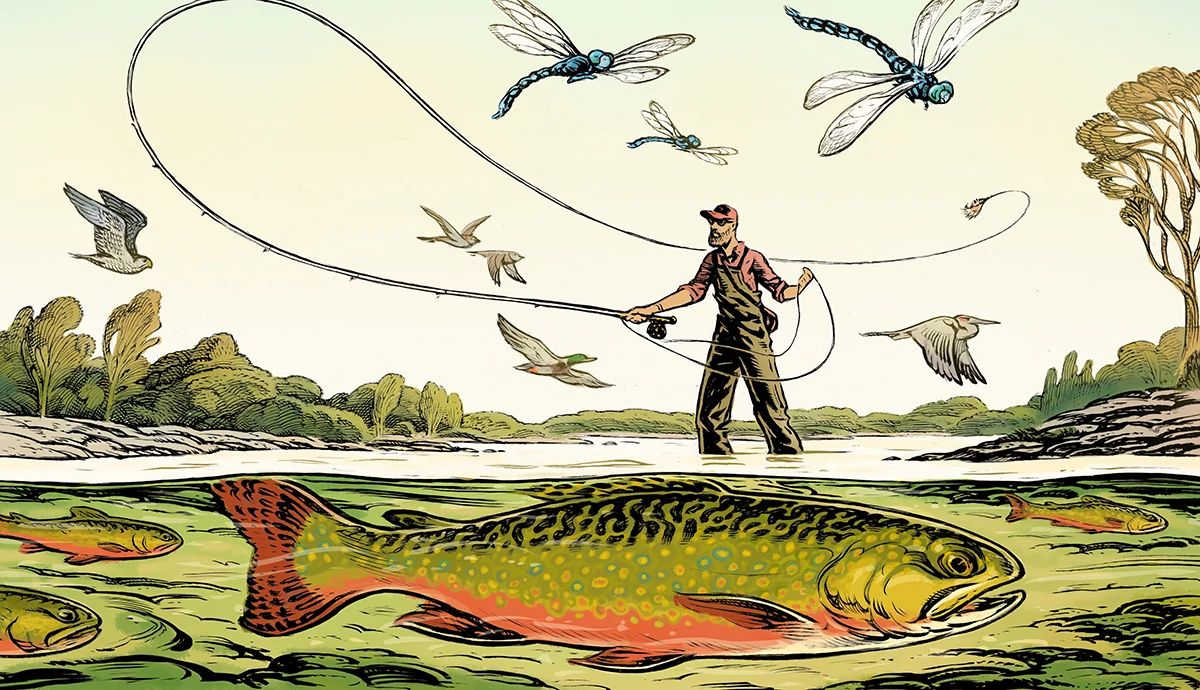
As the fly drifts with the current, I must make very subtle changes, called mends, on the water, making sure there are no unnatural movements that might spook a fish. At the end of the drift, if I don’t have a trout or steelhead hooked, I continue to work the water, casting farther out or looking for a different pool, repeating the process all over again. I’m completely engaged in every moment on the water. There’s no time to dwell on work stress, political malfeasance or family drama. There’s only me, the water, and oh yeah, the fish.
Hooking a fish causes intense euphoria and excitement; it doesn’t matter if I’ve caught one, 10 or 100 on the day. If it’s a small fish, I can often just bring in the line immediately, but larger, stronger fish may require letting out some line as it attempts to flee. The goal is to let it tire itself out before finally reeling in the line and netting it.
In essence, it’s a lot like a chess match, one that all too often is won by the fish. A million things can happen for the fish to escape. A pike can bite off the line. A salmon or steelhead will leap into the air, creating enough slack to loosen the hook. Trout or small tarpon will head toward a fallen tree in the water, where the line can get tangled in the branches and break.
At the end of a day of fishing, I almost always feel more mentally refreshed, even if I don’t catch anything. (Though it’s even better if I do.)
I’m not the only person who has found solace in waders. Several organizations such as Project Healing Waters and Casting for Recovery teach veterans and breast-cancer survivors, respectively, the basics of fly-fishing and take them to trout streams near and far. Tamar Martin, a New York City–based psychologist, coauthored a paper about the mental health benefits of fly-fishing for veterans and military personnel with disabilities. When learning to fly-fish herself in 2003, she immediately realized its therapeutic benefits.