
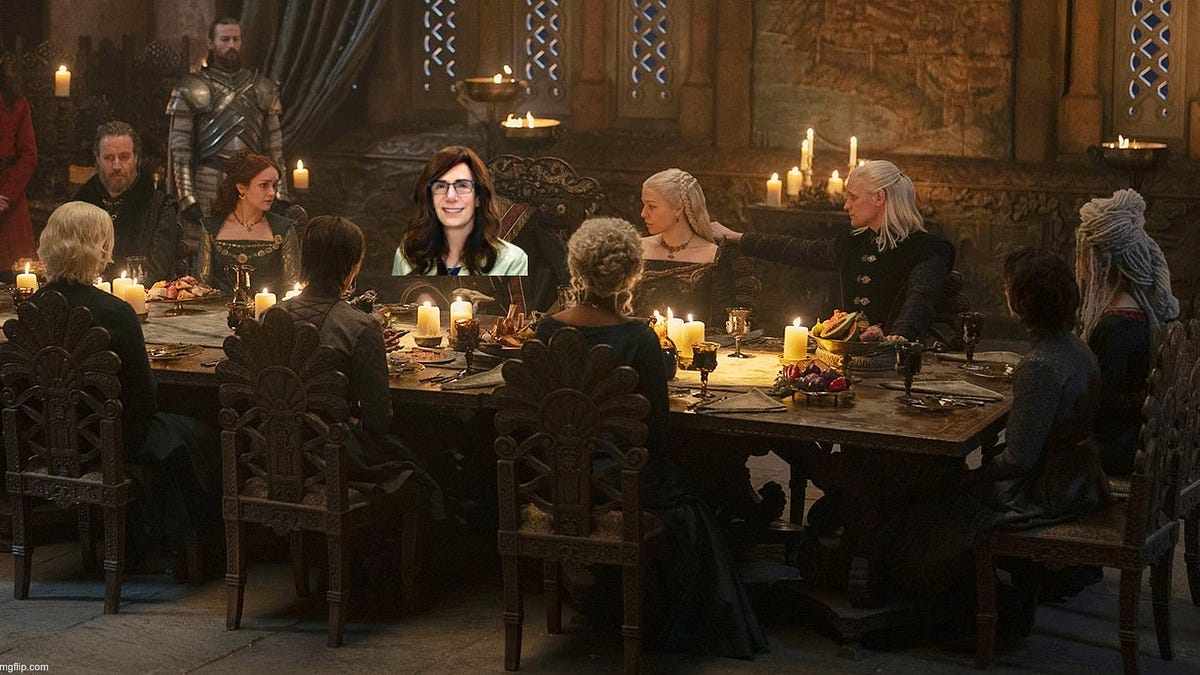
We as a culture seem to universally enjoy the theater and intrigue of dynasty and the handoff of power. Game of Thrones, Succession, Yellowstone or even the reality television that is the British monarchy – the machinations and backstabbing of the ruling class for some reason grip our imaginations. This fascination manifests in the corporate world too, from the will-they-won’t-they of an aging CEO’s exit to the boardroom coups that end them. But until now, healthcare’s largest technology giant has stayed out of the genre entirely. While their land campaigns against rivals and chess moves of court have provided some entertainment, the throne itself has never been in question. Judy has always been Judy, and the line of succession was settled, not open sport.

But now Verona’s Queen Elizabeth has her Prince Harry. On Friday, July 3, Sumit Rana emailed Epic’s roughly 14,000 staff to say he would step away on August 14. The stated reason is family – his father died last November, his mother lives in India, and he wants more time with his wife and kids. He signed off telling everyone to keep doing what Epic does best: Do Good, Have Fun, Make Money.
This is somewhat atypical for Epic. When employees leave, it’s a bit of a faux pas to send an all-Epic farewell, and the ones that slip out often get revoked from inboxes shortly after. But Sumit’s not only stood, Epic itself pushed the full text to the press with a spokesperson statement and a same-day interview at Healthcare IT Today. Sumit is clearly not just anyone.
At almost any other company this is a nothing-burger. A well-liked executive leaves after nearly three decades to take care of his mother. At Epic it is the most consequential personnel event in years, because Rana was the standing answer to the one question every customer, competitor, and regulator has been circling for a decade: who runs Epic after Judy?
To understand why a single resignation email produced this much speculation, you have to realize that Epic’s succession plan is the least person-centric of any you’ll encounter. It is a process, a procedure, a doctrine designed to outlast any individual. It is equal parts monument to Judy and artifact of the culture she built. So let’s build up to the theories the right way.
 Ruthless empire builders for 500, Trebek
Epic’s independence rests on a legal structure Faulkner has spent years describing in public, most recently at the Forbes Healthcare Summit in December.
Independence, for Epic, means staying private in perpetuity, free of shareholders and quarterly earnings pressure. That freedom is what lets the company plan on 20-to-50-year horizons and skip formal budgets entirely, and protecting it after Judy is the point of the machinery below.
The mechanics, as she’s laid them out: her voting shares (she holds all of them) transfer on her death into a trust governed by her husband, her three children, and five longtime senior Epic managers. The estate plan’s voting rules prohibit two things forever:
You cannot vote to go public.
You cannot vote to be acquired.
These are the first two of Epic’s informal Ten Commandments, the ones that famously hang in a campus bathroom.
She added a newer wrinkle in December: three health-system CEOs she calls the “trust protectors,” whose job is to sue anyone who breaks the voting rules. She declined to name them. So the structure is belt, suspenders, and a second pair of suspenders held by customers with standing to litigate.
On top of the ownership lock sits a cultural rule about the chair itself. Faulkner has said repeatedly that the next CEO must be a long-tenured Epic employee and a software developer by background. That single requirement is the most important analytical tool you have for ranking any successor list, and most of the LinkedIn commentariat keeps forgetting it.

The throne has had presumptive occupants before, and Epic has a habit of losing them.
Once it was Andy Geisler, seen as the one to carry the culture forward, who left in the late 2000s and now authors books. For a long stretch the number two was Carl Dvorak, though most read him as someone who would retire before Judy rather than succeed her (Carl is now best remembered in the community for a certain airplane incident, which is a somewhat sad story)
Then came Sumit. He was not subtle about it and neither was Epic. Watch the last few UGM openings and the choreography is obvious: Judy handles the history, Sumit handles Future Vision. I wrote up the odds on Epic’s next leader back in March 2025 in “Speaking Judy-ese,” then had to slap an EDIT on the top when I was reminded by a variety of people that Sumit had effectively already been anointed.
Betting is now, very much, reopened.
Should we have seen this coming? Perhaps it was possible. STAT’s August 2025 profile reads very differently knowing what we know today. Sitting in a ski-lodge conference room during UGM, Rana laid out a leadership doctrine that amounts to a blueprint for his own departure.