
OKLAHOMA CITY –
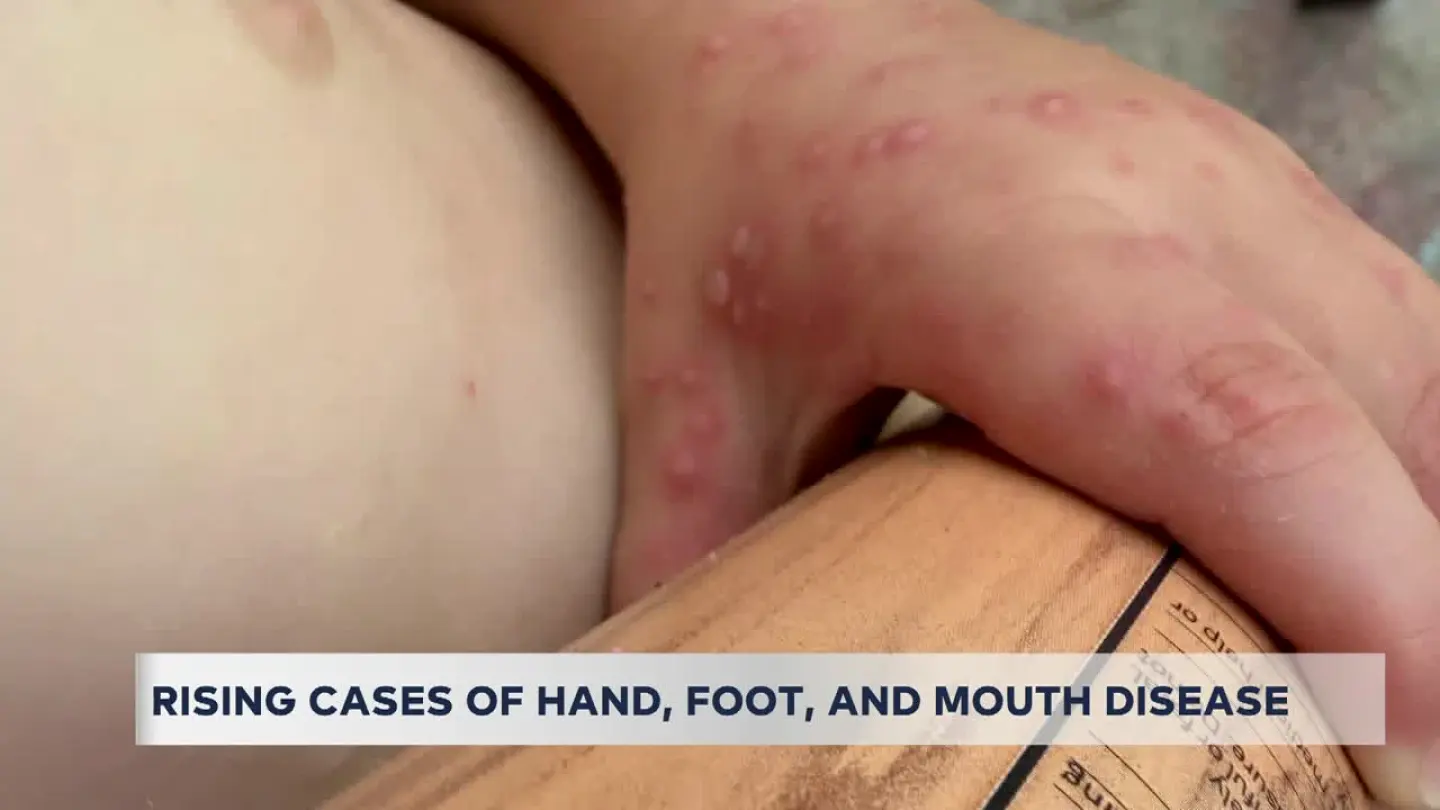
Oklahoma Children’s Hospital OU Health told News 9 on Friday that it is seeing a rise in cases of hand, foot and mouth disease this summer, averaging anywhere from 10-20 patients each weekend.
What is hand, foot and mouth disease (HFMD)?
OU Health Science states that HFMD is a viral infection common in babies and children younger than 5 years old. Older children can also get the disease, as well as adults in some cases. It is caused by the coxsackievirus A16 most of the time, with some infections cause by other viruses in the same family as coxsackievirus.
HFMD causes mouth sores, which can be painful, as well as a painless rash on hands, feet or buttocks. It is highly contagious and can easily spread from person to person. HFMD can be mistaken for strep throat because both conditions exhibit similar symptoms. While uncomfortable, HFMD is not usually a serious problem. Most of the time, it can be treated at home.
How is HFMD spread?
Breathing infected air through coughing, sneezing or talking.Contact with contaminated items, which can occur when an infected person doesn’t wash their hands after using the bathroom or changing a diaper.Contact with fluid from the blisters, although this type of transmission is rare.
What are the symptoms of HFMD?
A rash of small, red bumps or blisters on the hands, feet, or buttocks.Mouth sores that often occur on the gums, tongue, inside the cheeks, and in the back of the throat.A sore throat.A rash over the rest of the body.A fever.Loss of appetite.Pain when swallowing.Drooling.
HFMD can be diagnosed from the appearance of the rash and mouth sores. There may be tests needed to rule out infection.
There is no treatment for HFMD, but it can be managed. HFMD lasts about 7 to 10 days and the infected person is no longer contagious 24 hours after the fever is gone, per OU Health Science Center.
In the event of mouth pain, ibuprofen or acetaminophen can be administered to the infected person. If a medical professional prescribes another medication, that is the treatment that should be used. Do not give ibuprofen to a baby younger than 6 months. Do not give aspirin to children or teens unless a medical professional says it is safe to do so.
The infected person should stay hydrated, by consuming a soft diet and a lot of fluids. Cool fluids and frozen treats may be soothing and easier to consume. Avoid citrus as it may aggravate the mouth sores.
Contact a medical professional if the infected individual exhibits the following symptoms.
A mouth sore that doesn’t go away within 14 days.Increased mouth pain.Trouble swallowing.Neck pain.Chest pain.Trouble breathing.Weakness.A lack of energy.Signs of an infection around the rash or mouth sores, such as pus, fluid leaking, or swelling.Signs of too much fluid loss, such as very dark or little urine, excessive thirst, dry mouth, dizziness.A fever that lasts longer than 3 days.A seizure.
How can HFMD be prevented?
HFMD is highly contagious, so it is important to be mindful of the spread of infection. OU Health Science Center advises the following to control the disease.
Wash your hands well with soap and clean, running water for at least 20 seconds before eating or handling food, after using the bathroom and after touching a rash.Clean and disinfect frequently touched surfaces and shared items, such as doorknobs or toys.Don’t share cups, utensils or napkins. Do not share personal items that contact sores or rashes.Do not hug or kiss someone who has HFMD.Consult a medical professional about how long the infected person must refrain from being around other people. As HFMD is normally mild, most kids can go to daycare or school as long as there is no fever or uncontrolled drooling and they feel well enough to participate, but always check daycare or school guidelines.
In the case of a medical emergency, always call 911.
If there is a medical event that is not an emergency, see a medical professional.