
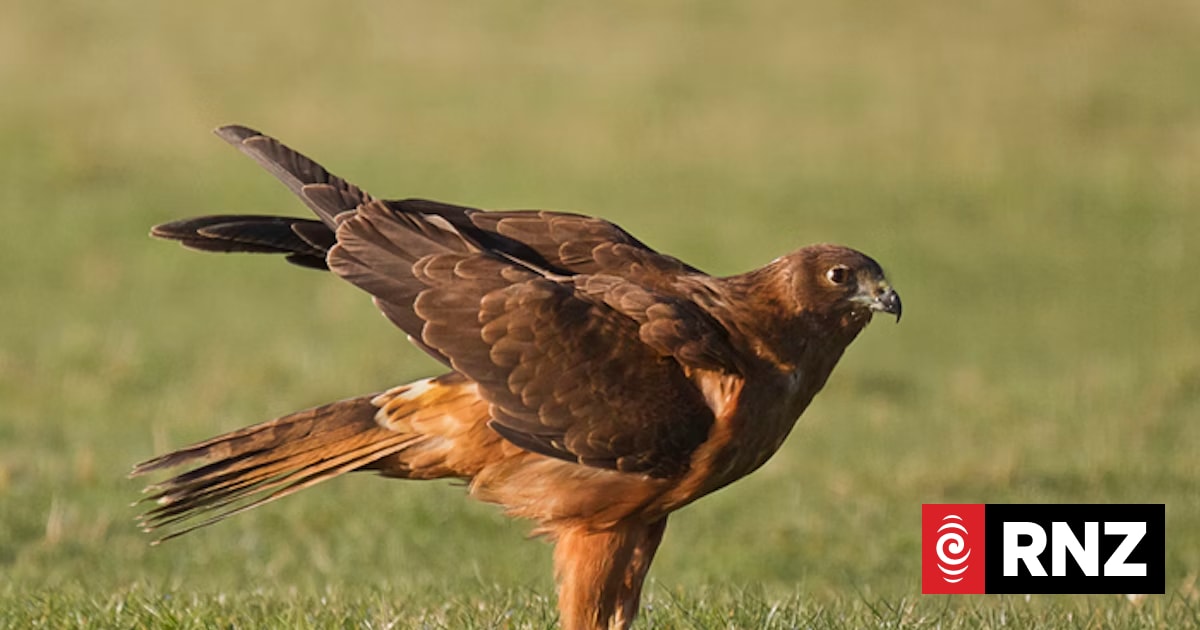
Native bird confirmed as second case of deadly bird flu
Checkpoint
A second bird found near Carterton in Wairarapa and taken to a Palmerston North wildlife hospital has been confirmed to have H5 bird flu.
Biosecurity Minister Andrew Hoggard says it’s disappointing, but not unexpected, following the confirmation of a first case found at Petone Beach, near Wellington, earlier this week.
The native kāhu – or swamp harrier hawk – could have been infected by “hunting, eating or scavenging infected birds”, said Hoggard.
He said there had been no detection in poultry.
“The find shows our continuous bird flu surveillance and testing programme is working well, and as a result, we will step up our actions in response to bird flu in close co-ordination with our industry partners and others.”
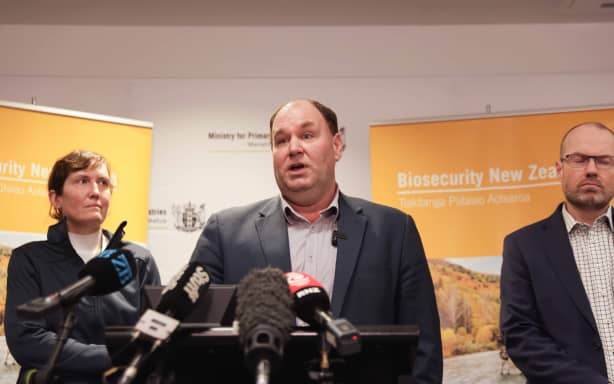
Biosecurity Minister Andrew Hoggard.
RNZ / Samuel Rillstone
Hoggard said the hawk could travel off the coast, especially in winter, to hunt.
“Hawks can get bird flu by hunting, eating or scavenging infected birds,” he said.
“I remind New Zealanders to be alert, and follow advice about reporting sick or dead birds. It is vital that people do not touch or handle unwell birds.”
On poultry, Hoggard said he supported free range farmers protecting their birds by temporarily housing them, but said that was a decision for individual businesses.
“We will have to learn to live with bird flu, as it cannot be eradicated and overseas experience shows strong biosecurity measures on-farm help.”
He said chicken and eggs remained safe to eat, and bird flu was a “very low risk to human health”.
Hoggard said extra checking of birds at selected sites in Wairarapa would take place over the coming days, in addition to one-on-one support for poultry and egg operations in Wellington and Wairarapa.
Technical advisory group would also be established.
Hoggard said the Department of Conservation (DOC) was continuing its vaccination programme for 300 core breeding birds.
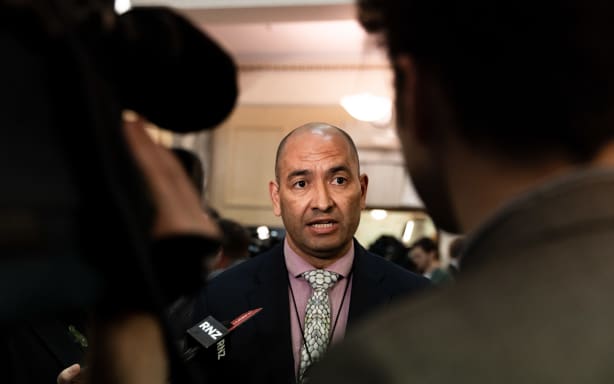
Conservation Minister Tama Potaka.
RNZ / Samuel Rillstone
Pragmatic and practical
Conservation Minister Tama Potaka said DOC had been preparing for the arrival of bird flu for several years and, so far, 67 birds had received their first vaccination.
He said, as of Thursday night, the Ministry for Primary Industries chief veterinary officer had approved the second tranche of the vaccination response.
“This approval gives DOC the ability to extend vaccination to further priority species and populations where it will provide the greatest protection.
Native bird confirmed as second case of deadly bird flu
Checkpoint
“A final list of species has deliberately not been fixed.”
Potaka told RNZ’s Checkpoint that the vaccination programme began with captive birds, because it required two doses.
“Wild birds are a little bit harder to catch and you have to catch them twice to vaccinate, which can add additional stress to those birds,” he said. “We’ll start with these captive birds, many of them known to New Zealanders.
“I expect there will be other species added, but let’s get started with these that are highly endangered.”
The Department of Conservation indicated it may need additional funding to carry out a comprehensive programme, but Potaka would not speculate on the cost.
“I expect the DOC team to continue on the plan they’ve been working on for a couple of years and there may be need for further funding, but right now, we’re taking pragmatic and practical steps, and as minister, I take these matters very serious,” he said.
“I anticipate there will demand on various resources, but that’s why we work with groups throughout the country, with stakeholders and others to make sure we remain pragmatic and practical around those matters.
“We have significant allocations to conservation on arranged matters, and I expect that will be drawn on in order to manage the response and to continue to activate the plan that we have.”
‘Not there yet’
Wairarapa MP Mike Butterick says a confirmed case of bird flu in his patch is disappointing, but felt inevitable.
Butterick said there was no reason to panic, but he wouldn’t want to see a case at nearby wildlife sanctuary Pūkaha Mount Bruce.
“I’m sure they will be taking advice from all the appropriate officials as to best course of action,” he said. “Should it come to pass, it would be devastating, but we’re not there yet.”
Butterick said he expected the handful of poultry farms in the region to ramp up biosecurity and encouraged reporting to MPI’s hotline.
Wobbly on its feet and dull
The bird was taken to the Wildbase Hospital at Massey University and was very weak, showing neurological signs.
Professor Brett Gartrell told Checkpoint the kāhu came in from the Carterton area.
“The vet team who were on thought it was a head trauma case initially, but it deteriorated and they put it to sleep about an hour after it arrived.”
He said the bird was wobbly on its feet and dull, instead of bright and responsive.
The hospital has now increased its biosecurity response, including setting up a triage centre away from the wildlife hospital.
There was a remote possibility the kāhu fed on an infected seabird, he said, but also a possibility of more cases being out there that weren’t detected. MPI surveillance should pick up these up.
“I think we’ll continue to see single cases for a while,” he said. “I’d hope so anyway, but once it starts to get into the water foul populations in particular, then we might start to see clusters of deaths.”
Gatrell said the public should look out for birds down on the ground, unable to fly and unaware of what’s going on.
A change in advice for poultry farmers
Egg Producers Federation executive director Fiona MacMillan told Checkpoint that the government’s and MPI’s advice to poultry farmers had now changed slightly.
“The words they’ve used are MPI supports free range farmers to take precautionary action to protect their birds by temporarily housing them, while they are gathering more information.”
Second case of deadly strain of bird flu confirmed
Checkpoint
Farmers will be considering that and whether they can house their chickens inside will depend on the type of farm, she said.
Farmers who use the barn-housing method will already have their chickens inside which provides a greater degree of protection from a disease such as this, she said.
A few small farms would find it very difficult to house their birds inside, she said.
But the majority of free range farms have birds that already come inside at night and it would be a lot easier for them to temporarily house those birds indoors, she said.
Of the 12 million chickens in New Zealand which produce meat and eggs, with roughly a third of the flock being free range, she said.
MacMillan said as soon as the federation heard the news they started considering how to inform everyone in the industry.
If there were to be a bird flu infection inside a commercial poultry flock it would raise the alert another notch, she said.
Poultry farmers needed to minimise who is coming onto their farms and should not wear there outside boots inside the poultry shed to try and minimise the chance of spreading the disease, she said.
Worries bird flu could wipe out species already on the brink
Checkpoint
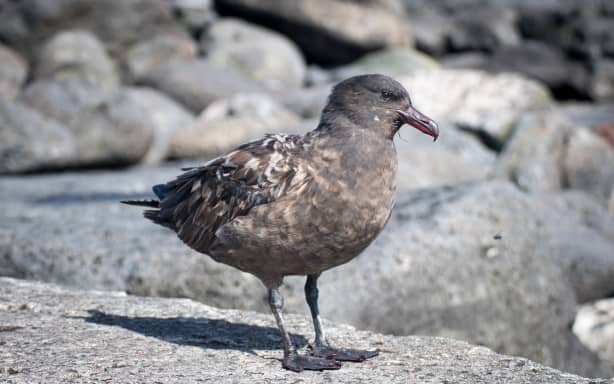
A brown skua.
Antoine Lamielle/Wikimedia Commons
What to do if you see sick birds
Biosecurity Minister Andrew Hoggard earlier said birds behaving strangely, or a number of birds who had died together, would be the main signs to watch out for.
“Take photos, get a GPS spot if you can, send it through to us, that’s the information we need. Obviously don’t go and pick it up yourself. Let us know and we’ll send the right people around to do it.
“If you are a poultry farmer and you have concerns, obviously talk to your vet and they’ll talk to us. Even if you’ve just got a few chickens in the back yard and you’re concerned, talk to your vet.”
Officials said anyone who sees three or more sick or dead wild birds in a group should report it immediately to the exotic pest and disease hotline on 0800 80 99 66.