
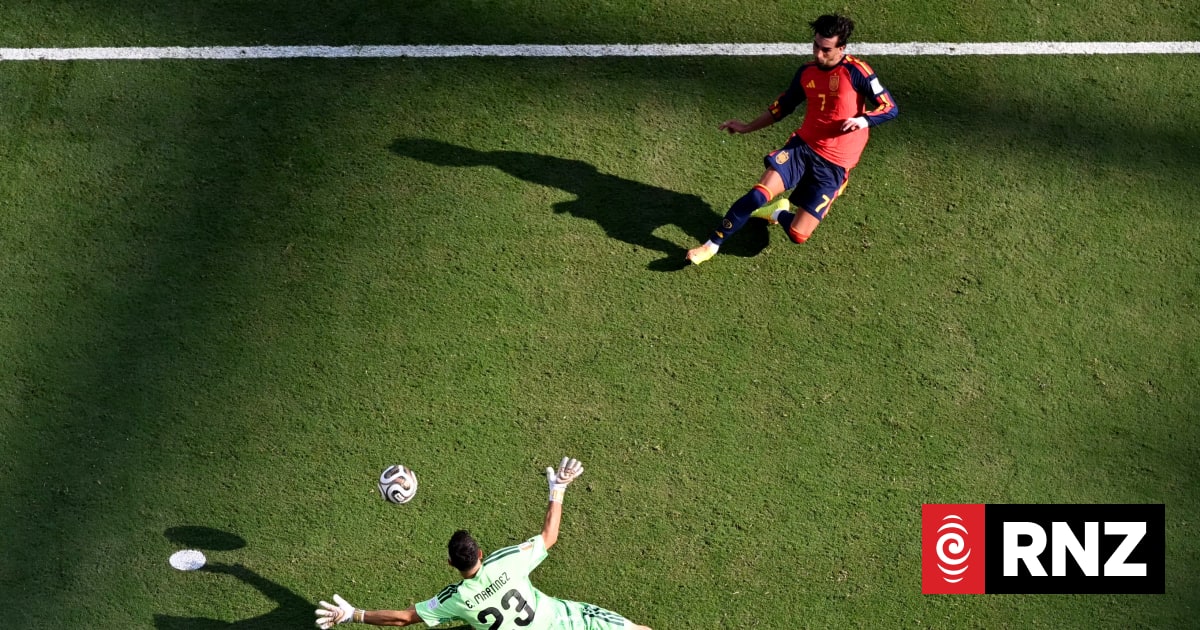
During extra time, it looked as though Ferran Torres had scored a goal that would have brought Spain’s lead to two and sealed a victory.
It was the second goal disallowed for Spain, this time for offside.
So what is the offside rule?
It’s an infamous question asked by millions of football newbies every tournament.
If you’ve jumped on the World Cup bandwagon and found yourself trying to wrap your head around this section of the rule book, we’re here to help.
Here’s a quick breakdown of the rule.
The offside rule aims to prevent players from lingering next to the opponent’s net to wait for a pass.
It forces teams to build up play carefully and use complex tactics to score goals.
Without the rule, teams would be incentivised to constantly launch long balls, making the game less dynamic.
If a player is called for an offside offence, the referee will stop the play and award an indirect free kick to the opposing team.
The free kick is taken from the spot where the offside player had been located when their teammate passed them the ball.
A player is in an offside position if:
However, an offside player is only penalised if they become involved in play.
And there’s no offside offence if a player receives the ball directly from an opposition player, a goal kick, a throw-in or a corner kick.