
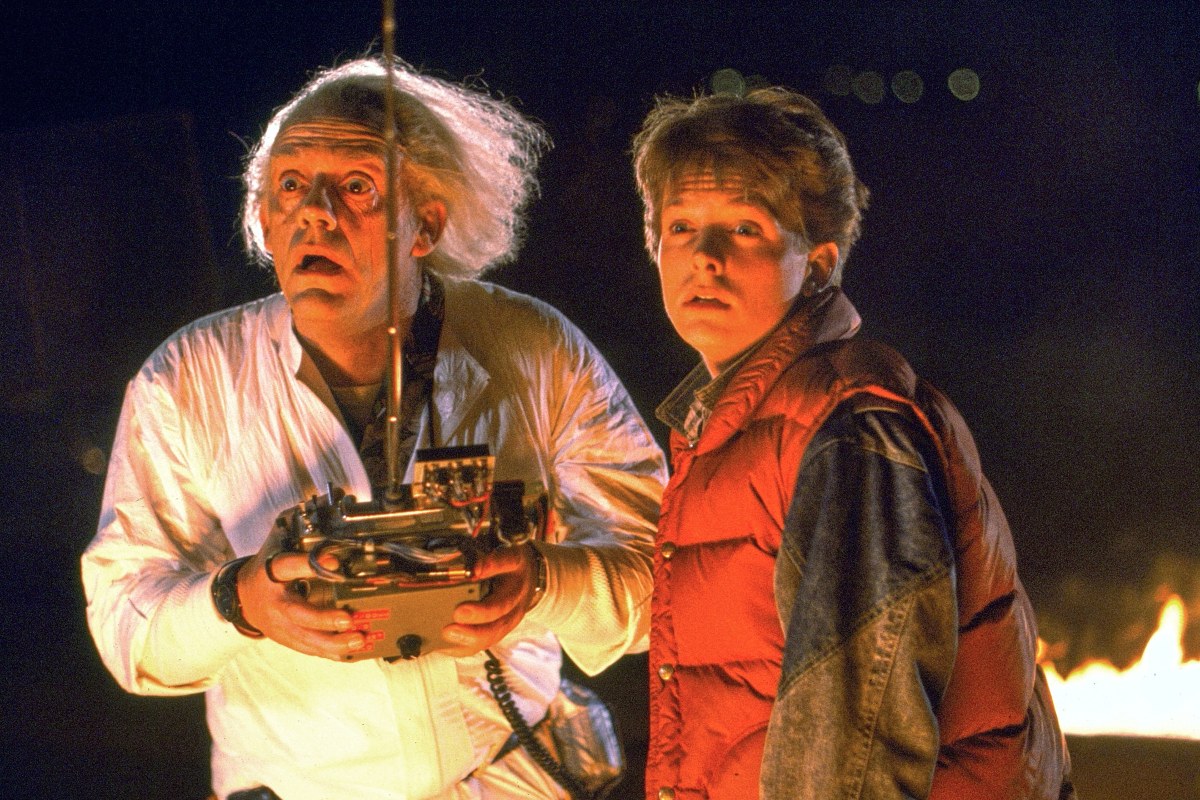
In his new memoir “Future Boy,” Michael J. Fox recounts secretly juggling two productions in 1985, picked up each morning for “Family Ties” and driven to the “Back to the Future” set once the sitcom wrapped around 5 p.m. The overlap stretched roughly two to four months and left Fox running on about three hours of sleep a night, an endurance test he says explains why he was cast so late, after Eric Stoltz had already spent six weeks in the role.
Every evening around six, a car idled outside the “Family Ties” set, waiting to whisk a 23-year-old Michael J. Fox to another job he wasn’t supposed to be doing yet. He’d leave one soundstage as the sitcom’s beloved son and arrive at another to become Marty McFly, the role Eric Stoltz had already been shooting for six weeks before Steven Spielberg convinced Gary David Goldberg to let Fox split his nights. Nobody outside that small circle of producers and directors knew the arrangement existed, and Fox himself later admitted the deal was struck “without me or my agent involved.” What followed was months of a body running on fumes, dropped off at dawn only to be picked up again a few hours later, a routine that quietly decided who audiences would watch race a DeLorean that summer.
A grueling double life on set
In 1985, Michael J. Fox was 23 years old and about to take on one of the strangest schedules in Hollywood history: shooting the sitcom Family Ties by day and Back to the Future by night. His 2025 memoir, Future Boy, revisits that stretch in detail, describing 20-hour days that lasted roughly two to four months.
A deal struck without him
The arrangement was born out of a casting crisis. Eric Stoltz had originally been cast as Marty McFly and had already filmed for about six weeks when director Robert Zemeckis and producer Steven Spielberg decided to replace him. Spielberg then pleaded with Family Ties creator Gary David Goldberg to release his sitcom star, and the two worked out the double-duty compromise on their own. The men “had been friends for years, so the casting conversation was handled between them, without me or my agent involved,” Fox writes.
Life in the backseat of a station wagon
The routine was punishing. Fox was picked up Monday mornings at 9:00 a.m. for Family Ties, wrapped around 5:00 p.m., then a teamster driver shuttled him straight to the movie set, where cameras rolled deep into the night. “By 3:00 a.m., I’m passed out in the backseat of the station wagon,” he recalled. “My teamster driver practically carries me into my apartment and deposits me in my bed, my alarm set for four hours of sleep.”
The memoir’s math is actually the generous version. In an earlier Parade interview, Fox put the number even lower: “I ended up getting about three hours sleep a night for the next three or four months, because they had to get the movie out that summer.” Either way, the studio’s rush to hit a summer release left almost no room for rest.
The payoff, and a long-delayed meeting
The gamble worked. Back to the Future grossed $381.1 million worldwide, finishing as the highest-grossing movie of 1985 and turning Fox into a household name, all while Family Ties kept airing without interruption. The exhaustion, it turned out, bought him the defining role of his career.
Future Boy also closes an old loop. Fox reveals in the book that he wrote a letter to Eric Stoltz and finally met him in person, 40 years after the recasting that set the whole sleepless saga in motion.