
If you’ve followed the conversation around the NRLW this week, you’ll have noticed two themes.
The first centred on some uncomfortable Round 3 scorelines.
The second came from within the game itself, with current players arguing they want the NRLW to reach a place where it is analysed, debated and criticised in the same way as the men’s competition.

Watch every game of the NRLW LIVE and ad-break free during play on FOX LEAGUE, available on Kayo Sports | New to Kayo? Join now and get your first month for just $1.
I couldn’t agree more.
Holding the NRLW to high standards isn’t disrespectful. It’s a sign of respect.
If a team’s performance isn’t good enough, we should say it. If a club isn’t competing at the level expected, we should analyse why. If there are blowout scorelines, we should ask what is causing them and how the competition continues to improve.
But there is another part of the conversation that is equally important — perspective.
Today’s NRLW players are stronger. Faster. More powerful. Better prepared. And increasingly, more complete footballers.
The evolution isn’t just visible on the field; it’s reflected in the way individual players have developed their games over time.
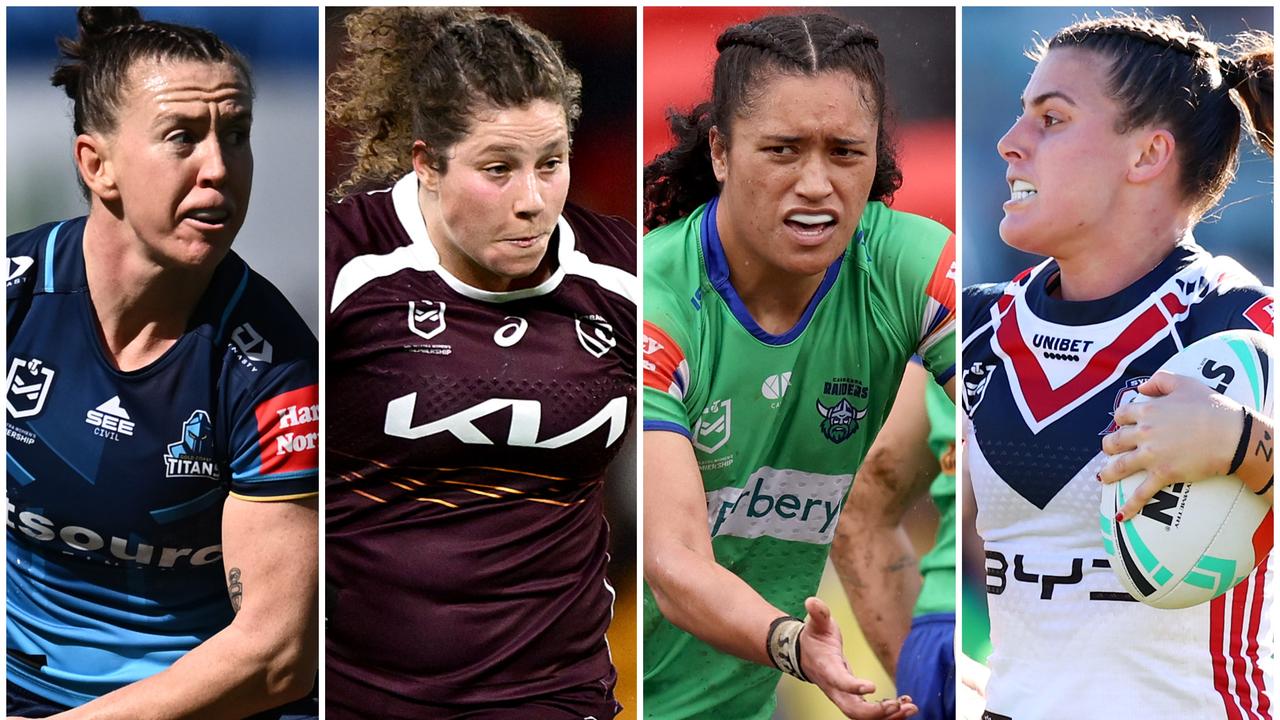
Looking at four players who featured in the inaugural 2018 season and remain in the competition today, each tells a different story of how the demands of the NRLW have changed.
Georgia Hale of Gold Coast Titans is the NRLW’s top tackler.Source: Getty Images
Zahara Temara is kicking further and more often, lifting her average kick metres from 106 in 2018 to 144 per game so far this season.
Chelsea Lenaduzzi didn’t manage one offload in her first season, currently her game average is seven.
Meanwhile, Jess Sergis average tackle busts have increased from 10 to 29 and her run metres per game are averaged at 122m, compared to 72 in 2018.
Georgia Hale, known widely as the leader in tackles per game in recent seasons, has gone from 16 per game in 2018 to averaging in the 40s for the past four seasons.
No single statistic captures the evolution of the modern NRLW athlete. Together, though, they point to a competition that now demands more complete footballers.
Players haven’t simply gained experience over the past eight seasons; they’ve adapted to a game that has become faster, more physical and more demanding in almost every facet.
Is it really a two horse race in NRLW? | 07:58
That evolution hasn’t happened by accident. It is the result of sustained investment, stronger development pathways, improved coaching and athletes who have embraced the opportunity to become semi-professional.
But growth isn’t driven by what happens on the training field alone.
As the NRLW has become easier to watch through expanded broadcast coverage, more people have been able to connect with the game. Greater audiences brings greater visibility, which attracts investment, sponsorship and support.
In turn, that creates more opportunities for players to improve, and the cycle of growth continues.
But acknowledging that progress doesn’t mean ignoring the challenges.
The NRLW should continue to be questioned. The competition should continue to look at ways to improve depth, consistency and competitiveness across all clubs.
Because as standards rise, the difference between teams with established high-performance environments and those still building them become even more obvious.
That’s part of the evolution of any professional competition. The difference today is that the expectation has changed. Eight years ago, the conversation was about whether women could have a national competition.
‘Reason players want to be a Rooster’ | 03:02
Today, the conversation has expanded and so too have the expectations. We debate tactics. We analyse selections. We question performances. We critique playing rosters and coaching styles.
We expect more — and that’s a positive thing.
WATCH THE WARRIORS
The Warriors are yet to field what many believe is their strongest side, but there were signs in Round 3 of what they could become.
After their Round 2 defeat to Canberra, they responded with a commanding 38-point win over the Cowboys, led by a Lavinia Tauhalaliku four-try haul.
More importantly, they did it without international stars Mele Hufanga and Gayle Broughton who are both still working their way back from injury.
That makes the Warriors one of the competition’s great unknowns. Their biggest tests against Brisbane and the Roosters won’t come until the closing rounds of the season, by which time they are expected to be much closer to full strength.
Until then, they’ll continue to build away from the spotlight, making it difficult to know just how high their ceiling really is. The season is still revealing itself.