
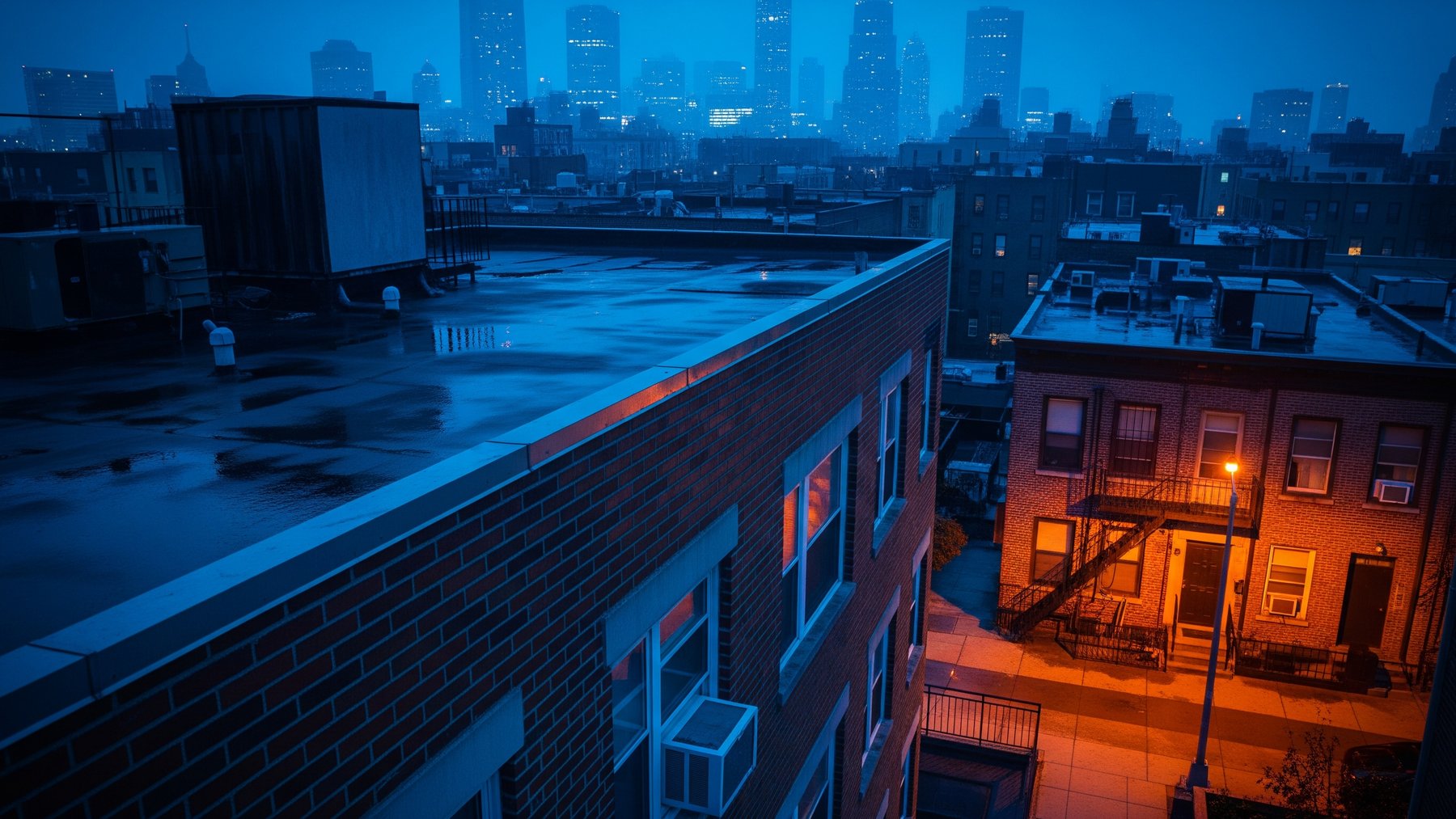
Step outside at midnight in Phoenix or Houston on a July night and something feels wrong.
It is still brutally hot, even though the sun set hours ago.
The air conditioner inside is working harder than ever, yet the room barely cools.
Most people blame a weak unit or bad insulation, but the real answer is hiding in the streets and rooftops all around them, and it reaches further than expected.
A city that bakes long after dark
Walk a few miles out of town and the air cools fast on the same summer night.
At its recorded peak, the evening air temperature inside a city can run as much as 22°F higher than in the rural areas just beyond its edge, according to the US Environmental Protection Agency, though typical nighttime differences are considerably smaller.
That gap is not a coincidence, and it is not about the weather forecast.
Scientists call it the urban heat island effect at its most pronounced, because rural soils and plants release heat just as quickly as they absorb it.
A grassy field that baked all afternoon can feel genuinely cool by ten o’clock at night.
City concrete and steel are different: they have high thermal mass and act like slow cookers, holding warmth for hours after dark.
A resident sleeping near a downtown overpass and a resident sleeping near a suburban park can experience what feels like entirely different seasons, on the same night, in the same city.
The concrete that swallowed the sun
Every road, roof and parking lot in a city spends all day drinking in sunlight.
Dark asphalt and dark shingle roofing absorb 80 to 95 percent of solar radiation.
Surfaces can reach temperatures 50 to 90°F hotter than the surrounding air at midday, turning a simple walk across a parking lot into something genuinely dangerous.
When evening comes, all of that stored energy has to go somewhere.
The heat radiates back into the environment for hours past sunset, slowly and relentlessly, preventing cities from cooling before the sun rises again.
The city begins each new day already warmer than it ended the last one, like a pot that never comes off the burner.
Over a full summer, that compounding warmth adds up in ways a single thermometer reading cannot capture.
When the cure becomes part of the problem
The obvious fix sounds simple: run the air conditioning harder.
But there is a catch built into the machine itself.
The residual heat dumped outside by air conditioning systems can raise nighttime urban temperatures by more than 1°C in some urban locations, according to research from Arizona State University.
The energy those units consume also contributes to the carbon emissions that worsen the heat island over time.
Urban land cover has been steadily expanding for decades, adding more heat-trapping surface and shrinking the patches of soil and grass that once helped cities breathe.
Think of a neighborhood that paved over its last community garden to build a surface parking lot: every car baking on that asphalt adds a small pulse of warmth back into the block each evening.
The air conditioner is not losing a battle with summer, it is losing a battle with the city itself.
The urban heat island and the sky above
Here is where the story becomes genuinely strange.
On a clear night in the countryside, every surface on Earth loses heat by radiating it as infrared light straight upward, into the cold of space.
The universe acts as an enormous heat sink, and the open sky is the drain.
In a dense city, that drain is effectively clogged: high-rise buildings and tightly packed infrastructure trap heat by blocking wind circulation and the sky view that lets surfaces radiate warmth away.
A city at night is cut off from one of Earth’s oldest cooling systems, the cold of the cosmos itself.
Research published in The Lancet Planetary Health confirms a significantly higher risk of heat-related death in urban areas compared to rural ones, and the urban tree canopy that once helped cities shed heat has barely grown in a decade.
What actually works when AC cannot keep up
The answer turns out to be what the city removed in the first place.
Research across multiple cities has found that tree planting can meaningfully lower average temperatures during the hottest months, offering one of the most accessible tools cities have.
White and reflective roofs mimic what open land naturally does: they bounce sunlight back toward the sky instead of drinking it in.
A cool roof made from highly reflective materials can return a substantial share of the sun’s rays, dramatically reducing heat absorbed by the building below.
These are not futuristic fixes and they require no new invention, just a return to surfaces that cooperate with the night sky instead of sealing heat away from it.
The biological clocks of the animals that share our cities are already registering the difference, and so are the people lying awake in apartments that never quite cool down.
Air conditioning was never designed to fight a city’s own thermal memory.
The good news is that cities are not trapped: the same materials and organisms that built the problem can be swapped out, one rooftop and one tree at a time, until the night sky can do its ancient job again.