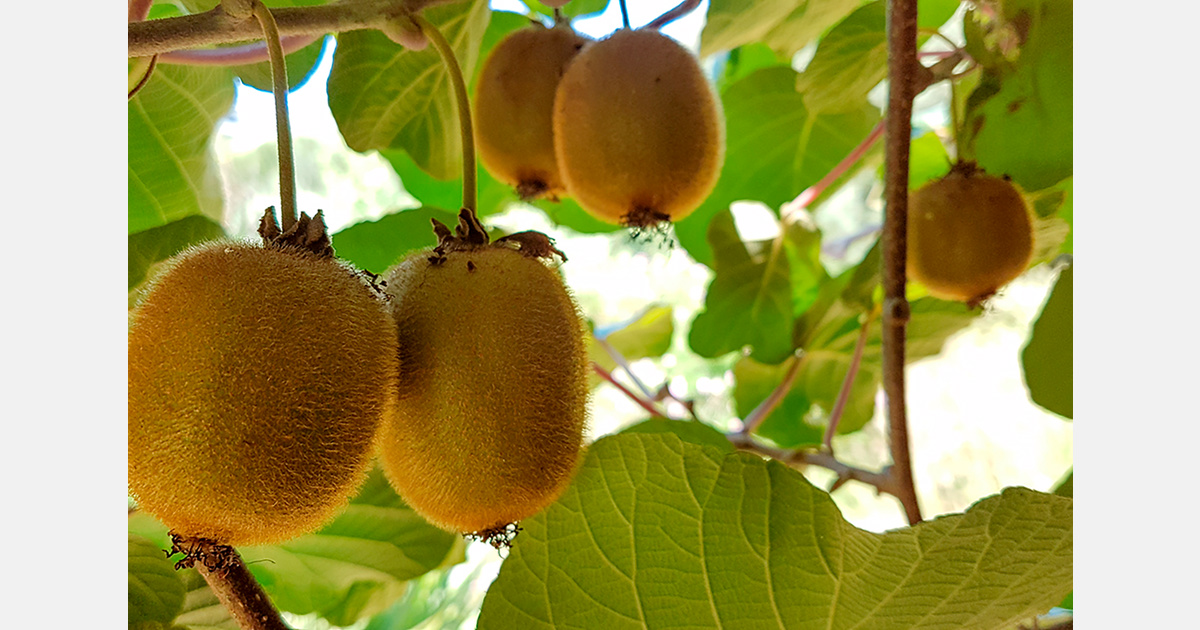
Kiwifruit production and exports are expected to remain the main drivers of growth in New Zealand’s Bay of Plenty, although increasing demand for land, housing and infrastructure is creating planning challenges.
According to an ANZ report, the region recorded a 17 per cent year-on-year increase in export value in 2025 to NZ$7.56 billion (US$4.5 billion), led by kiwifruit production and export activity through the Port of Tauranga.
The report projects a further 1,000 to 1,200 hectares of new kiwifruit orchards will come into production over the next five years, supported by land conversions east of Tauranga and the replacement of lower-performing avocado orchards. Zespri is targeting an additional 20 million trays of production by 2030.
At the same time, Tauranga’s population is forecast to reach 540,000 by 2053, increasing competition for land.
Western Bay of Plenty District Council environmental planning manager Natalie Rutland said population growth and horticultural expansion can coexist with appropriate planning.
“As both depend on access to land, infrastructure, water, transport networks and labour, without deliberate planning the two growth trajectories could increasingly compete for the same resources,” she said.
The Port of Tauranga now handles almost 50 per cent of New Zealand’s containerised exports and continues to expand its role as a hub for primary sector exports. The ANZ report forecasts kiwifruit exports will increase from NZ$4.5 billion (US$2.7 billion) to NZ$6.2 billion (US$3.7 billion) by 2030.
Earlier this year, Zespri said port bottlenecks are becoming a constraint, while the Port of Tauranga continues to pursue wharf expansion through the Fast Track process.
Frontpage photo:
© Konstantinos A | Dreamstime
Source: farmersweekly.co.nz
Publication date:
Wed 22 Jul 2026