
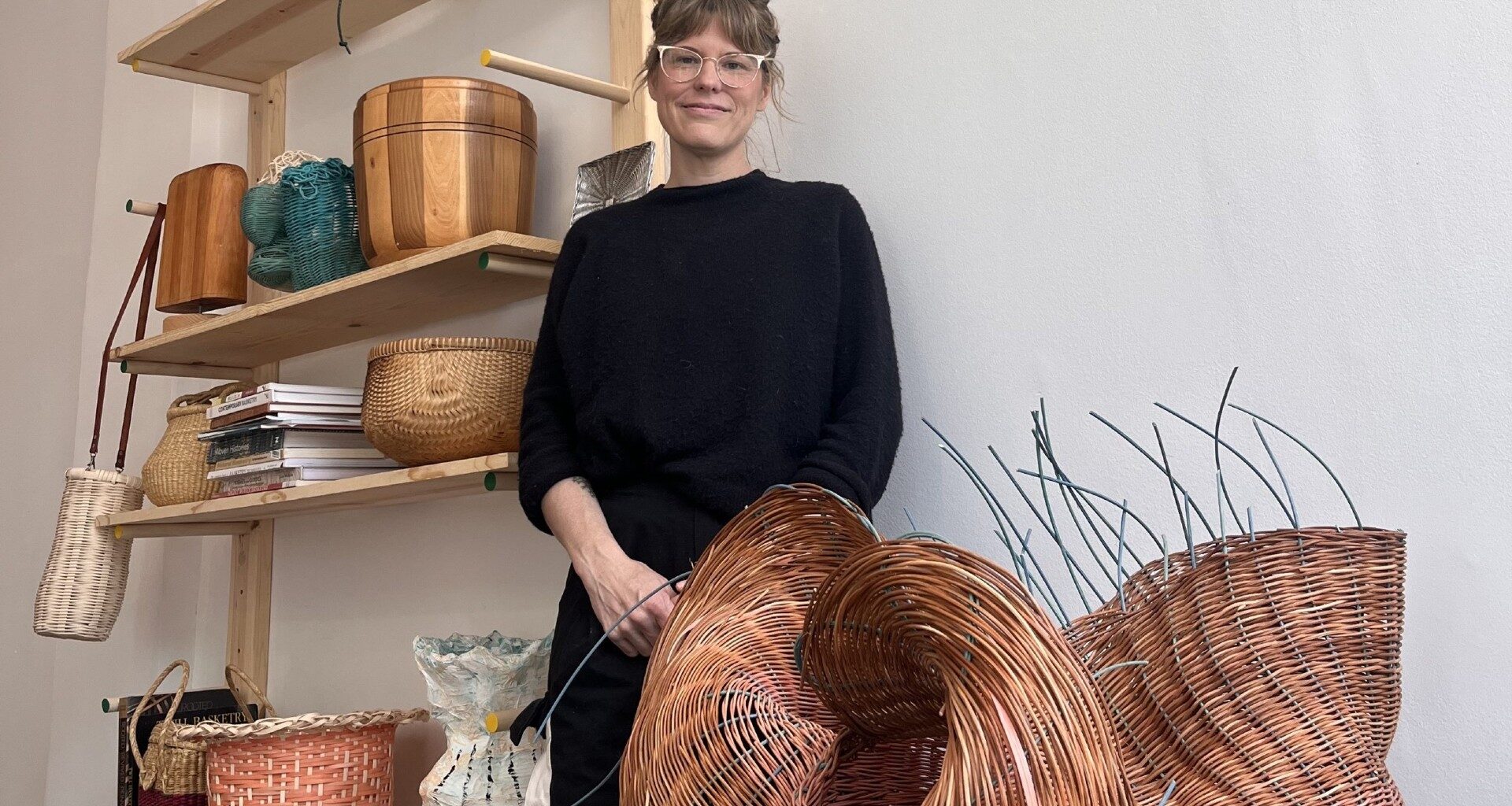
PILSEN — A Southwest Side artist is turning her passion for weaving into a studio where Chicagoans can learn how to make baskets, sculptures and more.
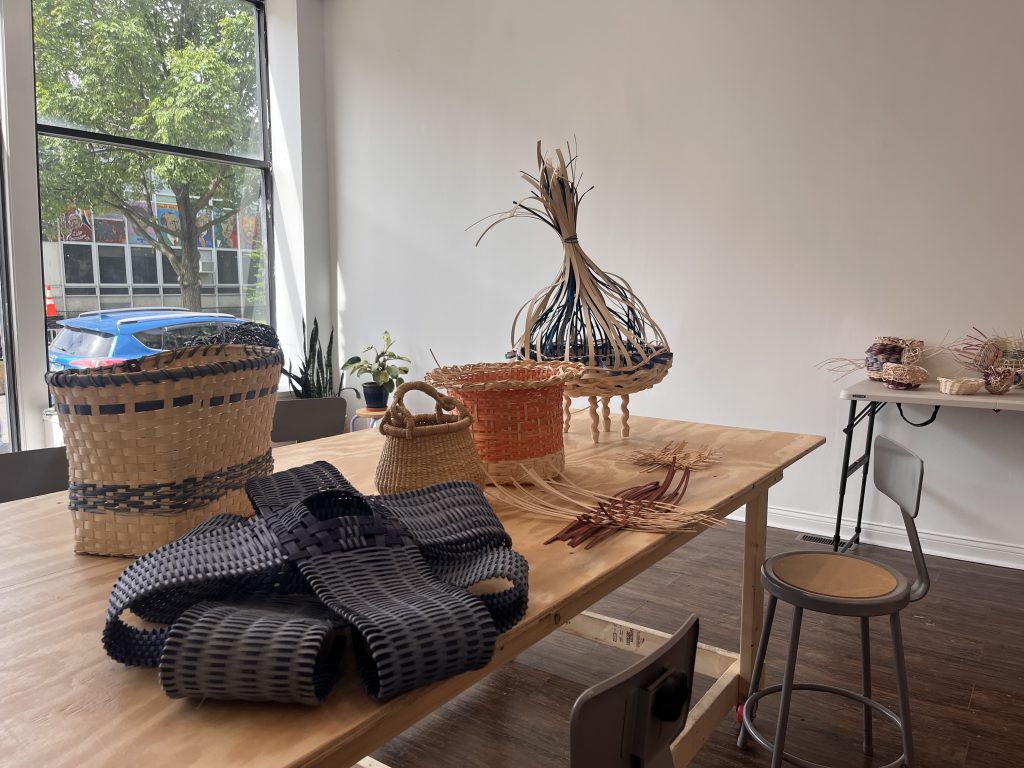
Dee Clements, a Chicago-based textile artist and sculptor, opened The Weaving Workshop in April at 1616 W. 18th St. The school is dedicated to basketry, off-loom weaving and fiber arts, offering workshops and group classes in basketry, paper-weaving, basket pattern-making, advanced sculptural basketry and more.
Clements started the school about a year and a half ago, teaching over 80 classes out of the studio in her Little Village home, she said.
The workshops — where people learn how to make baskets or sculptures using basket-weaving techniques — drew interest from people around the city and from other states, Clements said.
Seeing her success, Clements decided to open her first brick-and-mortar in Pilsen. She will use the spot to keep teaching, host group events and offer classes alongside other textile and weaving artists.
“I want people to find their own sense of creativity,” Clements said.
Attendees can take beginner classes, subscribe to a membership program or learn advanced techniques for weaving sculptures. Basketry helps develop creative problem-solving and critical thinking skills without looking at a screen, she said. Information about memberships and workshops is on the school’s website.
Clements, originally from upstate New York, moved to Chicago to study at the School of the Art Institute of Chicago. While completing her undergraduate studies on sculpture and fiber studies, she enrolled in a fibers class, where she learned about textile weaving and “loved it,” she said.
But it was not until graduate school that Clements taught herself basket weaving and found a new passion. Drawing from her background in textile weaving and sculpture, she created her first woven lamp while taking a sculptural lighting class, she said.
 Credit: Francia Garcia Hernandez/Block Club Chicago
Since then, Clements has experimented with basket weaving, creating unique sculptures that have earned her recognition for her creative take on an ancient craft.
Clements’ work is part of the collections at The Cranbrook Art Museum and The Anderson Collection at Stanford University, and it will be displayed at Yale University Art Gallery, according to her website.
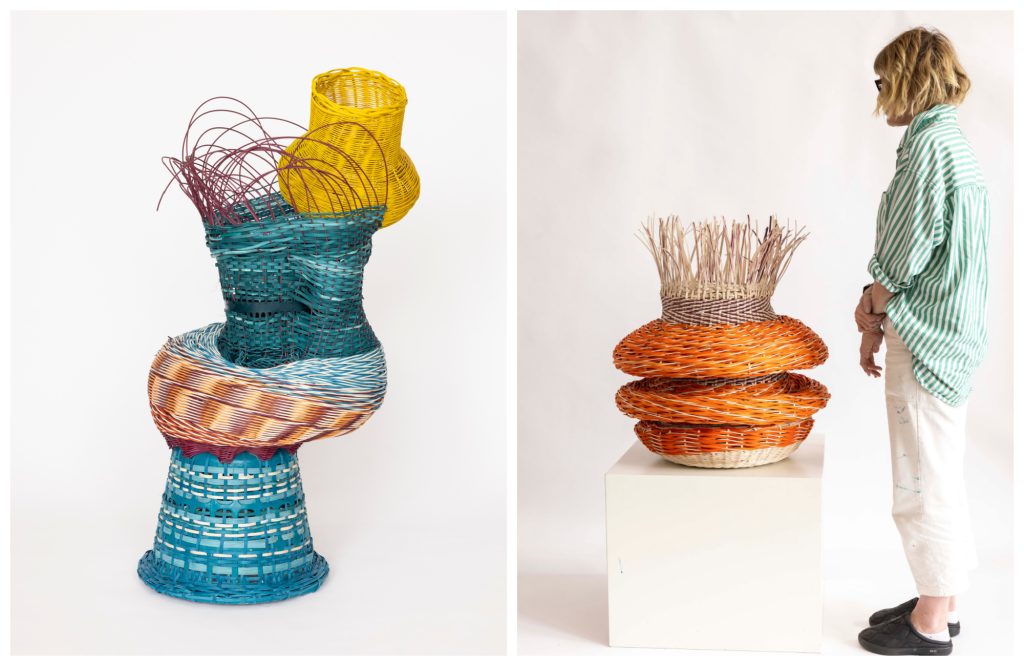 “The Body is a Piece of Land”, 2024/25, Permanent Collection, Cranbrook Art Museum (left) and “Double Rolls,” 2025, Permanent Collection, Yale University Art Gallery. Credit: Provided/Photos by Clare Britt
Out of the recently opened Pilsen school, Clements teaches some of the techniques she developed for her practice, showing students how to build forms and armatures like the ones she used to create sculptures or sculptural lamps.
Clements also teaches the history of basketry, a craft that is 34,000 years old and existed before humans communicated through language, she said.
“It was the first cultural device in humanity. It predates stone-carving and ceramics, so it’s really our first craft in humanity,” Clements said.
Clements is often inspired by women in ancient basketry, a craft in ancient Mesopotamia assigned exclusively to women, while men were assigned to labor, she said. Her sculptural work explores themes of women’s bodies, experiences and labor, she said.
Whether someone is completely new to basketry or has experience weaving, Clements hopes students will walk away realizing “we all have a relationship to weaving” and feeling fulfilled after trying something new, she said.