
A second image from the same group shows the car parked on snow at the proving grounds themselves, confirming what many suspected when a pair of Cybercabs were first spotted in June, strapped to a transporter heading south through the North Island.
Tesla has confirmed it owns the two Cybercabs and that they are at Cardrona for cold weather testing.
Whether the car was driving itself is not clear from the images. There is no way to determine from the footage whether anyone was aboard.
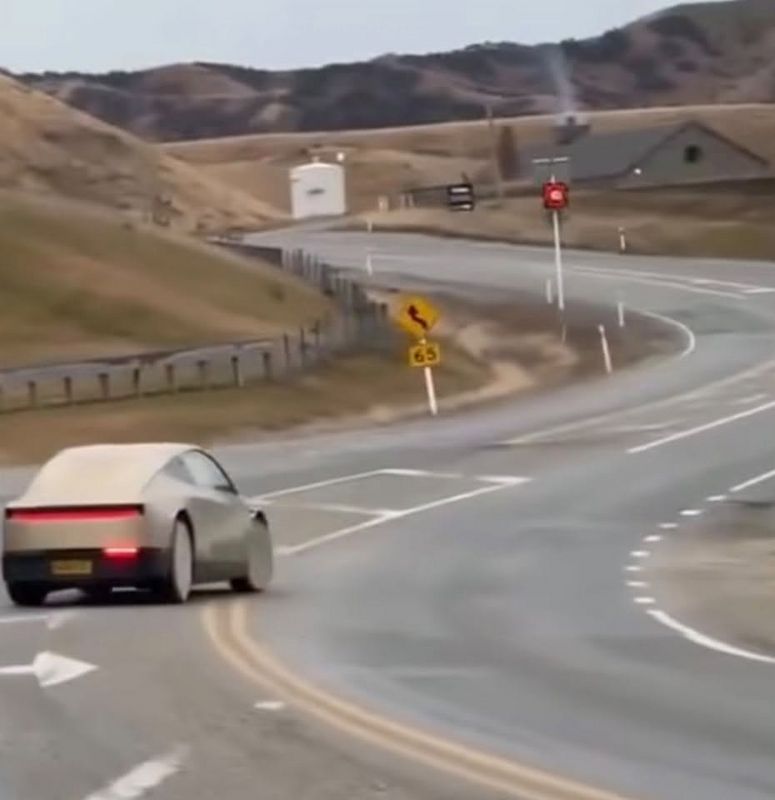
The car wears the same gold finish as production units coming off the line at Gigafactory Texas, along with flush aero wheel covers and a full-width rear light bar. It is travelling on the correct side of the road, working through tussock country with a suitably bleak winter landscape behind it.
Engineering mules, not finished robotaxis
New images posted to the Rare and Unique Car Spotting New Zealand Facebook page show a Tesla Cybercab moving under its own power on what appears to be Cardrona Valley Road, minutes from the Southern Hemisphere Proving Grounds, marking the first time one of the autonomous two-seaters has been photographed on a New Zealand public road. 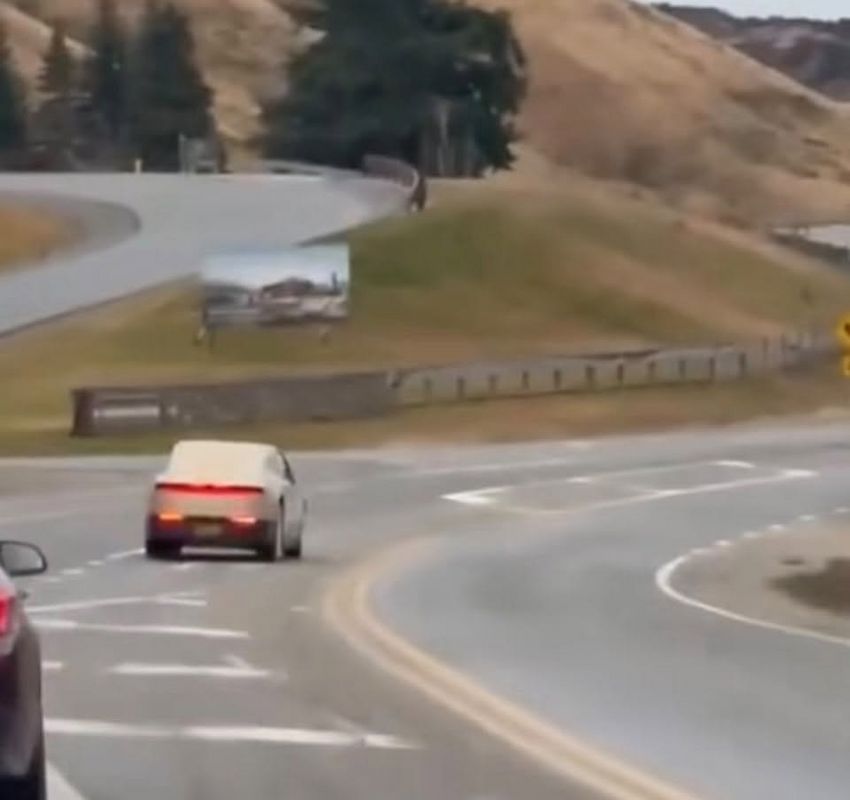
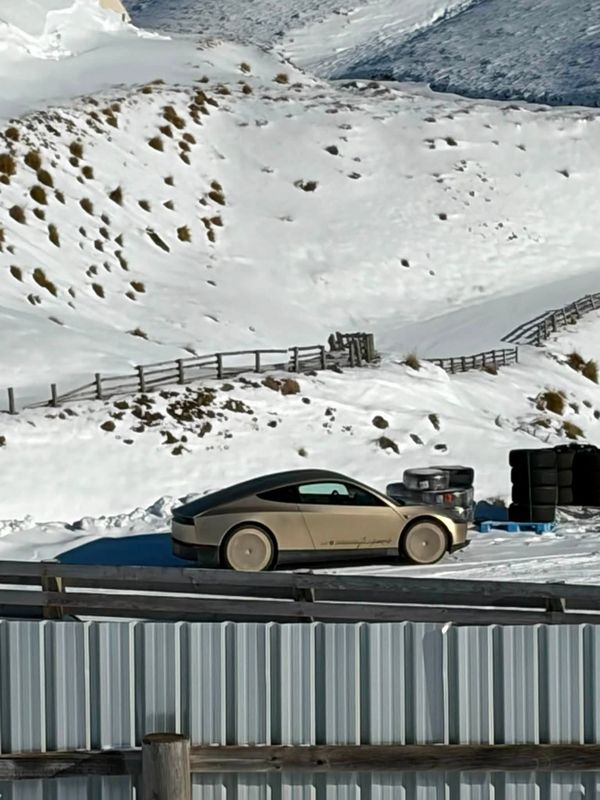
The New Zealand examples are left-hand drive and are fitted with a steering wheel, details that distinguish them from the production Cybercab, which has no steering wheel and no pedals. That configuration points to engineering mules rather than finished robotaxis.
Technical details on the Cybercab come from an Environmental Protection Agency (EPA) filing released earlier this year. The model runs a 48kWh battery and a single front-axle motor producing 163kW, with a lab range figure of up to 672km. Kerb weight is listed at 1.4 tonnes, making it lighter than a Tesla Model 3 rear-wheel drive.
The Southern Hemisphere Proving Grounds at Cardrona operate through June, July and August, providing northern hemisphere manufacturers with out-of-season snow and ice testing. Toyota and Sumitomo were among the first to use the site in the early 1990s.