
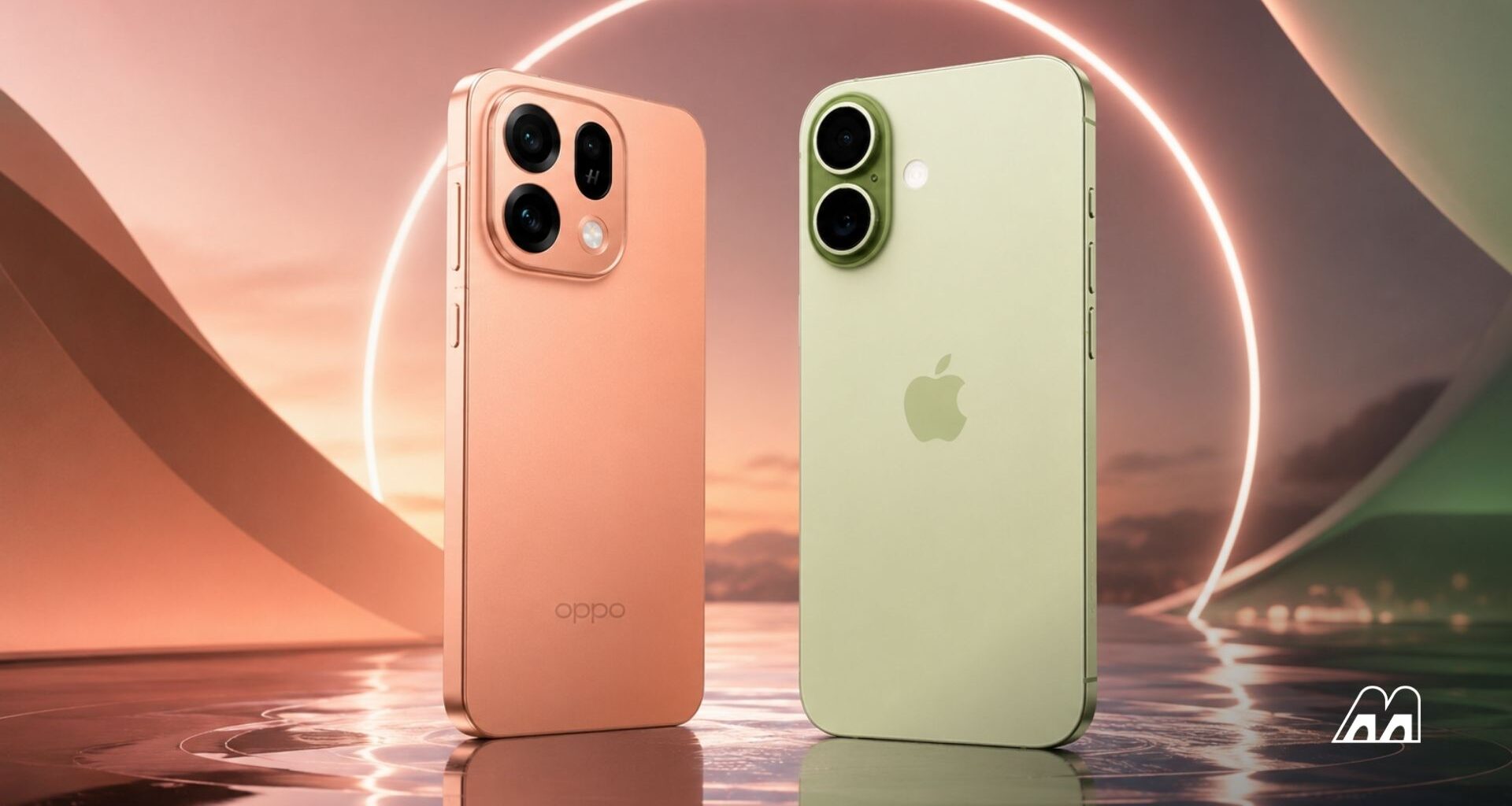
The OPPO Find X9s launched globally on April 21, 2026, with specs that read like a direct challenge to every compact flagship on the market — including the iPhone 17, which arrived seven months earlier. Here’s what actually separates these two phones when you look past the numbers.
Battery: Big Numbers, Smaller Gap
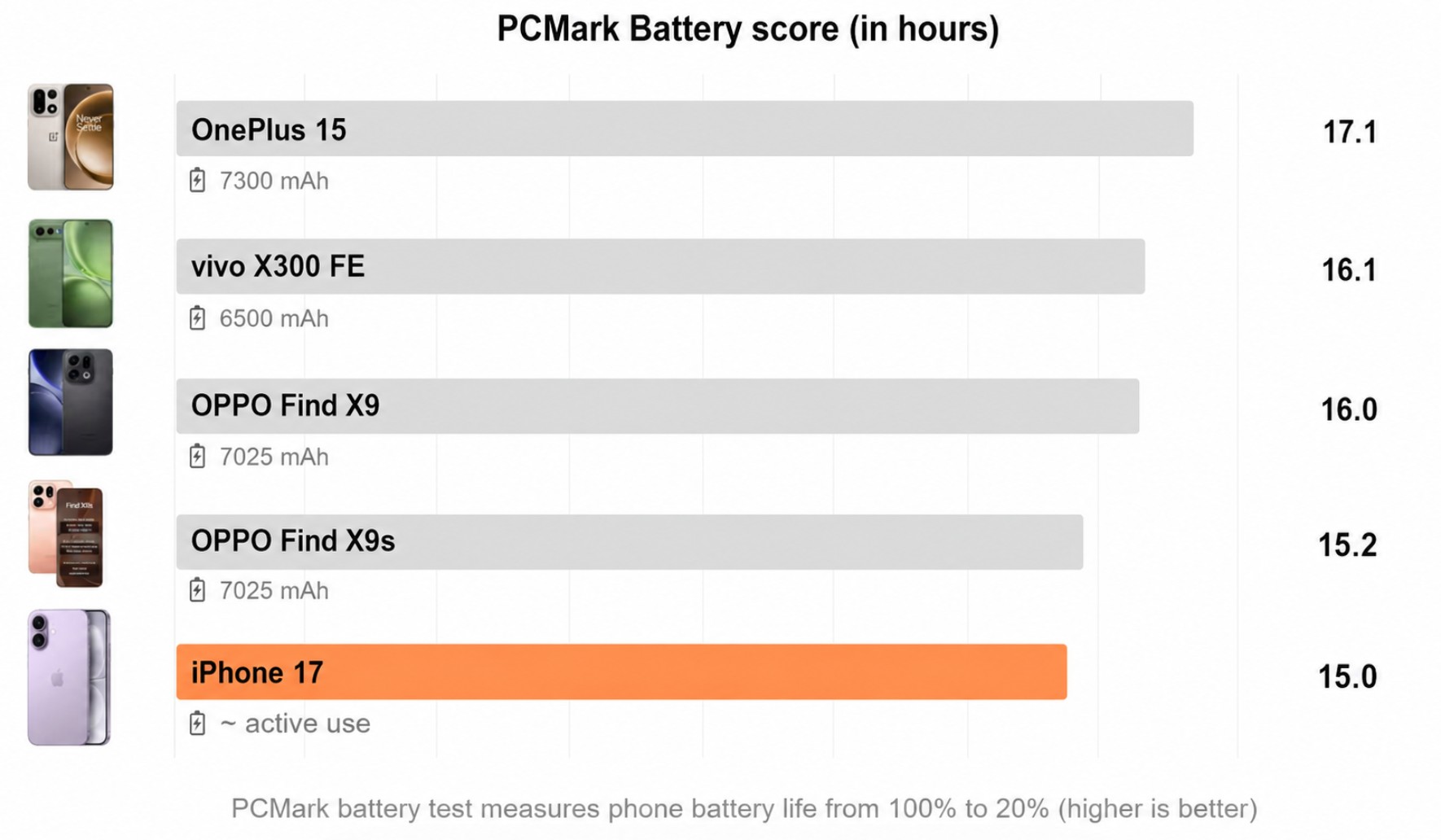
The Find X9s carries a 7,025mAh silicon-carbon battery — nearly twice the iPhone 17’s 3,692mAh cell. On paper, it’s not even close.
But real-world testing narrows the gap. Find X9s clocked at 15 hours and 12 minutes in PCMark testing — strong, but actually lower than the Vivo X300 FE despite a larger battery. The iPhone 17 posts roughly 15 hours in active use tests, thanks to Apple’s ProMotion display dropping refresh rates when it can.
The charging story is more interesting: the Find X9s hits 80W wired (full charge in ~45 minutes), while the iPhone 17 caps at 40W. But the iPhone supports MagSafe and Qi2 wireless charging — something the Find X9s skips entirely. If you’ve built a nightstand around a wireless charger, that matters.
Performance: Benchmark King vs. Daily Workhorse
Apple’s A19 chip scores 9,327 on Geekbench multi-core. The Dimensity 9500s inside the Find X9s hits around 7,337 — a 27% gap that shows up in video exports and heavy multitasking.
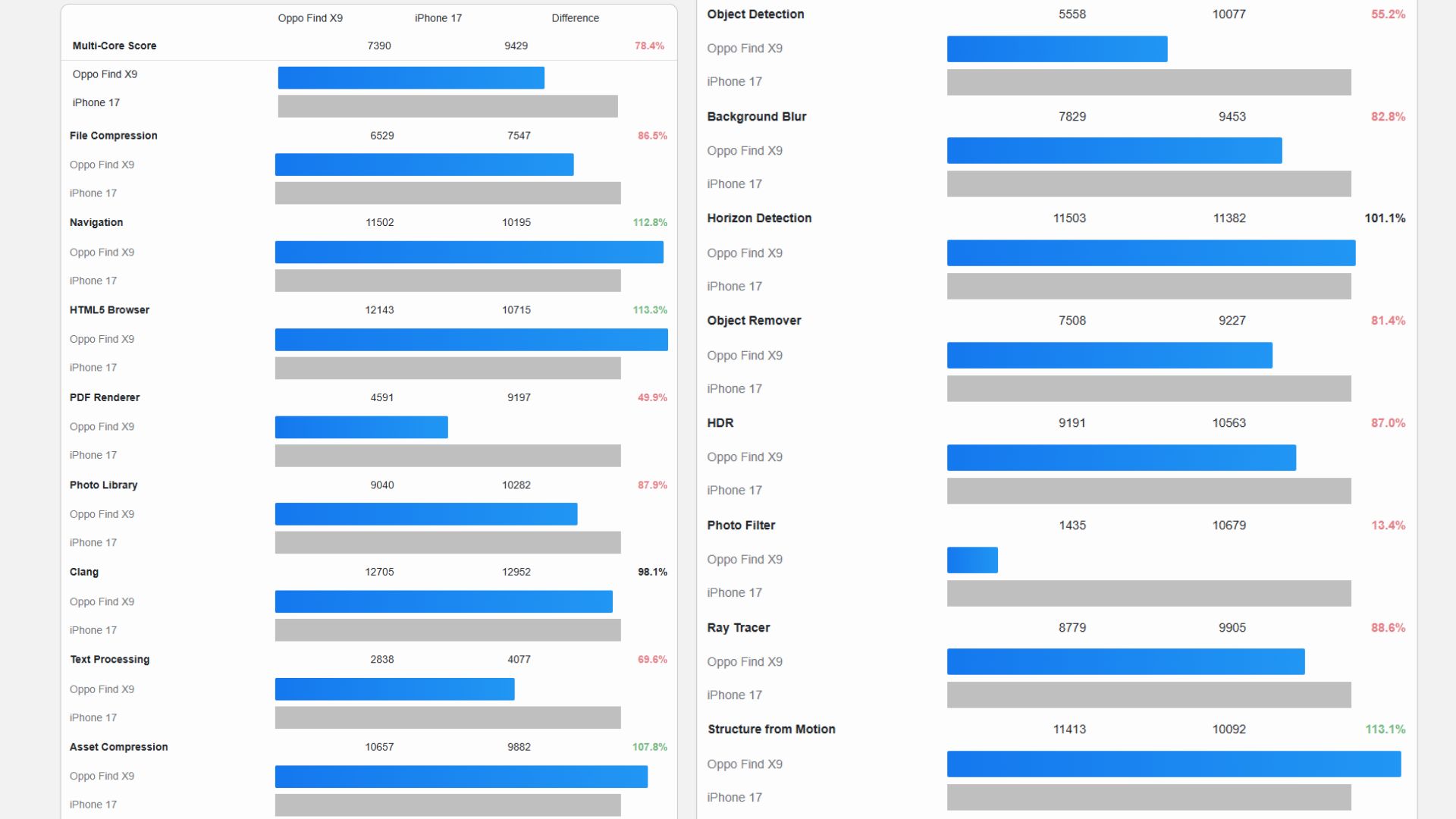
Most people won’t feel that difference day-to-day. Find X9s delivered 8–10 hours of screen-on time with smooth performance across two weeks of testing. The iPhone 17’s edge shows in edge cases — 4K rendering, complex automations, or sustained gaming sessions.
The Find X9s ships with 12GB RAM and Android 16 (ColorOS 16); the iPhone 17 runs iOS 26 with 8GB. Apple typically supports iPhones for six to seven years of updates, while OPPO trails at roughly four years. With the smartphone market squeezed in 2026 by rising chip costs, update longevity matters more than ever.
Camera: Three Lenses vs. Two (and Why It Matters)
The Find X9s runs a triple 50MP rear camera system co-developed with Hasselblad: main, ultrawide, and a telephoto with 3x optical zoom. The iPhone 17 has a dual 48MP setup — main and ultrawide — but no dedicated telephoto.
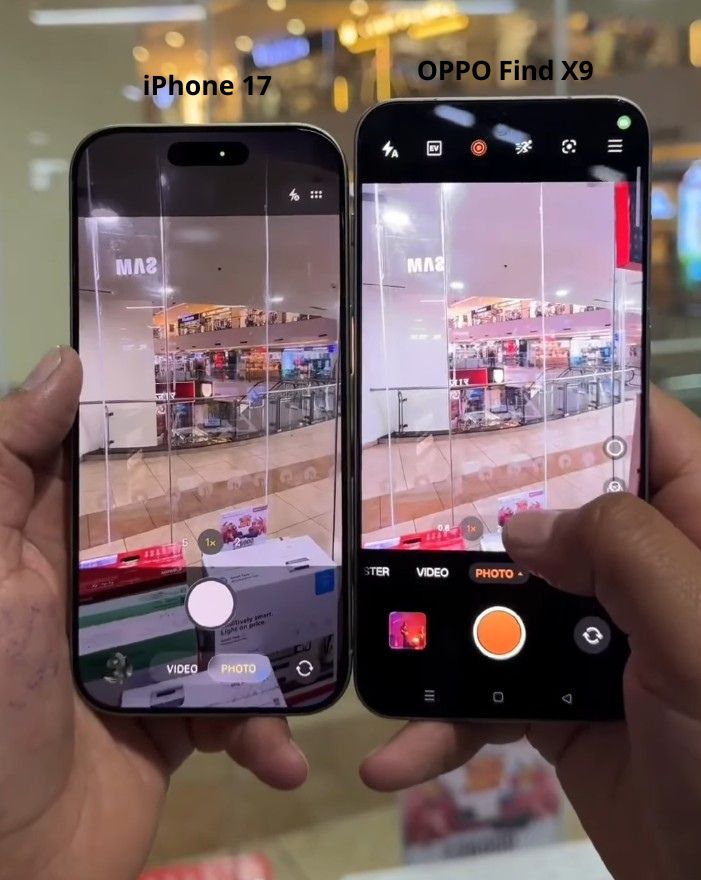
That third lens matters. If you travel or shoot from a distance, 3x optical zoom gives you clean detail where digital zoom on the iPhone 17 produces noticeable grain. Apple still leads in video — ProRes, Dolby Vision HDR, better stabilization — but for stills, OPPO’s Hasselblad color science delivers natural skin tones straight out of the camera. For selfies, the 32MP vs 18MP gap gives OPPO more detail to work with.
Display and Design
The iPhone 17’s 6.3-inch Super Retina XDR OLED (120Hz ProMotion) looks excellent. The Find X9s counters with a slightly larger 6.59-inch 1.5K AMOLED, also 120Hz, with 1.15mm ultra-thin bezels and 3,600 nits peak brightness — 600 nits above the iPhone.
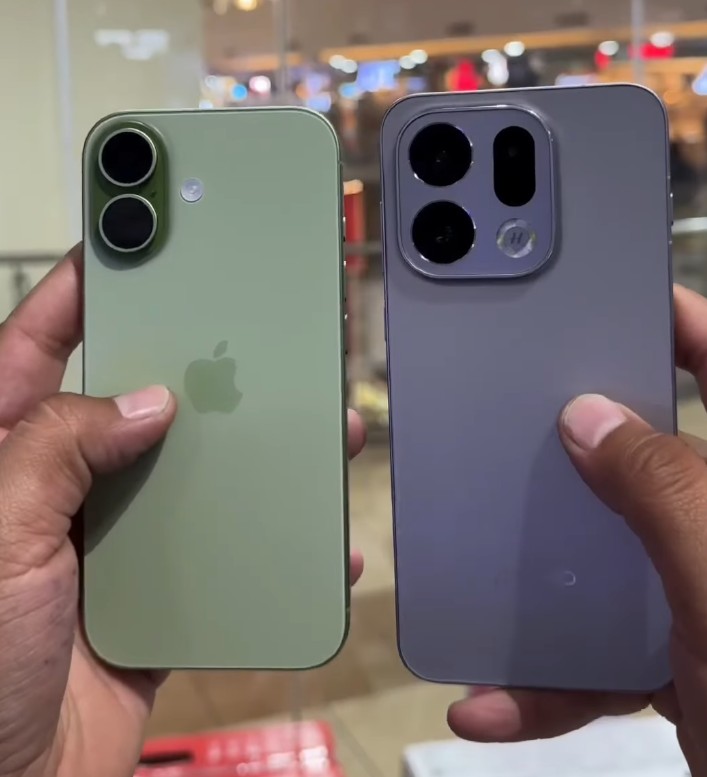
That brightness gap shows up outdoors. The OPPO earns IP66/IP68/IP69 with Gorilla Glass 7i; the iPhone 17 has IP68 with Ceramic Shield 2. The trade-off? The Find X9s weighs 202g versus 177g — you feel that extra 25 grams over a long day of one-handed use.
The Ecosystem Question No Spec Sheet Answers
If you already own AirPods, an Apple Watch, or a MacBook, the iPhone 17 slots into your life in ways no Android phone replicates. AirDrop, Handoff, iMessage — these aren’t specs, but they’re why millions never seriously consider switching.
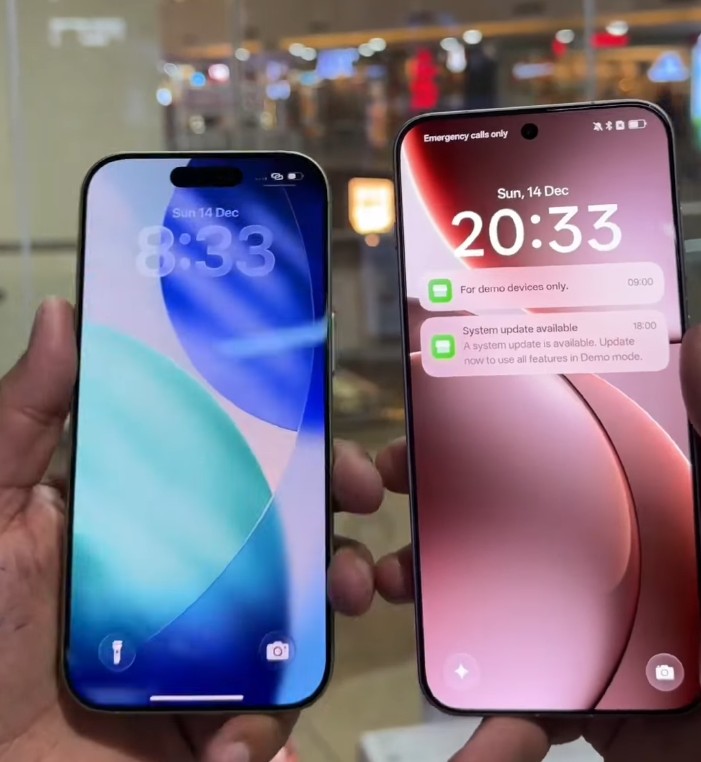
If you’re platform-agnostic, the Find X9s offers more hardware per dollar. OPPO’s AI Snap Key — a dedicated button that captures content directly to the phone’s AI workspace — shows OPPO thinking about on-device AI in practical terms. Apple Intelligence embeds AI across system-level features instead. Neither approach is objectively better — they reflect different philosophies about how your phone should work.
Price: It Depends on Where You Live
The iPhone 17 starts at $799 (US, 256GB). The Find X9s ranges from $700 to $910 globally — the 12GB/512GB variant in Malaysia starts at about $910. In markets where both compete — India, Southeast Asia, Europe — the Find X9s often undercuts the iPhone while offering more camera hardware and faster charging. The iPhone counters with stronger resale value and ecosystem integration.
Who Should Buy Which?
Get the OPPO Find X9s if: you want maximum battery life, Hasselblad telephoto zoom, faster charging, and you don’t rely on Apple’s ecosystem.
Get the iPhone 17 if: you’re invested in Apple’s ecosystem, value long-term updates, prefer wireless charging, or prioritize video quality.
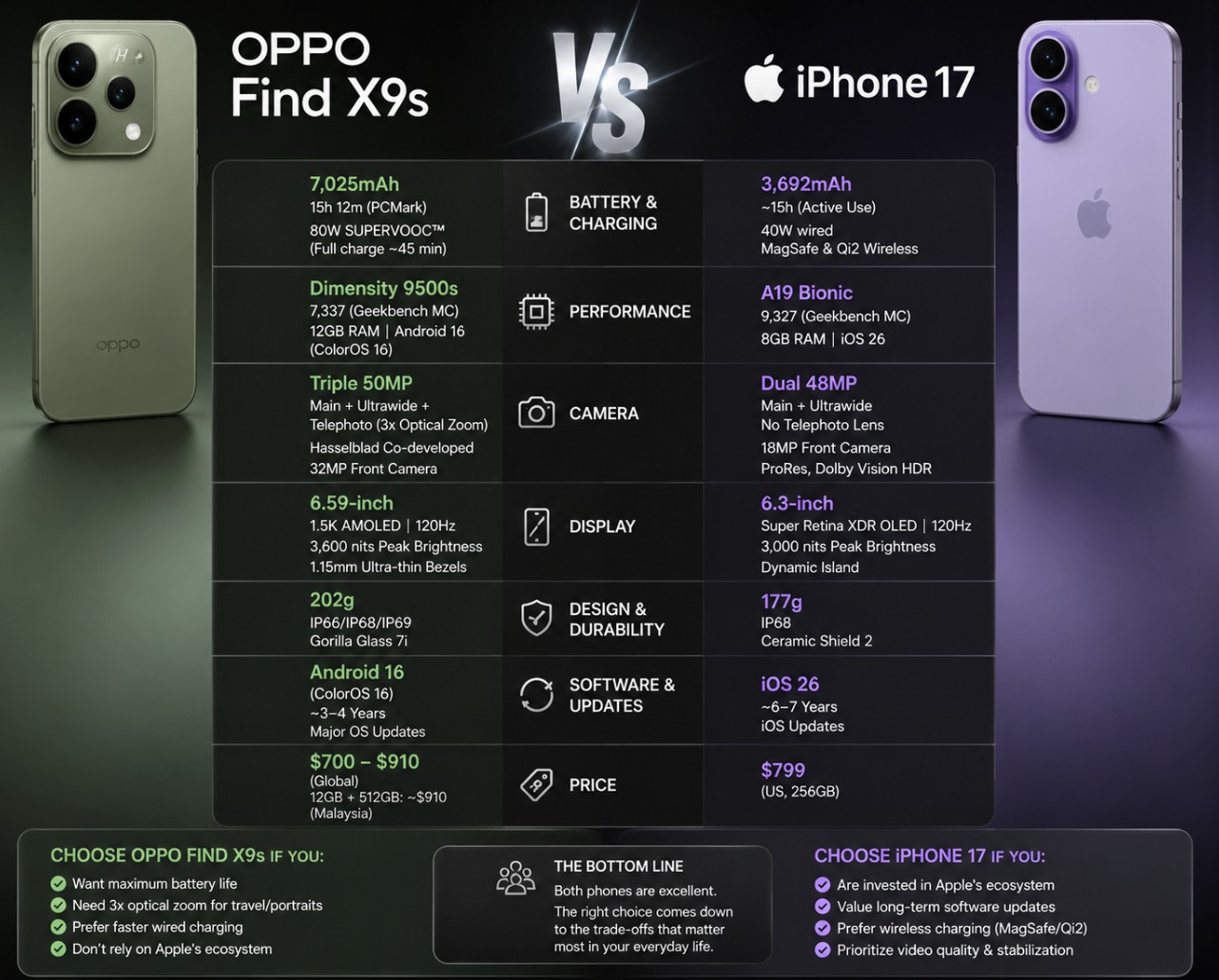
The answer isn’t about specs. It’s about which trade-offs match how you actually use your phone.
FAQsDoes the OPPO Find X9s support wireless charging?
No. The Find X9s supports 80W wired SUPERVOOC charging but skips wireless charging entirely, unlike the iPhone 17 which supports MagSafe and Qi2 wireless charging. If you rely on a wireless charger at your desk or bedside, this is a notable omission from OPPO’s side.
How does the Dimensity 9500s compare to Apple’s A19 chip?
The A19 leads in raw benchmarks — roughly 27% higher multi-core scores. But for everyday tasks, both chips handle apps, gaming, and multitasking smoothly. The gap matters most for heavy video editing, sustained gaming, or tasks that require sustained peak performance. Most users won’t notice the difference in daily use.
Is the OPPO Find X9s available in the United States?
OPPO doesn’t officially sell phones in the US market. You can import the Find X9s, but you’ll lose carrier support, warranty coverage, and some 5G band compatibility. If you’re US-based, the best compact flagship phones currently include the iPhone 17, Samsung Galaxy S26, and Google Pixel 10.
Will OPPO update the Find X9s to Android 17?
OPPO hasn’t confirmed its exact update timeline for the Find X9s, but the company’s recent track record suggests three to four major OS updates. ColorOS 17 is expected to debut alongside the Find X10 series in late 2026. Apple, by comparison, typically delivers six to seven years of iOS updates for iPhones.
What’s the biggest advantage of Hasselblad camera tuning on the OPPO Find X9s?
Hasselblad’s influence is most visible in color accuracy, especially skin tones and natural landscapes. Photos look realistic out of the camera without heavy post-processing. The upcoming Find X10 Ultra is expected to push Hasselblad’s telephoto optics even further, which signals OPPO’s long-term commitment to this camera partnership.