
How it is different from normal CarPlay
Old CarPlay was a mirror: the phone did the computing and the car acted as a monitor. Ultra mixes three things instead. Some of it is still mirrored from the phone, some is what Apple calls local UI, taking data straight from the car such as speed, fuel level or climate and showing it through Apple’s pared-back styling, and some is punch-through UI, where a specialist page from the car’s own software appears inside the CarPlay environment. The aim is that you never flick between two different interfaces again, because everything lives under one skin.
It takes over the instrument cluster
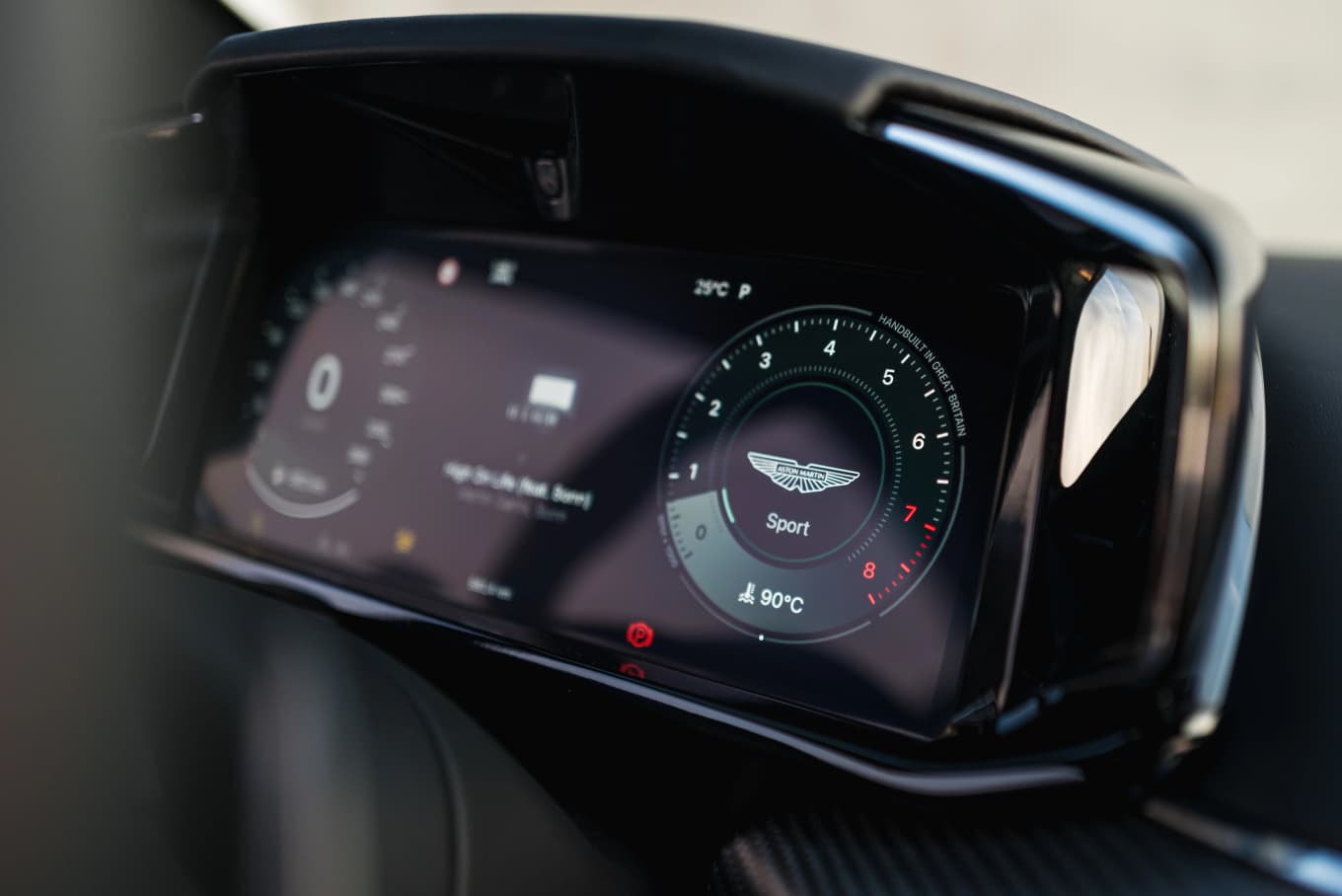
This is the real change. Swipe left and right on the wheel-mounted thumb pad and the dials switch between layouts, much like changing an Apple Watch face: a traditional twin-roundel look in Aston’s racing green at one end, Apple-style horizontal colour bars in the middle, and a full-screen map with speed and revs shrunk to the bottom at the other. Swipe up and down and the central square cycles through maps, audio, tyre pressures and trip data. You can recolour the layouts in the settings, though the layouts themselves are fixed for now, with more promised through over-the-air updates.
The car’s functions are baked in
Where the old system made you leave CarPlay to change the climate or the radio, those controls now sit inside it, styled to look unmistakably Apple. You get three ways to do anything: the CarPlay interface, the car’s physical buttons where they exist, or Siri through the steering-wheel voice button. A small but telling detail: connect a UK or Belgian iPhone and it quietly switches the climate to Celsius and corrects the spelling in the radio favourites, because it already knows where you are from.
Why Aston Martin went first
It looks odd that a low-volume British sports-car maker beat the giants to it, until you consider the trade. Apple hands each manufacturer a toolbox of graphics and applications, and the manufacturer skins it to suit the car, so an Aston looks nothing like a mainstream brand’s version would. For Aston, whose electronics are largely bought in rather than developed in-house, handing the cluster to Apple costs very little pride. For a company that has spent decades building its own interface, it costs a great deal more.
Who else, a year on
This is where the story has drifted since launch. At the reveal Apple listed a long roster of interested brands, but more than a year later Aston Martin is still effectively the only one shipping CarPlay Ultra, across the DBX, DB12, Vantage and Vanquish. Hyundai, Kia and Genesis have committed to bringing it in the second half of 2026, with the Hyundai Ioniq 3 the most likely first non-Aston car. Several once-listed names have gone the other way: Audi, Volvo and BMW have all decided against it, unwilling to hand the whole dashboard to Apple.
What you need
The car needs a digital instrument cluster and the software installed, and once running the system works over a wireless connection only. On the phone side you need an iPhone 12 or newer on iOS 18.4 or later. Existing Astons with the current-generation infotainment can have it added at a dealer, and owners can still choose to run the old-style CarPlay if they prefer.
AutoNext Take
As a piece of software it is excellent. If you already prefer CarPlay to whatever your car came with, and most people do, Ultra removes the last seams: no more jumping out to the native system to change a setting, just Apple’s clarity spread across every screen. In the Vantage it looked genuinely good, the racing-green dials keeping enough Aston character that it never felt like a phone had colonised the cockpit.
The bigger question is who owns the dashboard, and that is why the year-on picture matters more than the demo. Handing the instrument cluster to Apple is easy for Aston and unthinkable for a brand whose software is part of its identity, which is exactly why Audi, Volvo and BMW have said no. They are not being stubborn, they are refusing to let the most valuable screen in the car belong to someone else. Whether buyers care more about that principle or about a slicker interface is the real test, and right now almost nobody outside an Aston showroom gets to answer it.