
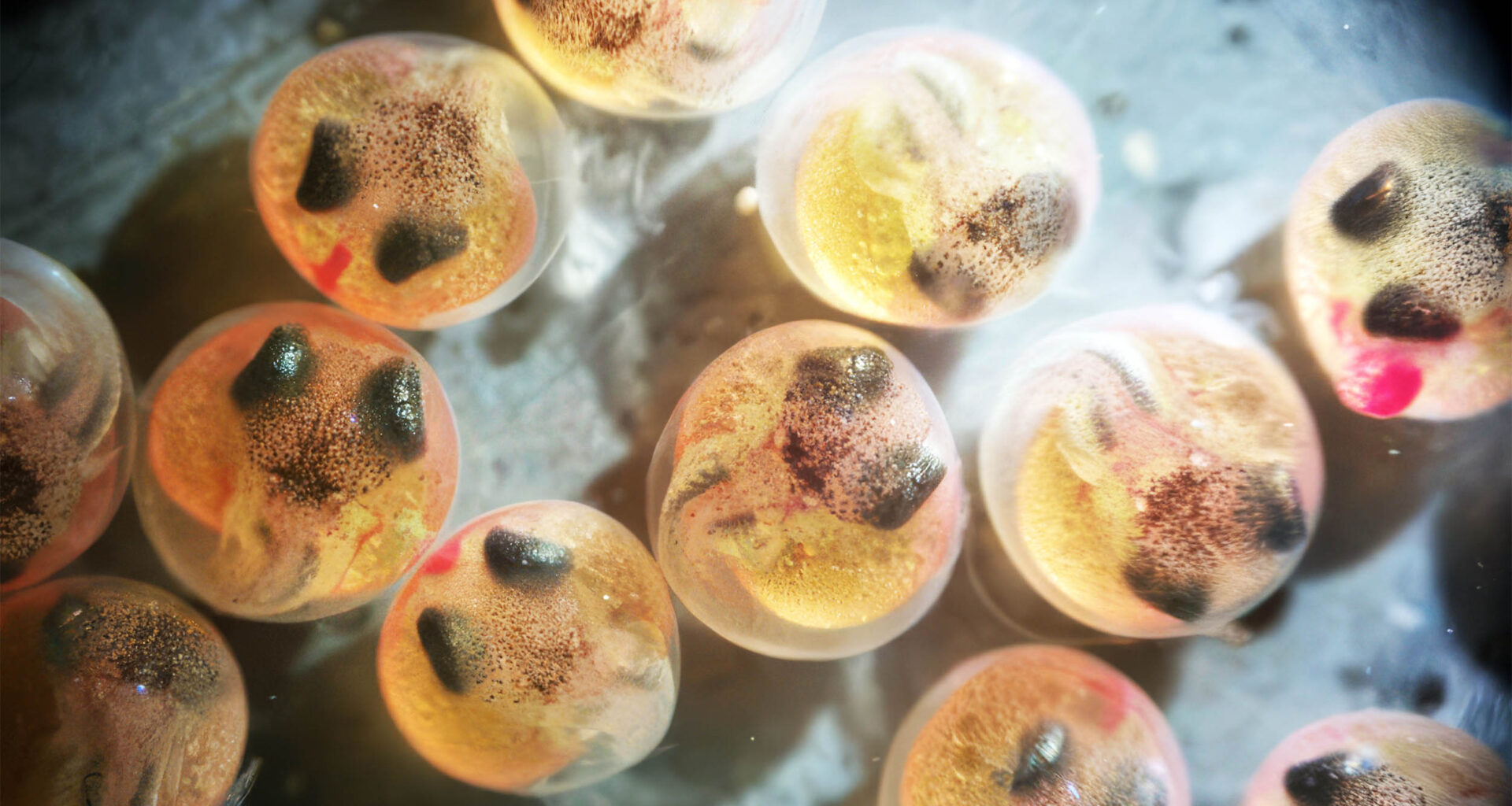
Tucked away in Mexican rivers, two small fish species that have coexisted for generations are starting to fade into each other.
New research finds that pollution is scrambling their ability to tell each other apart. Mate choice is what has been keeping their identities separate in the first place.

Where the water runs dirtiest, the two species have all but merged into a single hybrid population.
The study was led by researchers at Stanford University and focused on rivers in the Huasteca region of Mexico, north of Mexico City.
It tracked how pollution downstream from a small town reshaped the biology and behavior of two closely related fish.
When species start blending
The species in question are the highland swordtail fish, Xiphophorus malinche, and the sheepshead swordtail, Xiphophorus birchmanni.
Both are tiny, about two inches long, and normally distinguishable at a glance. Only the highland swordtail carries the pointed tail its name refers to, while the sheepshead swordtail sports a sail-like fin along its back.
“This research highlights that very recent changes in the environment appear to be causing really dramatic genetic and evolutionary changes in these groups of fish,” said senior author Molly Schumer, an associate professor of biology at Stanford.
“This is likely happening really broadly across many kinds of species and ecosystems.”
That broader claim is part of what makes the finding unsettling. This is not framed as an isolated quirk of one river system. Instead, it may preview what pollution is doing to species boundaries elsewhere, largely unnoticed.
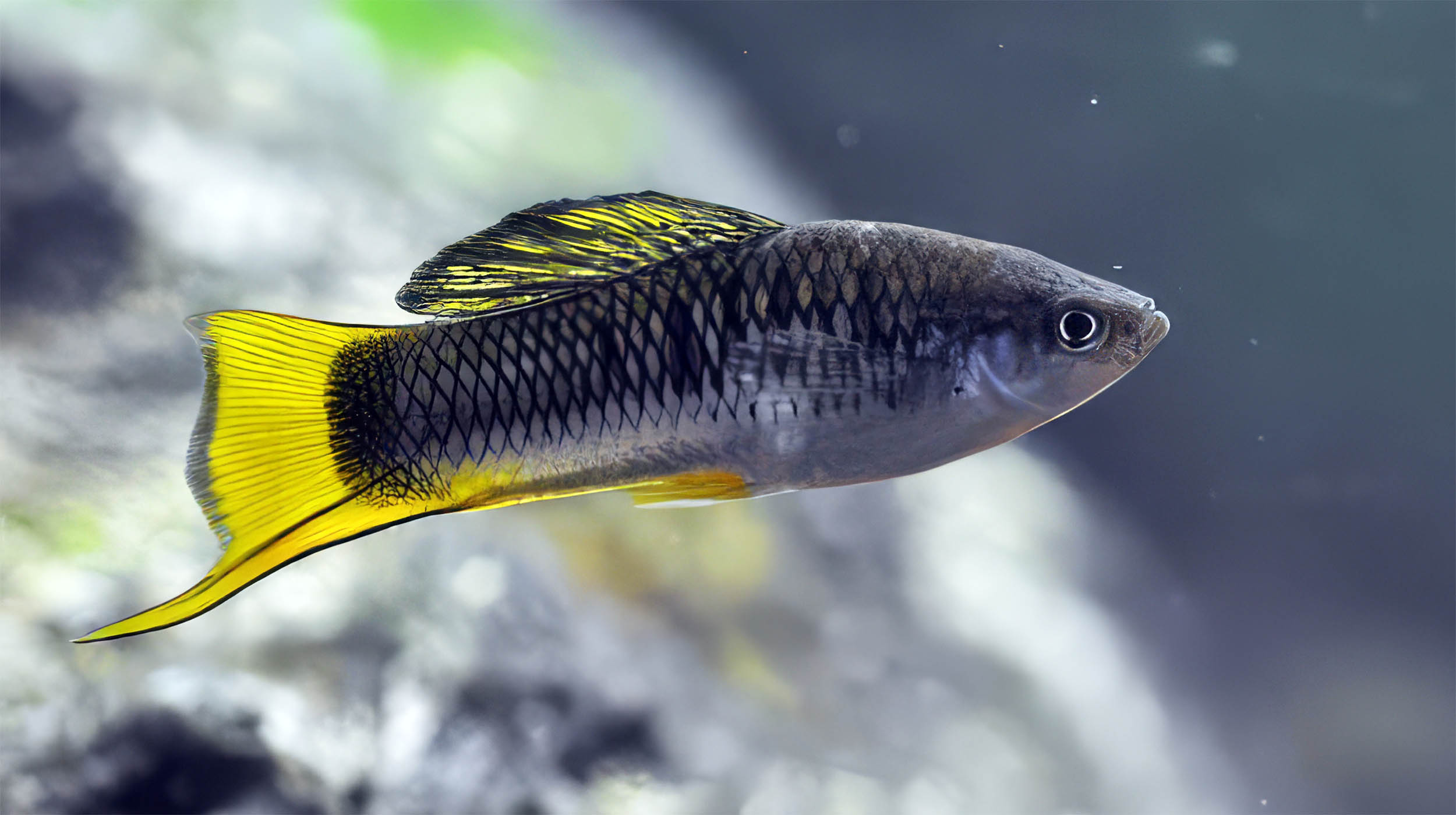 Male highland swordtail fish Xiphophorus malinche. Credit: Dan Powell/Stanford University. Click image to enlarge.Tracking pollution through rivers
To trace what was happening, the researchers sampled water and fish from at least 10 locations across four rivers in the region. The area includes a mix of untouched wilderness, cattle ranches, and farmland.
One of the four rivers ran through a town of about 3,000 people. That’s where the differences showed up most sharply.
Water collected downstream of the town was noticeably more turbid than water collected upstream. It also carried higher concentrations of nitrate, phosphate, and heavy metals, including copper, lead, and cadmium.
None of the other three rivers, which lacked that kind of urban footprint, showed the same contamination pattern.
The comparison gave researchers a natural experiment: the same fish species in the same general region, but one population swimming through significantly dirtier water.
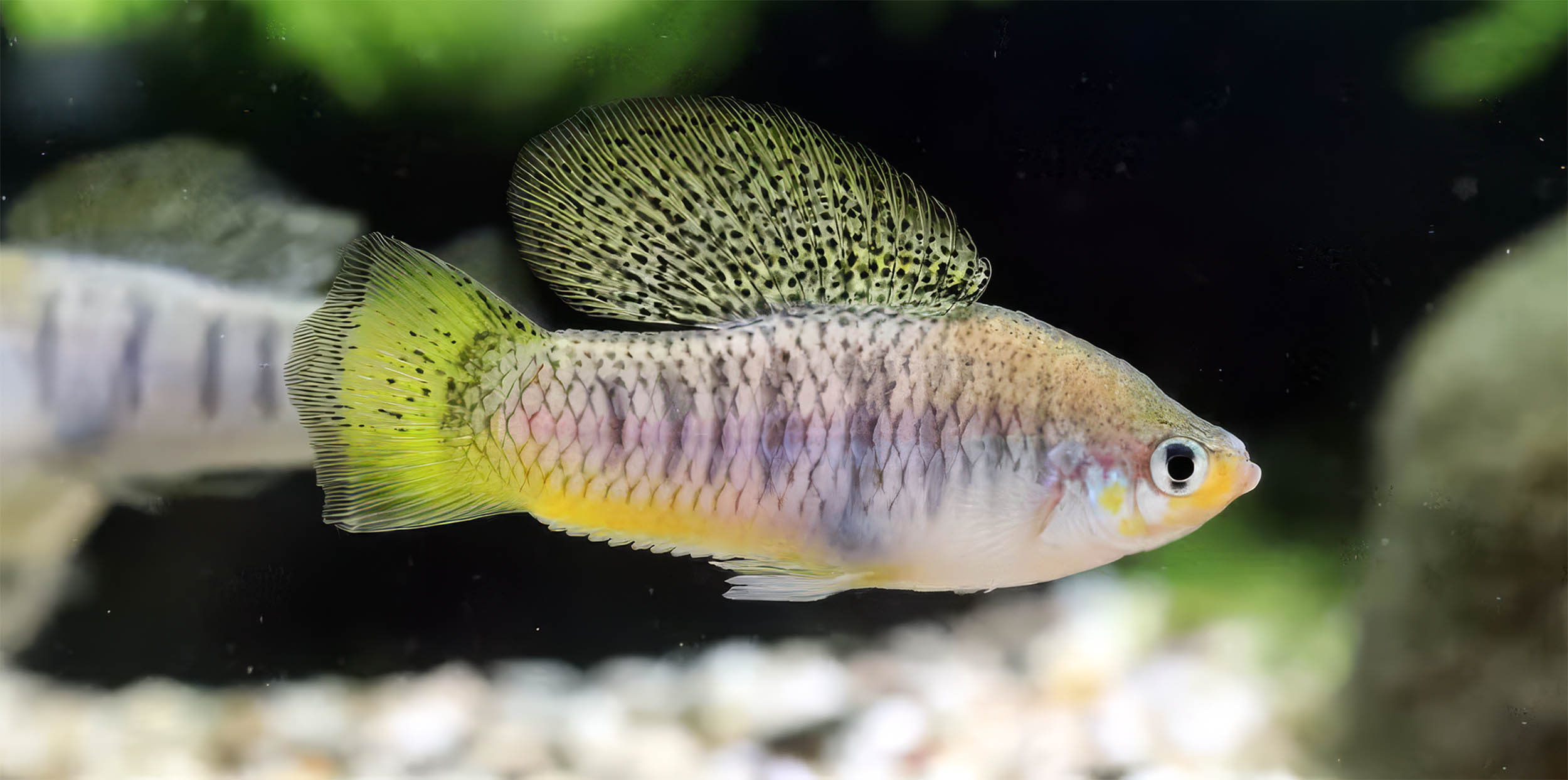 Male sheepshead swordtail fish Xiphophorus birchmanni. Credit: Dan Powell/Stanford University. Click image to enlarge.Swordtail fish with damaged noses
The physical effects on the fish downstream were striking. Female swordtails there were missing olfactory cilia, the small hair-like structures inside their noses responsible for detecting smell.
At the same time, their noses contained more mucus-producing cells. That left them effectively congested, not unlike a person struggling through a bad cold.
That matters enormously because smell is believed to be these fish’s primary way of identifying a suitable mate.
Genetic analysis of embryos from the downstream population backed up what the physical damage suggested. Many of the offspring were genetically halfway between the two species, evidence that females downstream were no longer reliably choosing mates of their own kind.
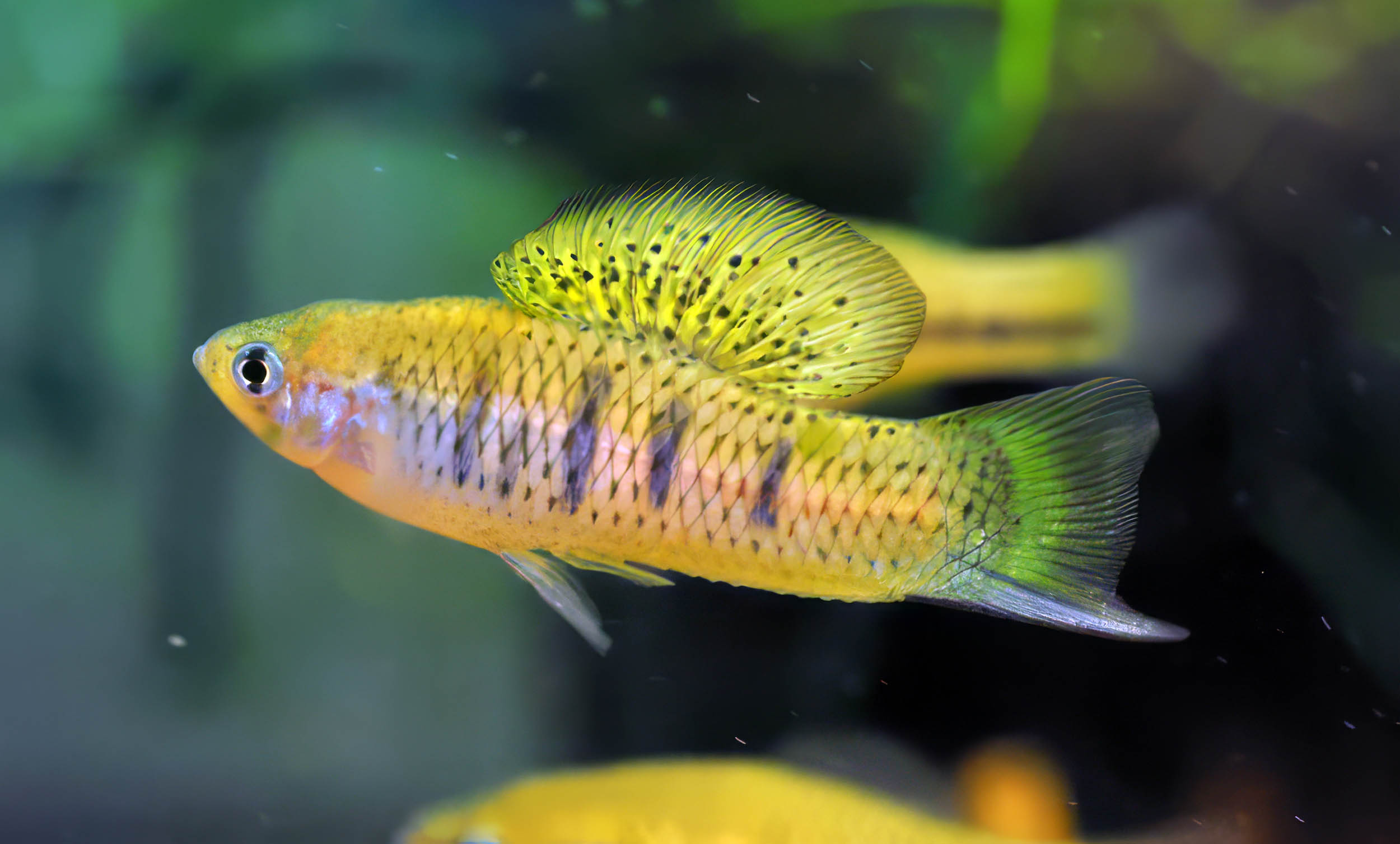 Male hybrid swordtail fish showcase physical traits of the two parent species, with a shortened sword, a sail-like fin, and variable bars along the body. Credit: Dan Powell/Stanford University. Click image to enlarge.Connecting pollution and hybrids
Ben Moran, the study’s first author and a former doctoral scholar in Schumer’s lab, was careful about how the researchers framed the connection.
“We don’t have a smoking gun, but we have really good circumstantial evidence that hybridization is causing a loss of biodiversity in these fish,” Moran said. “And it’s probably connected to the way that humans are impacting the environment.”
The case builds through consistency rather than a single definitive test. Cleaner rivers retained distinct swordtail species, while the polluted river contained fish with damaged olfactory systems and extensive hybridization. The loss of smell provides a clear biological mechanism linking the two.
Previous research from Schumer’s lab had already shown that hybridization between these two species carries real costs. In some offspring, it triggers melanoma or a lethal metabolic disorder.
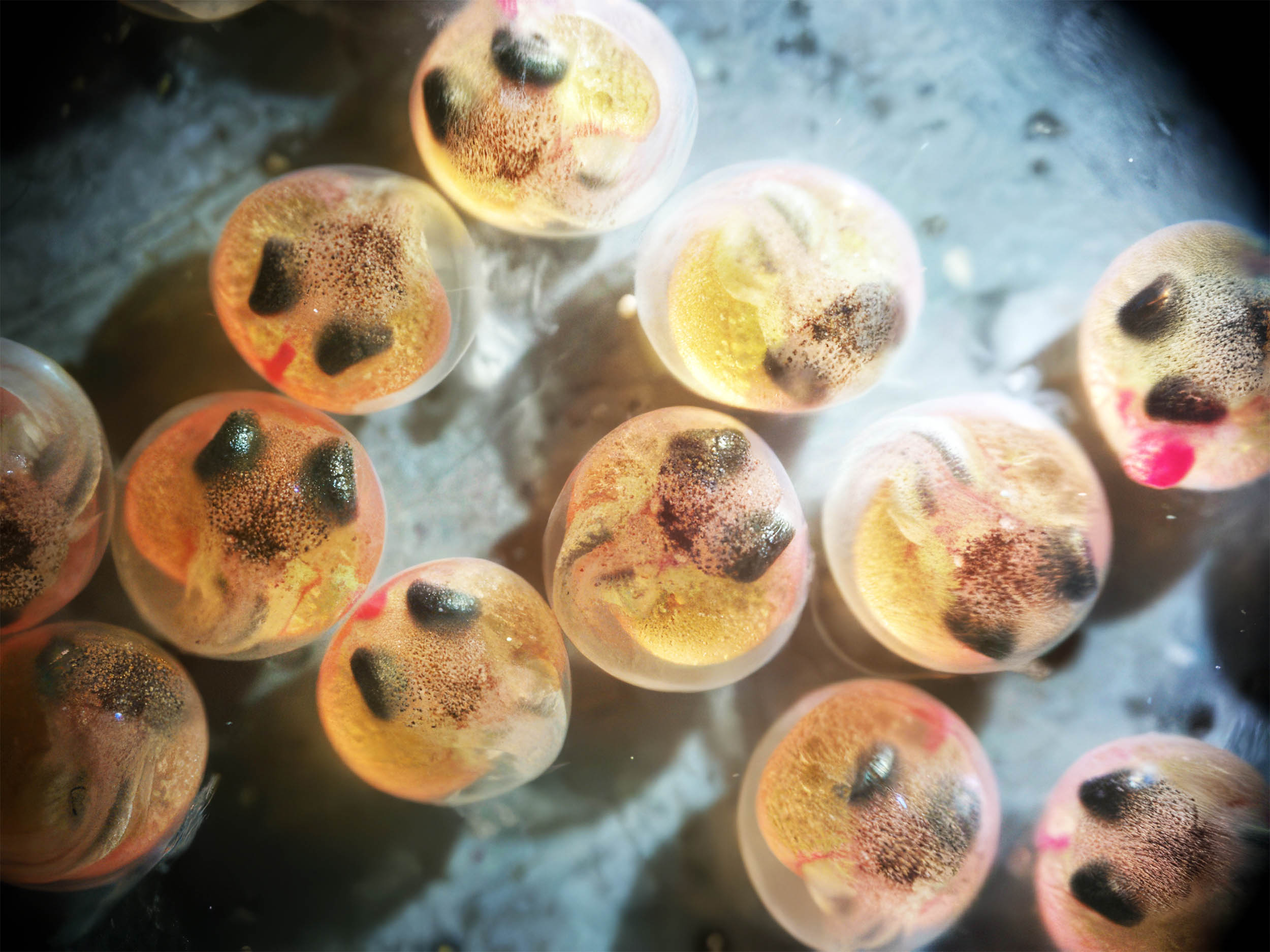 Researchers compared the genetics of swordtail embryos upstream and downstream of the town to learn more information about their parentage. Credit: Ben Moran/Stanford University. Click image to enlarge.Two swordtail fish species become one
This particular study only covers current conditions in a handful of rivers, but its implications point well beyond them.
“One concern is the reduction in population health,” Schumer said. “But from a conservation perspective, hybridization could result in a type of species collapse, where there were two species, but then eventually there is only one and diversity is lost.”
That’s a different kind of biodiversity loss than the one most people picture.
No single species has to vanish outright for diversity to disappear. Two species can blur into one, quietly and without any dramatic die-off. The same erosion can happen because pollution disrupts their ability to recognize one another by smell.
The study is published in the journal Current Biology.
—-
Like what you read? Subscribe to our newsletter for engaging articles, exclusive content, and the latest updates.
Check us out on EarthSnap, a free app brought to you by Eric Ralls and Earth.com.
——