
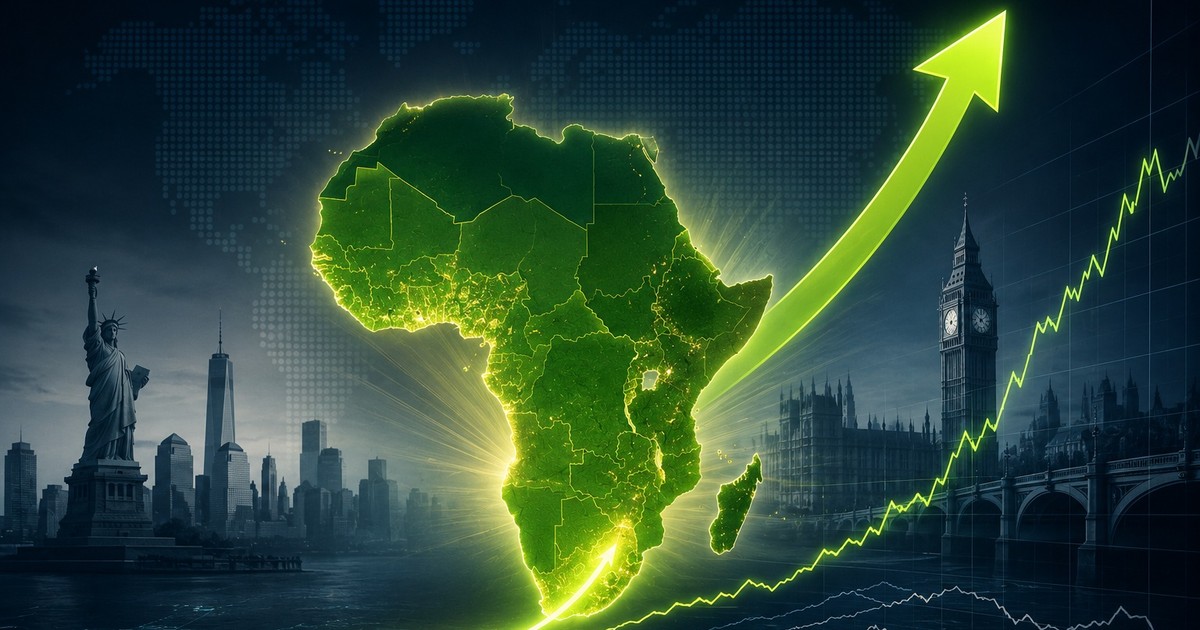
Investigation by the International Monetary Fund (IMF) revealed that Sub-Saharan Africa is projected to achieve economic growth of 4.3 percent in 2026, comfortably outpacing major developed nations and the global economy due to structural policy reforms, improved macroeconomic stability, and strong economic momentum in key non-resource and resource-rich nations.
This expansion comes at a time when global economic momentum faces significant crosscurrents from geopolitical conflicts and shifting market conditions.
Divergent growth trends across major economies
In comparison to the expected performance of sub-Saharan Africa, the United States economy is forecast to grow by 2.3 percent in 2026, while economic growth in the United Kingdom is projected to slow to 1.0 percent.
Meanwhile, overall global economic growth is expected to reach 3.0 percent during the same year.
The economic resilience across sub-Saharan Africa is supported by structural reforms, improved macroeconomic stability, and favorable terms of trade in key nations.
Commodity price dynamics
In its official World Economic Outlook Update published on July 8, 2026, IMF stated that “Global headline inflation is expected to increase from 4.1 percent in 2025 to 4.7 percent in 2026 before declining to 3.9 percent in 2027.”

The report further observed that while non-resource-intensive, oil-importing economies in Africa face cost pressures from energy prices averaging $89 per barrel, resource-rich nations in the region are helping offset regional slowdowns.
Individual performance within the continent varies, with Nigeria projected to grow by 4.1 percent in 2026 due to macroeconomic policy adjustments. South Africa is expected to expand by 1.1 percent as ongoing structural reforms take root.