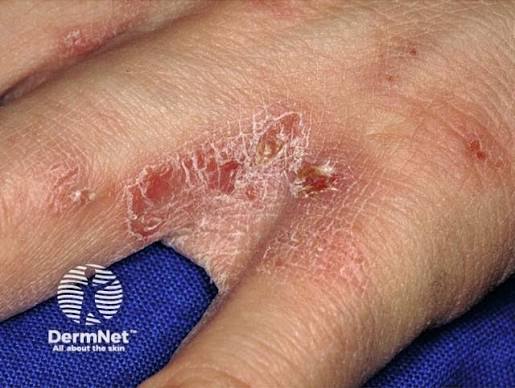
The first national mass drug administration (MDA) control program for scabies has drastically reduced cases of the skin disease in Solomon Islands and Fiji, a new study shows.
The research, led by the World Scabies Program (WSP) at Murdoch Children’s Research Institute (MCRI) in Victoria, Australia, and published in Nature Health, found the MDA program—which involved ivermectin—led to substantial and sustained decreases in scabies and associated skin infections across the Pacific nations.
After two annual rounds of MDA delivered to the entire population of Solomon Islands, scabies prevalence fell from 23.2% to 3.9%. Rates of impetigo, a skin infection, declined from 9.2% to 1.6% during the same period.
In Fiji, where one round of MDA was rolled out nationwide, scabies prevalence almost halved from 6.2% to 3.4%, while impetigo rates dropped from 4.3% to 1.2%within 12 months of treatment.
More than 2.5 million doses of ivermectin were provided under the MDA program. Scabies and impetigo decreased across all age groups in both countries, including young children, who experience the highest burden of disease. The prevalence of moderate to severe scabies also declined substantially.
“Our findings demonstrate for the first time that scabies, a disease that causes enormous suffering for children and families, can be significantly reduced when effective treatment is delivered at scale,” says Susanna Lake, PhD, a post-doctoral researcher and public health professional at MCRI, in a news release.
The MDA was implemented by the Ministries of Health and Medical Services in Solomon Islands and Fiji with support from the WSP, an initiative of MCRI and including researchers from the Kirby Institute based at UNSW Sydney.
WSP was established in 2019 with the aim of translating research evidence into public health action for scabies control after successfully securing $10 million in support from the Macquarie Group Foundation. The Australian Government also provided further funding.
Andrew Steer, PhD, Director of Infection, Immunity and Global Health, and Group Leader of the Tropical Diseases Research Group, at the Murdoch Children’s Research Institute at MCRI, adds that the new findings were particularly important for countries with high scabies cases and limited health system resources. “Scabies has long been neglected, despite its links to serious infections and long-term disease,” he says. “Our research provides critical evidence to inform national and international policy and supports the broader integration of scabies control into public health and neglected tropical disease programs.”
Steer says that achieving high coverage in urban areas requires multiple strategies to improve access, including delivering MDA through workplaces, schools, and community gatherings.
He adds that further measures were needed to address the ongoing burden of scabies in young children, with prevalence still above 10% among those aged under five despite MDA treatment.
The results come as a scabies control guide produced by the WHO, which includes contributions from Steer, has been published.
The guide outlines how to implement scabies control programs, including how to estimate disease burden, deliver control measures, and establish effective monitoring and evaluation systems.
Photo Credit: Dermnet