
Analysis: Ireland remains one of the wettest countries in Europe, but the challenge is how we manage that water and keep pace with a changing climate
Following one of the wettest winters in recent memory, many people have been asking what seems like an entirely reasonable question: if it rained for almost nine months straight, why are we now facing hosepipe bans and appeals to conserve water? Why wasn’t all of that rainfall captured and stored for the summer months?
Ireland remains one of the wettest countries in Europe, but our challenge is in how we manage, store and distribute that water, and whether our infrastructure has kept pace with growing demand and a changing climate. Understanding the different types of water storage explains why a wet winter does not automatically guarantee plentiful drinking water in August.
We need your consent to load this rte-player contentWe use rte-player to manage extra content that can set cookies on your device and collect data about your activity. Please review their details and accept them to load the content.Manage Preferences
From RTÉ Radio 1’s This Week, public urged to conserve water as hosepipe ban in effect
When rain falls across Ireland, much of it is stored naturally in lakes, rivers, groundwater aquifers, wetlands and soils. Groundwater (water stored naturally underground) supplies approximately one-fifth of Ireland’s public drinking water, while in some counties it provides much more than half of all supplies. Large lakes such as Lough Corrib, Mask and Ree contain vast quantities of freshwater and act as natural reservoirs, supporting public water supplies.
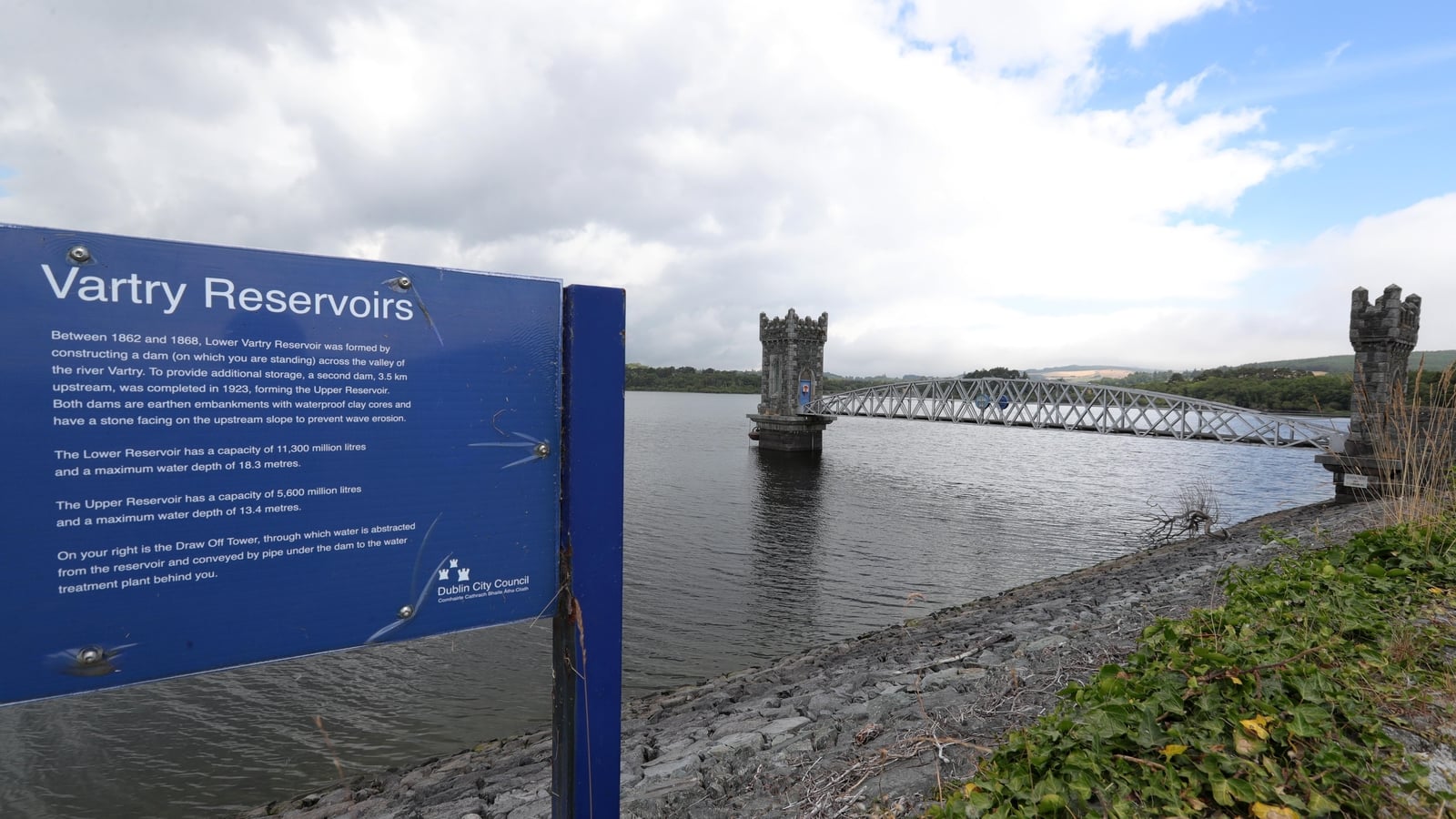
Ireland also relies on engineered impounding reservoirs such as Vartry and Poulaphouca, which were built to capture winter rainfall and provide a reliable raw water source for treatment throughout the year. Rivers retain an important storage function through the interaction between surface water and groundwater, with aquifers gradually releasing water back into river channels long after rainfall has ceased.
Ireland already stores an extraordinary amount of water, but this is raw water, not drinking water. Before it reaches our taps, it must first be abstracted from a reservoir, river, lake or borehole, treated to drinking water standards and then distributed through thousands of kilometres of pipes (where leakage remains a significant challenge).
We need your consent to load this rte-player contentWe use rte-player to manage extra content that can set cookies on your device and collect data about your activity. Please review their details and accept them to load the content.Manage Preferences
From RTÉ Radio 1’s Today with David McCullagh, would you snitch on your neighbour if they used a hosepipe during the current restrictions?
Every stage of that process has a finite capacity. During prolonged dry weather, demand increases at precisely the same time as river flows decline, lake and reservoir levels drop, and environmental limits on abstraction become more important. The bottleneck is often not the amount of water present within the catchment, but the rate at which it can be safely abstracted, treated and delivered to consumers.
This distinction is equally relevant whether water is supplied by Uisce Éireann, a group water scheme or a private well. Around 15% of Ireland’s population relies on group water schemes or private supplies, many of which depend on local groundwater or surface water sources and have fewer opportunities to supplement supplies during prolonged dry weather.
Another source of confusion is the meaning of the word “reservoir”. Most people imagine a large lake behind a dam, but within the drinking water industry the term often refers to covered service reservoirs that store treated water after it has left the treatment plant. These reservoirs generally hold only days of treated water. Their purpose is to balance daily demand and maintain pressure within the network, not to provide seasonal storage – and indeed, storing treated drinking water for months would create water quality challenges of its own.
We need your consent to load this rte-player contentWe use rte-player to manage extra content that can set cookies on your device and collect data about your activity. Please review their details and accept them to load the content.Manage Preferences
From RTÉ Radio 1’s Today with David McCullagh, how safe is our drinking water?
Ireland has historically relied much more heavily on natural lakes, rivers and groundwater than on large artificial reservoirs. Water infrastructure developed around abundant natural resources rather than extensive engineered storage. Today, however, climate projections suggest that while annual rainfall may not change dramatically, we are likely to experience wetter winters, drier summers and more intense rainfall events. Heavier winter rainfall does not necessarily improve summer water security if much of it arrives over short periods that exceed our capacity to capture, store or use it.
Following a relatively dry May, river flows declined, particularly in the east, although many lakes and groundwater bodies remained close to or above normal levels. Wetter conditions returned in June, with above-average rainfall nationwide and river flows recovering at almost three-quarters of monitored stations.
But not all of this water is readily available for public supply. Since 2024, larger abstractions have been licensed by the EPA, which sets site-specific abstraction limits to protect rivers, lakes, groundwater and downstream ecosystems. During dry weather, these environmental limits may require abstraction to be reduced long before a water body appears to be running low. This helps explain why local drinking water supplies can come under pressure even when broader hydrological conditions remain relatively healthy.
We need your consent to load this rte-player contentWe use rte-player to manage extra content that can set cookies on your device and collect data about your activity. Please review their details and accept them to load the content.Manage Preferences
From RTÉ Radio 1’s Drivetime, the era of ‘global water bankruptcy’
Looking across Europe provides an interesting comparison. Spain has invested in more than 1,200 large dams and possesses one of the highest reservoir storage capacities in Europe because its climate has always demanded seasonal storage. France also relies on major reservoirs and river regulation schemes, while many countries benefit from an additional natural reservoir in the form of winter snowpack that gradually melts throughout spring and summer. Yet even these countries have experienced water restrictions during recent droughts.
Despite having considerably greater reservoir capacity than Ireland, England has introduced widespread hosepipe bans this summer across several water company regions. Reservoirs undoubtedly improve resilience, but they do not eliminate the effects of prolonged drought or rising demand.
Ireland’s challenge is not one of water scarcity but ensuring that the right water is available, in the right place, at the right time
Ultimately, the question is not why Ireland failed to store enough rainwater over the winter: much of that rainfall remains stored today in lakes, groundwater and catchments across the country. The more important question is whether we have invested sufficiently in the infrastructure needed to convert those abundant natural water resources into reliable drinking water supplies for a growing population living in a changing climate.
That conversation should encompass reservoirs where they are appropriate, but also treatment capacity, interconnections between supplies, regional transfer pipelines, groundwater protection, support for group water schemes and continued investment in maintaining the infrastructure we already have. Ireland’s challenge is not one of water scarcity in the traditional sense; it is one of ensuring that the right water is available, in the right place, at the right time.
Follow RTÉ Brainstorm on WhatsApp and Instagram for more stories and updates
The views expressed here are those of the author and do not represent or reflect the views of RTÉ