
I once worked alongside someone who had spent over thirty years in the prison system, not as an inmate, but as a member of staff. Sharp, controlling and always two steps ahead, she initially seemed difficult to work with.
Over time, however, I realised that although she was now working in general healthcare, many of the behaviours that had helped her cope in a high-pressure prison environment had followed her into a very different setting.
In professions such as prisons, hospitals and emergency services, control is not always simply a personality trait, it can become a survival strategy. Daily demands for vigilance, authority and emotional resilience can train the body to remain in a state of alert. Over time, this heightened state may become automatic, influencing how a person thinks, relates to others and experiences periods of rest.
The instincts that once helped someone stay safe – reading people quickly, anticipating risk and taking charge – can gradually become habits that appear out of place in everyday healthcare environments. In calmer settings, these behaviours may present as irritability, perfectionism or a strong need to manage situations and people. It is not necessarily that these professionals want to control others; rather, their nervous system may have become accustomed to anticipating disruption. Repeated exposure to high pressure environments can condition the brain and body to anticipate threat, even when objective danger is no longer present. Survival has become a habit.
Research supports this understanding. Chronic workplace stress activates the hypothalamic-pituitary-adrenal (HPA) axis, contributing to prolonged physiological arousal and cumulative effects on the body and brain (McEwen, 2007). Repeated exposure to stress can also influence neural pathways involved in threat detection and emotional regulation (McEwen and Akil, 2020), meaning that responses which were once adaptive may continue even after the original threat has passed. Over time, these survival responses can become a form of psychological ‘muscle memory’.
“What looks like controlling behaviour may just be fear in disguise.”
In healthcare, these patterns are increasingly recognised. Compassion fatigue and secondary traumatic stress can contribute to emotional exhaustion and reduced wellbeing among healthcare professionals (Xie et al., 2021; Figley, 2012). Even when the immediate threat has passed, health practitioners may continue to experience the workplace through a lens of hypervigilance, subtly extending the same survival response.
I have witnessed how these patterns manifest in everyday team dynamics. The colleague who corrects everyone or uses humour to maintain authority, the person who arrives early, struggles to delegate or cannot relinquish control, these behaviours can easily be interpreted as arrogance or inflexibility. Beneath the surface, however, there may be years of accumulated stress and a nervous system that has adapted to constant vigilance.
Recognising post stress behaviour is vital for teams. Understanding how prolonged exposure to high-stress roles shapes behaviour enables colleagues to respond with empathy rather than frustration. Interventions do not always need to be formal. Creating psychologically safe environments, encouraging reflective practice and acknowledging the emotional impact of demanding work can all help.
When people feel psychologically safe, they are more able to lower their defences, reconnect with colleagues and rebuild trust.
Understanding these dynamics also protects patient care. Teams that recognise the emotional and behavioural consequences of prolonged workplace stress are less likely to experience conflict and more likely to retain skilled staff. Sometimes, the most controlling person in the room is simply someone whose nervous system has forgotten what it feels like to relax.
None of this excuses poor behaviour or manipulation. However, recognising the possible roots of these behaviours allows for more thoughtful responses. By shifting our perspective from blame to understanding, we can foster workplaces where staff feel safe enough to move beyond simply surviving and begin to truly work together.
Remember, what looks like controlling behaviour may just be fear in disguise.
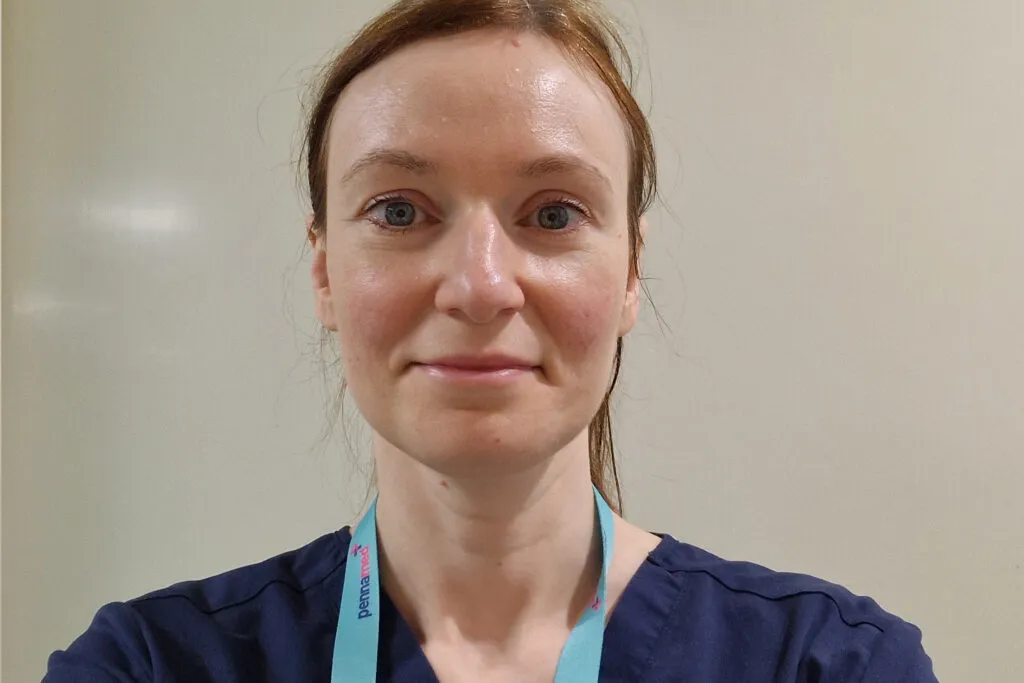
Chiara Quetti is endoscopy sister, Manchester University NHS Foundation Trust
References
Figley CR (2012) Compassion Fatigue: Coping with Secondary Traumatic Stress Disorder in Those Who Treat the Traumatized. Brunner-Routledge. [seminal ref]
McEwen BS (2007) Physiology and neurobiology of stress and adaptation: central role of the brain. Physiological Reviews; 87:3, 873-904. [seminal ref]
McEwen BS, Akil H (2020) Revisiting the stress concept: implication for affective disorders. Journal of Neuroscience; 40:1, 12-21.
Xie W et al (2021) The prevalence of compassion satisfaction and compassion fatigue among nurses: A systematic review and meta-analysis. International Journal of Nursing Studies; 120:103973.