
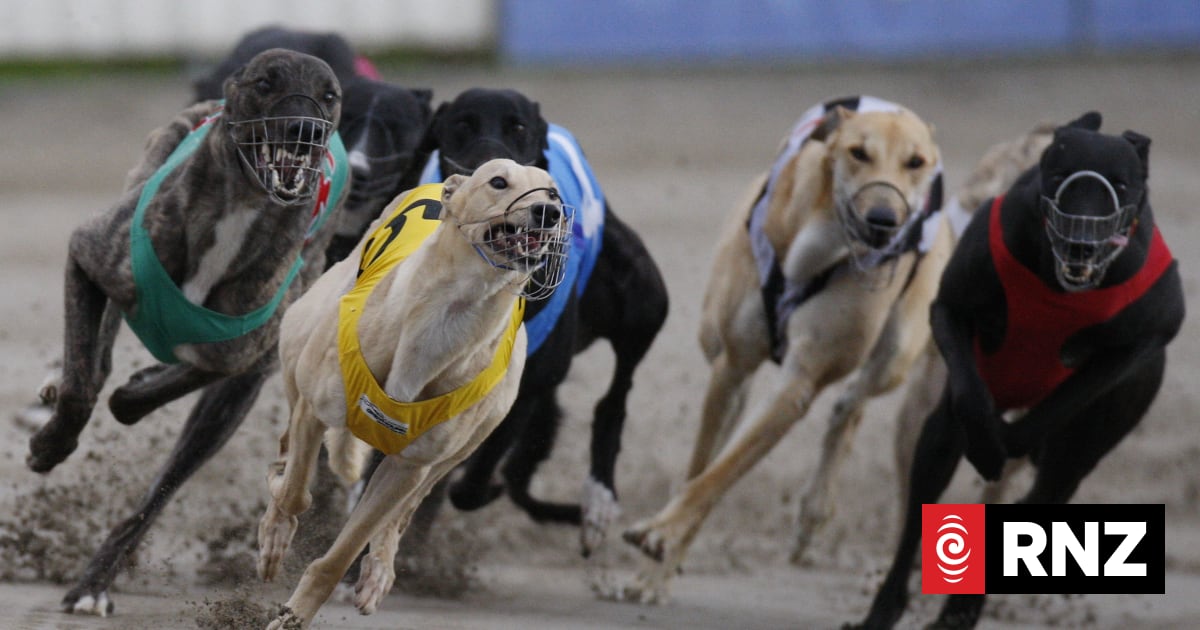
The final greyhound races are being held in New Zealand today and the industry has confirmed plans to send up to 150 dogs to Australia to continue racing.
The New Zealand racing ban, which takes effect on Saturday, follows years of animal welfare concerns.
Ten greyhounds have been euthanised this season, including one in the final days of racing.
From Saturday the Greyhound Racing Transition Agency takes on the task of rehoming an estimated 1400 dogs.
The transition agency’s head Heather Simpson said she was aware that Greyhound Racing New Zealand had organised charter flights for about 150 dogs to go to Australia.
“There is nothing in the legislation that stops trainers choosing to export their dogs to Australia, some of these dogs actually will be partly owned by Australians.”
She was not concerned about the welfare of transporting dogs via charter flights as they had been well looked after in the past.
“Dogs have been exported both for racing but also have been exported in the past for rehoming, so it’s not a new activity.”
None of the dogs which transfer to the Greyhound Racing Transition Agency will be exported for any racing activity, she said.
All of the people who are caring for dogs which come under the transition agency’s watch have signed contracts, she said.
“Our job is to look after the dogs and the people involved in the industry as the transition from racing occurs.”
Simpson said that the agency will have a welfare programme in place where the dogs are regularly checked.
“Part of the contracts with carers is that they will need to ensure the welfare of the dogs is looked after and appropriate medical, veterinary care is given to those dogs and we have an assurance system in place for doing checks on all those. So we are confident that the welfare of the dogs is well looked after.”
Trainers who keep the dogs in the meantime will receive a daily payment of $36.
Greyhound Racing New Zealand chief executive Edward Rennell has said he believed it should be more, given those in the scheme had to feed the dog, as well as paying wages and tax, and many did not have any other income.
But Simpson said she was confident it was a fair payment to look after the dog’s welfare and people have willingly entered into those contracts.