
Climate pollution from cows and sheep could be far higher over the coming decades than the Government’s most recent projections had estimated, according to criticism from the independent Climate Change Commission.
Last year, officials projected methane emissions from livestock and waste would fall by a quarter by 2050. This was virtually unchanged from the 2024 projections. However, between the two sets of calculations, the Government made a major policy decision, ruling out a price on agricultural emissions.
How is it possible that in 2024 officials calculated that a price on emissions would drive methane down a quarter over 25 years, but that a year later the same mark would be reached with no price at all?
Climate Change Commission chief executive Jo Hendy says the Government’s current approach to the primary sector won’t achieve the emissions cuts it has projected.
“Good policy decisions need to be made on robust projections that are the best estimate of what current policy will achieve. We identified some areas of concern that the assumptions that the Government policy projections are based on did not have sufficient evidence to back them up, and so that’s why we recommended they actually improve their process,” she says.
“If we overestimate what we’re on track for, then we’re going to discover down the track when it’s too late to act that we’re not going to make it. We want the best estimate so we can have a well-paced transition, hitting our emissions budgets. Leaving it too late increases costs and takes away choices.”
For its part, the Ministry for Primary Industries defends its work against that criticism.
“We disagree with the commission’s comments about the use of a scenario-based approach to projections,” says strategy director Chris Kerr. “The use of scenarios was a deliberate decision to improve our approach to projections to ensure they are fit for purpose in the face of rapidly increasing uncertainty, where past activities are increasingly not a good predictor of the future.”
Climate Change Minister Simon Watts backs the ministry’s numbers, too.
“The Government has confidence in the approach taken to develop projections, including for agriculture. All forecasts are inherently uncertain, but are based on the best information we have to help us understand how we are tracking towards our targets,” he says.
“The commission’s role is to independently monitor and provide advice. We will consider the commission’s recommendations as we develop our response to this report.”
The commission’s questions add to mounting concerns from experts, environmentalists and even the farming lobby about the rigour of the Government’s numbers.
Experts who have reviewed the technical details behind the modelling say officials adopted a new approach to estimating future pollution from livestock last year, concurrent with the Government’s policy changes.
Christina Hood, chief adviser at the NZ Climate Foundation, says officials are engaged in wishful thinking built on “circular argument”, relying on unrealistic assumptions that even the environment ministry called arbitrary.
Green Party co-leader Chlöe Swarbrick says her party will lodge written parliamentary questions to try to get to the bottom of what has happened. She suspects the change to the modelling was a political decision, in order to reassure the public that the Government’s climate backtracking would have little real-world impact.
“You have a Government come, shred climate action, especially in the methane emissions space and then all of a sudden we’ve had a changing of the modelling which is supposed to lead us to the conclusion that, ‘Don’t worry, there’s nothing to see here, everything is all good’. It can only really lead one to the conclusion that politicians have put their fingers on the scale,” she says.
“It’s sketchy and clearly further questions have to be asked.”
Emissions pricing
In 2024, the Government released its emission reduction plan, detailing the policies it would use to meet the second carbon budget for (2026 to 2030) and, in part, the third budget (for 2031 to 2035) as well.
Projections developed to accompany that plan showed methane emissions from livestock and waste were due to fall 24.9 percent by 2050, from 2017 levels. That was just within the range of the target at the time, which required a 24 to 47 percent reduction.
The biggest driver of this change was agricultural emissions pricing. Although the Government had delayed its coming into force by five years and cut the requirement for agricultural processors to report their emissions, this policy was still one of the key elements of the climate plan.
From 2030, farmers would have to pay a price for the emissions produced by their livestock. The details beyond that were scarce, but officials estimated a price could drive uptake of new technologies to reduce emissions, which farmers would not otherwise pay to use on their own.
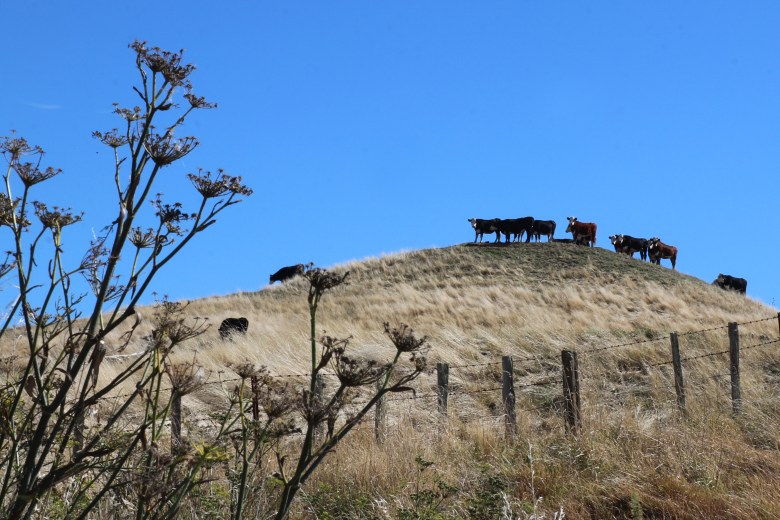 A price on emissions was expected to improve the commercial case for new technology. Photo: Lynn Grieveson
By the 2040s, for example, officials estimated 69 percent of dairy farmers would use a methane inhibitor if they had to otherwise pay a price for the methane their cows produced. In the absence of a price, adoption would peak at 3 percent.
Over just the first five years of the pricing scheme, 10.6 million tonnes of pollution would be avoided. However, progress wouldn’t start until the price was in place. Only 200,000 tonnes would be avoided in the second half of this decade, when technologies became available but farmers didn’t face a price on emissions.
Officials anticipated that in the absence of an emissions price driver, some farmers would want to be early adopters of mitigation technologies over the second budget period. “However, our assumption in the modelling is that price will be a key driver of uptake,” they said. “Given this, we have adopted relatively conservative assumptions that have a very small impact on [the second budget].”
Over the next year, government policy changed significantly. First, the Government made the decision to weaken the methane target, defying the Climate Commission and a coterie of local and global experts. Methane would now need to fall only 14 to 24 percent by 2050.
Watts, the climate minister, conceded the lower end of this range was not consistent with limiting warming to 1.5C – a requirement in the Zero Carbon Act and, according to a ruling from the International Court of Justice, in international law as well.
The weakening of the target had long been foreshadowed. What hadn’t been was the accompanying decision to scrap pricing entirely. National had campaigned on implementing pricing – yes, five years later than Labour, but it was still a core part of the Government’s climate response.
The most surprising revelation, however, came in the form of updated pollution projections. With pricing gone and a weaker target providing even less incentive for farmers to reduce emissions, methane emissions from livestock and waste were now forecast to fall 24.7 percent by 2050. That is, just 0.2 percentage points less than a year earlier, despite the eradication of any policy which might effect such a significant reduction.
‘Arbitrary set of assumptions’
While the headline numbers showed little change, under the hood there had been significant movement.
To begin with, the 2025 baseline projections (in the absence of any climate policy) showed livestock methane emissions would be 5 percent higher in 2050 than had been estimated the previous year, driven largely by an increase in the projected number of dairy cows.
When Government policy was included – pricing in the case of the 2024 projections and an unspecified “market-led” approach in the case of the 2025 numbers – the numbers aligned more closely. In other words, the new “market-led” approach would actually lead to more emissions reductions, the projections insisted, in order to arrive at the same point but from a higher baseline.
At the same time, however, projections that included pricing showed the most progress in cutting pollution would come in the 2030s, before flattening out in the decade to 2050. The projections from 2025 assumed a much more linear rate of reduction, meaning far more methane (about 6 percent more) would be emitted to arrive at the same 2050 target.
To achieve the greater reductions without pricing, last year’s projections assumed the technology available to farmers would be more effective than previously thought and taken up more widely.
For example, the baseline expected uptake for a methane inhibitor was now 37 percent rather than the 3 percent projected the year prior. The market approach would lead to uptake peaking at 70 percent, above the 69 percent achieved by pricing. Even the efficacy of the inhibitor itself was improved, with the technology expected to cut emissions from a cow by 50 percent instead of the 45 percent modelled in 2024.
The differences were more significant across other technology types. Where pricing was assumed to lead to just 3 percent of farmers using the EcoPond effluent treatment tool, officials the next year estimated one in three farmers would use it in the absence of pricing.
Just 1 percent of dairy farmers were expected to use a nitrification inhibitor in 2024, even with a price on emissions. In 2025, officials decided uptake might instead peak at 24 percent.
Overall, the new projections assumed technology would be more effective at reducing emissions and more widely used in the absence of pricing than with it – with the exception of low-methane genetics, where uptake with pricing would peak above 90 percent rather than the 16 percent under the “market-led” approach.
James Palmer, then the chief executive for the Ministry for the Environment, would later tell a select committee that, in the absence of pricing, “it’s a pretty arbitrary set of assumptions at the moment”.
Scenarios widely doubted
Cue the Climate Change Commission, which last week issued just two recommendations to the Government in its annual vet of progress against targets. The first was to urgently implement more policies to reduce the risk of missing those targets. The second was to “update its approach to emissions projections to ensure they provide a robust indication of likely future policy impact”.
“The Government’s most recent emissions modelling projections include areas where the assumptions underlying the projections do not appear to be driven by a realistic assessment of current policy,” the commission wrote.
“While scenarios provide useful information, they do not replace the need for robust modelling of the likely effects of the Government’s policies … In particular, agriculture projections assume that industry incentives to take up technology are expanded, which is not currently proposed by the market.”
The commission is not the first to raise concerns about the robustness of the Government’s modelling. In March, Parliamentary Commissioner for the Environment Simon Upton called out the Government’s “heroic” assumptions undergirding its projections.
“Now the Government’s latest baseline emissions projections assume that by 2030, ‘37 percent of dairy cattle are vaccinated with a methane vaccine that reduces enteric methane emissions by 10 percent’. I personally find this assumption heroic. Remember this is the baseline projection! Not only do we not yet have such a vaccine, but the Government’s decision to abandon a price on methane removes the incentive to use one should it materialise,” he told the Dairy Leaders Forum at the time.
“Government projections appear to be relying on farmers acting out of the goodness of their hearts or whatever persuasion processors can come up with. My question to processors, like Fonterra, who have made clear commitments to reduce their emissions intensity is: how do they plan to meet their own emissions targets without a price on methane? What incentives will there be to take up new technologies?”
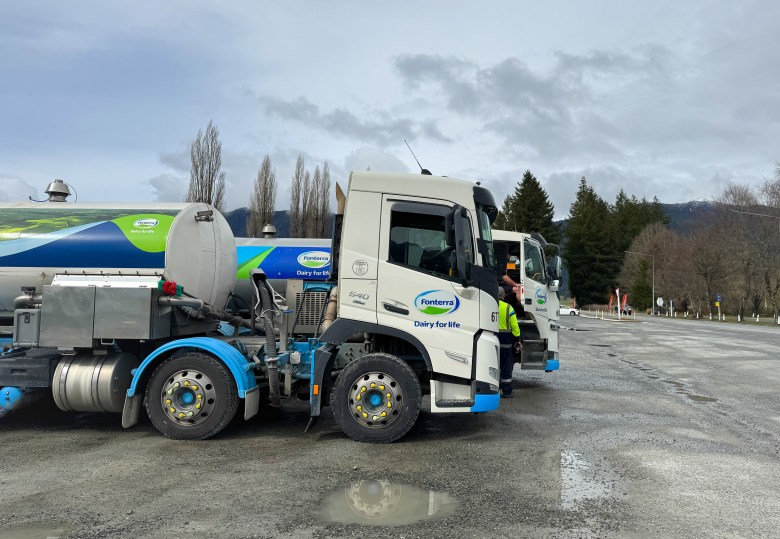 Fonterra has set targets to cut emissions from its farmers. Photo: Lynn Grieveson
In a submission last year on the Government’s policy changes, lobby group DairyNZ urged caution around “ambitious assumptions on technology uptake”.
Climate policy experts have shared their own concerns with Newsroom about the figures.
“I was alarmed and confused because it’s just not credible that in the absence of policy, you would end up in the same place. There are agricultural technologies coming down the pipeline but there are going to have to be incentives to take those up and if you take away the incentive structure, you can’t expect the same outcome,” Hood says.
Paul Young, a former Climate Commission staffer who now consults on energy and climate policy, also questions the figures.
“At face value, it is odd for the latest emissions projections to assume greater uptake of agricultural emissions technologies after the scrapping of the policy instrument previously assumed to drive their adoption (emissions pricing),” he says.
‘Scenario-based’
What explains the lack of change in the headline numbers, combined with such significant changes under the hood?
Between 2024 and 2025, as the Government was fundamentally altering its policy in this area, the Ministry for Primary Industries changed how it modelled future emissions. Where past projections modelled the impact of particular policies in driving uptake of methane-busting technology, the new approach is “scenario-based”, where certain things are assumed to happen and the impact of those events is subsequently modelled.
“We have confidence in the scenario approach we’ve taken because they use the latest available information while taking into account the uncertainty we face over the next 25 years,” says Kerr, from the ministry.
“Accounting for uncertainty is increasingly important in an environment where historical activities are often no longer a good predictor of the future. Uncertainty has rapidly increased in recent years across a range of domains, including global markets, weather patterns and adverse events, geopolitics, consumers and customer expectations, scientific developments and breakthroughs.”
But Hood questions that methodology.
“It’s just hypothetical assumptions. You draw a conclusion that says that 24 percent reductions are possible if we assume that technology uptake gives us 24 percent reductions. That doesn’t tell us anything at all. It’s just a circular kind of an argument,” she says.
“The way that things have been done in the past is a projection based on policies. So, if I make this change, what effect do I expect to see from that? And that is the information that you need to be able to track progress.”
In the absence of pricing, the new projections are built primarily on scenarios where the big agricultural producers – especially Fonterra and Silver Fern Farms – hit their own internal emissions-reduction targets over the next few years.
The ministry modelled three scenarios: One where those targets are achieved and new ones set by industry out to 2050, one where that happens and technology is more available than before (the so-called central estimate which achieves that 24.7 percent reduction), and one with even more effective and available technology.
One issue with this approach is that the big producers are not on track for their targets, despite the ministry assuming those targets are achieved and then exceeded over the coming decades.
Fonterra, for example, has pledged to reduce the emissions intensity of its dairy production by 30 percent by mid-2031. As of last year, however, it had achieved just a 3.8 percent reduction – identical to the previous year’s measurement, indicating progress has flatlined.
Silver Fern Farms has had mixed success as well. While it has over-achieved its target for reducing emissions from sheep, that’s come through reducing sheep meat production entirely. Its target to cut the emissions intensity of beef (which makes up nearly two-thirds of its total climate pollution) by 16 percent by 2032 is off track, with the firm having achieved just a 0.3 percent reduction so far.
Kerr says the ministry is confident that international pressure will ensure those targets are met.
“In developing the 2025 projections, we acknowledged that acceleration over the next five years would be required for industry to achieve their targets. We are aware these companies are actively working on ways to accelerate progress on adoption and other on-farm measures,” he says.
“A critical component for this is the availability of mitigation agritech. Industry are core investors in the technology pipeline and in the early-stage commercialisation and deployment of the first tools in market, such as the farms using the effluent treatment EcoPond. Several more technologies are expected to become available in the years before 2030. Given the growing numbers of and more ambitious scope 3 targets, we expect these technologies will be taken up as they become available, increasingly as a requirement to supply international customers.”
Rob Carr, who directed the Climate Change Commission’s recent report, says even if the targets are met, emissions could still rise. The most potentially consequential emissions targets in the sector are intensity-based targets – they seek to reduce the emissions per unit of dairy or meat.
“Relying on those market incentives to achieve your emission reductions may not result in absolute emission reductions because all of those incentives are based around emissions per unit of production,” he tells Newsroom.
“You can achieve those … by reducing emissions and by increasing your production, whereas the Government is trying to achieve an absolute emission reduction. Those schemes, even if they result in technology getting taken up, may not get you the outcome that you’re looking for if you’re relying on those as your only tool.”
Simon Watts says the Government is still investing to bring down methane emissions.
“The Government has committed $437 million over the next four years to accelerate the development, availability, and adoption of new tools and technology that support farmers to reduce agricultural emissions. For example, EcoPond, a new technology that’s effective at reducing methane emissions from dairy farm effluent ponds by over 90 percent, is already being deployed on more than 250 farms,” he says.
“Working with AgriZeroNZ, we are supporting farmers to adopt new emissions reductions tools and technologies once they’re approved. It is anticipated that market trends and industry and organisation-based targets will also contribute to emissions reductions.”
Incentives needed
Both Government policy and industry schemes are running into a reluctance to adopt new technologies that reduce emissions from methane. When the Survey of Rural Decision Makers last year asked about eight potential technologies, just one received support from a majority of farmers – EcoPond.
A majority of beef farmers said they were unlikely to adopt a methane inhibitor through a bolus and a plurality opposed methane vaccines, a bolus for dairy cattle, and nitrous oxide inhibitors. A plurality supported a methane inhibitor through a feed additive (which is difficult to implement in New Zealand’s pasture-based farm systems) and new forage crops which reduce emissions.
With no price on emissions to incentivise uptake, there’s little to shift these attitudes. In June, the Government announced a $51 million contribution to an industry-led ‘Early Adoption Accelerator’ that will fund pilot rollouts of various technologies.
That money won’t be available to incentivise wider uptake, however. And so long as the cost of doing nothing to reduce emissions is lower than the cost of implementing new technologies (which come with additional concerns around animal welfare and productivity), the projected surge in new technology use seems unlikely to eventuate.
Questionable projections have real consequences.
Hood says that’s the information one needs to be able to track progress. “The minister is legally responsible for ensuring that emissions budgets are met and that we’re on track towards the 2050 target and if you don’t have the information on what your set of policies are actually delivering, then you can’t do that progress tracking at all, it’s all hypothetical.”
In addition, New Zealand is required every two years to submit updated emissions projections to the United Nations’ climate body. Hood believes the approach used to model last year’s projections doesn’t meet those UN requirements.
“When New Zealand sends in its next report at the end of this year, I think they’re going to have to revert to the old way of doing it in order to meet the international requirements,” she says.
“This assumption-based approach, saying, if we assume emissions reduce then we achieve emission reductions, is really not good enough.”
Again, the ministry disputes that. Kerr says the approach is consistent with New Zealand’s obligations and a specific modelling methodology isn’t prescribed by the UN’s rules.
“Parties may use the models and approaches that best suit their national circumstances and information needs,” he says. “Projections are intended to provide a range of possible future emissions and removals outcomes based on assumptions, parameters and policy choices, rather than predict what will happen.”
Asked whether the ministry expects to see a significant change in the projections now that the policy changes of last year are fully bedded in, he says it is too early to tell.
“We are still in the process of compiling greenhouse gas emissions projections for forestry and agriculture for 2026. We’re intending to use a scenario-based approach again.”