
How to make snow from the sun is among the engineering feats of innovative solar energy company Sunergise, which is seeing rapid growth.
Sunergise chief executive Paul Makumbe said the business had seen more growth in past 12 months than in the eight years before.
Among a pipeline of upcoming projects was a large solar development for Fisher & Paykel Healthcare, which was about twice the size of a recent 2 megawatt (MW) facility for a Mānawa Bay retail development, located within the Auckland Airport campus.
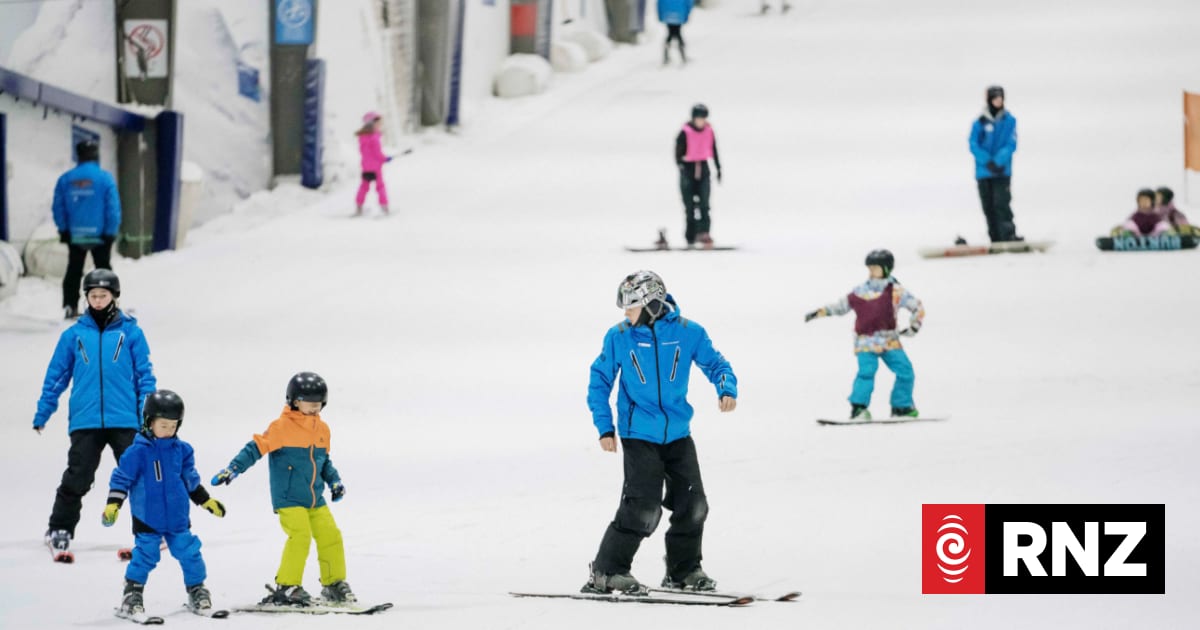
Sunergise also built a 1.05 MW solar plant to power about 30 percent of Auckland-based Snowplanet’s power requirements, with the 70 percent balance of power supplied from New Zealand’s national grid.
“How do we make snow out of snow? We figured it out with Snowplanet,” Makumbe said.
The year-round indoor attraction operated 24 hours a day and produced about 80 cubic metres of fresh snow a week to maintain its 8,000 square metres of slope.
“This is one of 50 sites that we currently have under our power purchase agreement,” Makumbe said, adding the facility produced more power than it can use, with the surplus flowing back to the grid.
“So the way that works is we effectively are responsible for designing the system, building the system, and operating the system, and instead of them paying their retail provider, they pay us for the power that they use from the system,” he said, adding that model allowed businesses to get access to solar on a “no-capital outlay basis.”
Sunergise also built solar facilities on behalf of other businesses.
“We’re starting to see a lot of the utilities asking us to build these solar plants on their behalf,” he said.
“We’ve been around for about 14 years, and we’ve got contracts and agreements with commercial clients across New Zealand and the Pacific.”
He said the pipeline for future development was strong.
“I think we we are seeing quite strong demand from corporates looking to take you know their power demand into their own hands.
“I think people are starting to realise that having control of their energy requirements… is a competitive advantage.”
He said obtaining resource consent was not typically an issue for the business as the bulk of Sunergise’s installations were on the rooftops of existing facilities.
“There’s a lot of kind of planning and design work that goes into it, but we don’t have to interact with the resource consent process.”
However, the Snowplanet development did need to got through the resource consent process.
He said the company was not thinking of growth beyond New Zealand and the Pacific.
“There’s a lot of work to be done in New Zealand and the Pacific, and we don’t want to get ahead of our skis, so to speak.
“Right now our focus is on buttoning down and executing on the opportunity in front of us. And I think there’s a lot of work to be done. A lot more opportunity than there is capacity or capability to execute on it.”