
Business and investing: It’s been a tough year for software-as-a-service providers globally as they continue to battle doubts about the continued viability of their business models in a world increasingly dominated by AI.
Once considered market darlings with share prices to match, these days they are largely shunned by investors in their rush to embrace the possibilities of new age AI businesses unencumbered by legacy systems and processes.
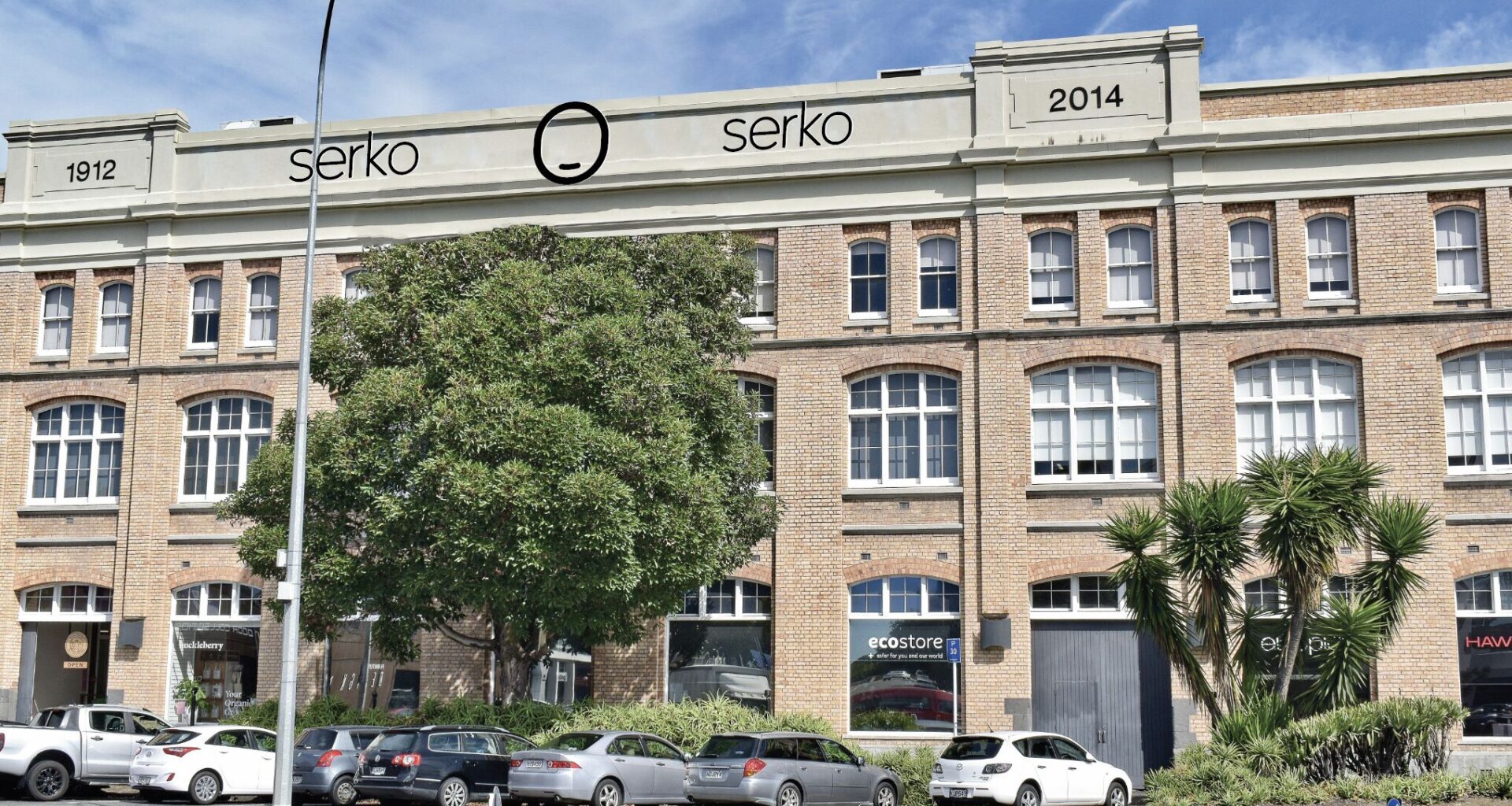
Take locally listed online travel booking and expense management service provider Serko as a case in point.
Despite recently reporting a 34 percent lift in annual revenue, having no debt, a cash buffer of $54.1 million and a global business model that has fully embraced AI from the outset and is continuing to grow, its share price has almost halved since the start of the year closing on Friday at $1.32 – a six-year low.
Or go back to October 2021 when its share price peaked above $8 and the decline five years on is even more dramatic.
And it’s not alone. In the US, Salesforce, the world’s leading customer relationship management software provider has seen its share price sink 35 percent year-to-date, while locally based online accounting provider Xero, whose shares are listed on the ASX, fell to a six-year low of A$61.58 on Friday – down 45 percent year to date.
Serko chief executive Darrin Grafton, who co-founded the business almost 20 years ago, admits the share price slide can be demoralising.
“It is disappointing that the market doesn’t see everything we’ve done over the years and build a little bit of faith.”
But in a nutshell, that’s the problem all software as a service businesses face: a lack of faith in the continued viability of their business models – despite the fact most of them are not necessarily easily replicated by AI.
In 2006 when Grafton co-founded Serko it was built on a simple premise.
“I thought to myself, imagine if we could build a global company from New Zealand with an online platform that spanned the world. I even had this moonshot goal that 20 percent of the world’s business travellers would eventually be using our technology.
“Today we operate across 180 countries, employ 400+ staff in six countries and our strong relationship with the world’s leading online accommodation website Booking.com continues to underpin the business.”
And far from being concerned about the impact of AI on the business, Grafton says the next decade is shaping up to be the most exciting decade in Serko’s history.
“People regularly say to me ‘don’t you fear the impact AI is going to have on the business?’ to which I respond ‘no, technology is finally catching up with the possibility to really change business travel forever’.”
But in a world reshaped by Covid is business travel still important?
“Absolutely! And what’s more, I’m expecting it to keep growing,” says Grafton.
“But where the shift has occurred is to prioritise more important or essential travel. From in-person conference presentations through to engineers meeting up with colleagues for whiteboarding ideas, these are all situations that just don’t happen virtually. And we see that all the time.
“Intuitively, it may seem the opposite. These days we operate in a full-scale digital economy. You’ve seen a massive change in the internet, data speeds and all that and yet every single day, millions of people board planes for business commitments. And you ask yourself the question, ‘Why?’ And the answer is simple, we are wired to connect, and we are wired to have those conversations that happen only while you’re in a room, in person.”
Although that’s all valid, sceptics will argue that AI systems will be able to take care of booking and travel management independently and most likely at a lesser cost enabling existing customers to bypass intermediaries in the future.
Unsurprisingly, Grafton disagrees pointing to several significant and not easily replicated advantages including decades of rich, proprietary travel data at scale, a deeply connected supply ecosystem, and an embedded technology platform that is already used by millions of travellers and thousands of organisations worldwide.
Serko.ai, Serko’s latest booking platform, is in closed-beta trial in the US and offers a taste of what managing future businesses will look like.
Built on three key principles and incorporating multiple AI features, the new platform will be designed to reflect how people actually travel for work: intent driven, personalised by default and ‘agentic’ by design – not a chatbot layered on top of a booking tool, but a coordinated execution engine that takes action on the traveller’s behalf.
Miss your flight, and the platform will automatically rebook and reschedule everything for you in in instant, or decide to extend your stay and everything else is taken care of for you automatically.
James Lindsay, head of research at Forsyth Barr Capital Markets, says what the market will be looking for from this point is for the business to show continued growth in bookings and customers.
“Serko achieved 4.3 million room nights for the year, which was up a reasonably impressive 31 percent, so if they continue to maintain that sort of growth trajectory that would be positive. A continued strengthening of its relationship with booking.com and the successful launch of its serko.ai platform next year would also be reassuring for investors.”
Lindsay also points favourably to Serko’s long-term growth aspirations.
“Serko does have a $250m revenue aspiration and currently it’s total income is well below that, but I do give them credit for having a big, longer-term goal like that. If they continue to affirm that target and show progress towards achieving it, that would certainly be positive for investors.”
Disclosure: The author has a small shareholding in Serko
Investors brace for a volatile week ahead of US Federal Reserve meeting
As if investors didn’t already have enough to contend with, last week they faced multiple curve balls including a renewed oil price shock, rising bond yields, new US trade wars, and the potential that the Federal Reserve will hike interest rates this week.
Brent crude broke above US$100 a barrel for the first time in two months as the Middle East conflict spread from the Strait of Hormuz to the Red Sea. US President Donald Trump rebuilt part of his fallen tariff wall, reimposing duties of between 10-12.5 percent on imports from about 60 economies, including New Zealand, which US trade representative Jamieson Greer claimed were designed to combat imports made with forced labour, an assertion Trade Minister Todd McClay strongly rejected.
Long-dated US Treasury yields continued to climb with the closely watched US 10-year yield spiking above 4.7 percent – an 18-month high – as investors bet the Federal Reserve will be forced to hike rates early.
Locally, the New Zealand 10-year Government bond yield has climbed 43 points over the past few weeks to a two-month high of 4.82 percent.
In the US Big Tech stocks tumbled after Alphabet Inc raised its artificial-intelligence spending plans, reviving questions about whether the industry’s enormous capital outlays will ultimately pay off.
Pie Funds founder and chief investment officer Mike Taylor says that though there’s a possibility of an early hike by the Fed this week, market repricing has largely already happened.
“Since late February the expected path of the Fed funds rate has moved up about 125 points as cuts were priced out and hikes priced in. Futures now have a hike as more or less a done deal by September, with odds around one-in-three for an early hike this week.
“What’s interesting is that almost all of the rise in bond yields this year has been real rates, not inflation expectations. Breakeven rates – which measure market-implied inflation expectations – are still sitting under 2.3 percent even with crude oil almost at triple digits, which tells you the bond market thinks the Fed will do whatever it takes.”
If anything, Taylor says he’s inclined to consider the opposite: that the US market has priced in too much tightening rather than too little.
“The bigger issue is communication. If Fed chair Kevin Warsh does move, he needs to be very clear about the end game, because the risk isn’t one hike, it’s the market extrapolating to three or even four.”
Taylor points out that a hike this week is only about 30 percent priced in, so expect a knee-jerk sell-off if the Fed does deliver a surprise hike, and probably a high-correlation one where everything falls together rather than a rotation.
“The vulnerable spots are obvious, long-duration tech and anything rate-sensitive. The Mag7 have already had their worst day since April 2025 on nothing more than the risk of higher rates. You’d also likely see the dollar stronger and more pressure on the Japanese yen, which is already at its weakest since 1986.
“That said, if a hike came with a clear message that this is a small adjustment rather than the start of a cycle, bonds could actually settle down, and that would put a floor under equities reasonably quickly. The reaction to the press conference will likely matter more than the decision itself.”
As for the rebound in the oil price, Taylor is concerned this latest price spike could be much more problematic than earlier in the year.
“This rebound certainly has more teeth. The earlier episode faded because supply kept flowing. This time the Strait of Hormuz situation has re-escalated, Brent is trading at almost US$100, and prediction markets have gone from treating it as a contained flare-up to pricing much more sizeable impacts.”
Even so, Taylor says two things keep him from getting too bearish.
“First, the futures curve is still in steep backwardation, with oil priced below US$80 by December, so the market sees a spike, not a new floor. Second, the analysis I’ve seen suggests oil would need to head towards US$200 before it becomes a major threat to the global economy. The real problem with oil at these levels isn’t demand destruction, it’s that it forces the Fed’s hand. Oil is up over 40 percent YTD, and that’s exactly what’s driving the hike debate.”
Australia to appeal imposition of new US tariff
Australian Prime Minister Anthony Albanese said he would appeal directly to US President Donald Trump over new tariffs announced by Washington, describing the levies as “unjustified”.
Albanese said he would “absolutely” raise the topic with Trump directly, when asked during an interview over the weekend, according to Bloomberg
The Trump administration announced the new 12.5 percent levy last week after what it described as an investigation into alleged failures of some 60 economies, including New Zealand, to prevent forced labour in supply chains that affect American workers.
Australia had already begun to engage with the US over the topic and would “raise it at every level of the Australia-US relationship”, Albanese said.
“These are unjustified. We have very strong provisions on modern slavery,” he said. “Tariffs are a penalty on consumers in the country that imposes them. This will lead to higher costs in the United States and undermine the trading relationship that we have with our US friends.”
Albanese also called for an end to the Iran war, which has led to higher energy prices and questions over fuel supply in Australia saying the government would be making an announcement on fuel in the coming days or weeks, without providing further details.
New Zealand, however, looks to take a more low-key position on the new tariff announcement – at least for now.
Unlike in August last year when Trade Minister Todd McClay flew to Washington DC to make New Zealand’s position clear face-to-face, this time around McClay told RNZ last week that a repeat visit was unlikely, and said he had already spoken to US trade officials to reiterate New Zealand’s position.
“I very clearly explained there isn’t forced labour in this country and that we have robust rules and laws in place, and that we take our obligations in this regard very, very seriously. But ultimately there was a bit of a shrug of the shoulders. The President of America is going to do what the President is going to do,” McClay said.
Coming up this week
Monday
Goodman Property Group AGM
New residential mortgage lending by purpose (Jun) – Reserve Bank
Tuesday
Ryman Healthcare AGM
Employment indicators (Jun) – Stats NZ
Household living-costs price indexes (Jun qtr) – Stats NZ
Wednesday
Taiko Critical Minerals AGM
Thursday
Oceania Healthcare AGM
Mainfreight AGM
ANZ Business Outlook
Friday
AFT Pharmaceuticals AGM
ANZ Roy Morgan Consumer Confidence
Correction: Serko’s cash buffer has been corrected to $54.1m.