
In the heart of Addis Ababa, where the quiet shadows of eucalyptus trees meet the hum of university life, a faint, familiar aroma lingers in the air: a blend of wet clay, turpentine, and fresh linseed oil. This is the scent of creation. Inside the grounds of the Alle School of Fine Arts and Design (ASFAD), housed within Addis Ababa University, generations of creative minds have found their voice. Today, that legacy is alive with a renewed, vibrant energy.
At the entrance, visitors are greeted by a bronze statue of the school’s visionary founder, Ale Felege Selam Hiruy. Standing as a silent guardian at the doorstep, his likeness watches over a steady stream of art enthusiasts, students, and curious passersby entering the center’s three massive ground-floor halls.
They have all come for the annual showcase—a landmark event running from July 16 to October 16 that transforms the campus into a living museum. Celebrating the work of approximately 30 graduating students across Painting, Sculpture, Printmaking, Industrial Design, and Interdisciplinary Visual Arts, the exhibition features 150 evaluated final works. It is both a rigorous academic assessment and a breathtaking celebration of human passion.
From The Reporter Magazine
A Sanctuary Born of Vision
To step onto the ASFAD campus is to walk through a physical archive of Ethiopian modernism. Sculptures peek through the garden foliage, and murals from decades past adorn the corridors. Yet, to truly appreciate the weight of this moment, one must look back to 1957.
Before the school’s inception, formal art education in Ethiopia was virtually non-existent. Master creators honed their craft within the sacred traditions of church iconography or passed down artisanal skills through family lineages. That changed when artist Ale Felege Selam returned home from his studies at the Art Institute of Chicago, determined to give his country a formal home for visual expression.
From The Reporter Magazine
In 1958, Emperor Haile Selassie I officially inaugurated the Addis Ababa School of Art. Modeled initially on European fine arts academies and enriched by local and international instructors—such as Austrian sculptor Herbert Seiler—the school set out to modernize Ethiopian culture without severing its ancient roots.
Through political upheaval, regime changes, and the shifting tides of history, the institution endured. It became the birthplace of modern Ethiopian art, nurturing legendary figures like Gebre Kristos Desta, Skunder Boghossian, and Afewerk Tekle—giants who proved that Ethiopian stories could speak to a global audience. Integrated in 2010 into the Skunder Boghossian College of Performing and Visual Arts, the “Alle School” remains the undisputed beating heart of the nation’s cultural landscape.
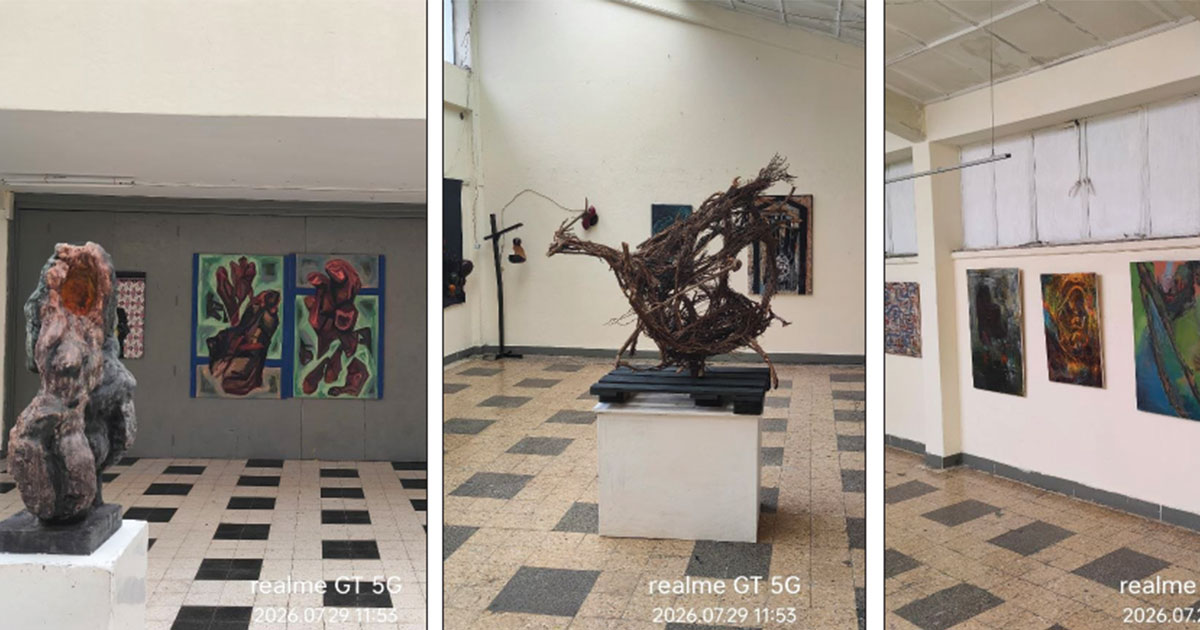
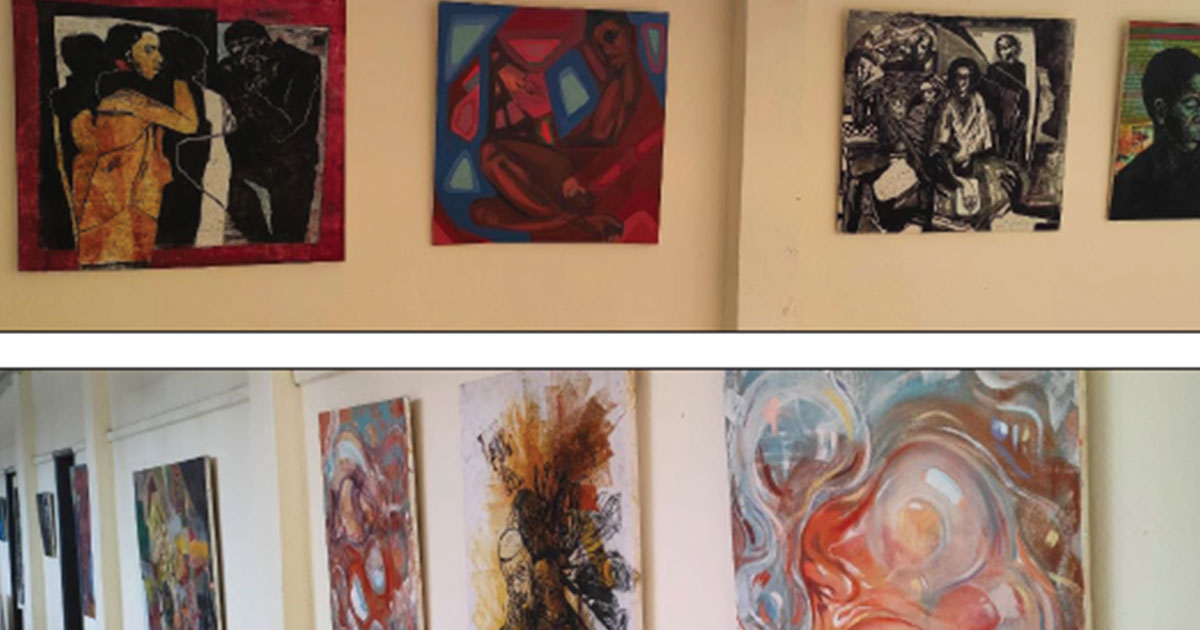
Walking through the sunlit galleries today, it is clear that the torch lit by Ale Felege Selam burns as brightly as ever. The works on display span a dazzling spectrum of styles and mediums—from sweeping oil realism and layered abstract expressionism to woodcut prints, digital media, ceramics, and mixed-media installations.
In one hall, large-scale abstract canvases rich in deep earth tones and fluid swirls command open corridors. In another, intricate graphic design panels occupy quiet alcoves. One piece that has quietly captured the hearts of visitors is a delicate, striking sculpture of an ostrich-like figure, painstakingly constructed entirely from a bundle of gathered sticks.
For Nahomi, a second-year student navigating the gallery, seeing her peers’ work installed in such a space is nothing short of transformative.
“I am genuinely happy and proud to see this level of creativity filling our halls,” Nahomi shares, her eyes sweeping across a wall of vibrant figurative portraits. “When you study art in the classroom, you see pieces in development—raw, isolated, and unfinished. But walking through this exhibition, you realize how these individual voices come together to form a larger conversation.”
For emerging artists like Nahomi, the exhibition bridges the intimidating gap between the safe haven of student life and the professional art world. “It gives us hope,” she reflects softly. “It proves that the long hours spent experimenting in the studio aren’t just academic exercises—they have a real, vibrant life when shared with the public.”
Curating a showcase that balances such vast discipline and emotional range is no small feat. Agegnehu Adane, Executive Vice Dean at ASFAD, notes that hosting 150 distinct works across diverse mediums brings its own spatial and technical challenges.
“One of our primary challenges is presenting works from multiple disciplines with different spatial and technical requirements within a single gallery environment,” Agegnehu explains.
Yet, rather than viewing the showcase as a simple end-of-year display, the leadership envisioned it as an interactive public learning platform. Throughout its three-month run, the school is hosting curator-guided tours, student artist talks, professional panel discussions, and educational visits for primary and secondary schools.
The response has been overwhelming. A steady flow of university peers, practicing artists, foreign diplomats, tourists, and art collectors have packed the halls. Most encouraging of all to the faculty is the sheer number of young Ethiopians filling the galleries daily.
“Young visitors make up the largest proportion of attendees, reflecting the growing interest in contemporary visual arts among Ethiopia’s youth,” Agegnehu notes, adding that attendance is expected to peak as the exhibition approaches its October 16 close.
Carrying the Flame Forward
Beyond building impressive portfolios, this exhibition serves as a launching pad. For these 30 graduates, the showcase opens direct doors to commissions, gallery representation, postgraduate study, and international residencies.
As visitors spill out of the quiet gallery halls back into the warm Addis Ababa sun, there is a tangible sense that something special has been witnessed. The mediums and tools may have evolved since 1957—digital screens now sit alongside hand-carved woodblocks—but the spirit remains unchanged.
Under the watchful bronze gaze of Ale Felege Selam, Ethiopia’s newest generation of artists is not merely reflecting the world around them. They are painting, carving, and shaping its future.