
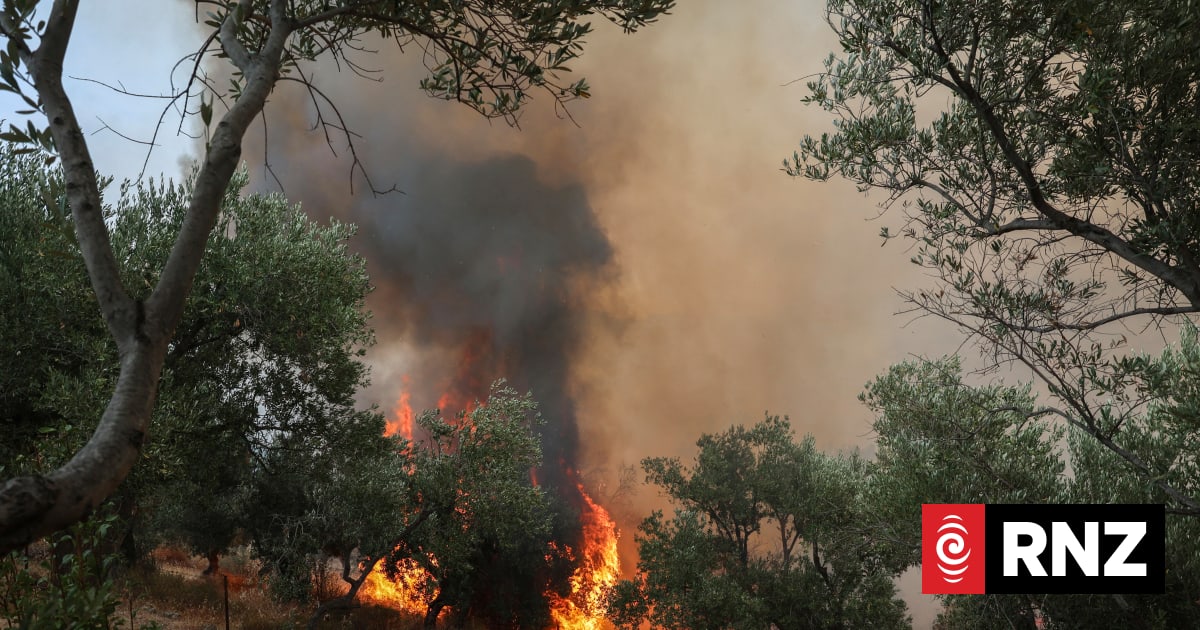
Residents near Bordeaux allowed home after evacuation orders lifted.Europe 3.3C above its 1961 to 1990 average. People evacuated by boat from the Boeotia region, northwest of Athens.
Greece battled wildfires on multiple fronts, from the outskirts of Athens to the central part of the country and the island of Crete on Friday (local time), while France and Spain won some respite after bringing major blazes under control.
Europe has been ravaged by wildfires this summer after successive record-breaking heatwaves, leaving vast stretches of drought-parched vegetation primed to burn, and forcing hundreds of thousands of people to flee their homes.
Residents of two communities west of Athens were advised to evacuate as a precaution as smoke billowed from densely wooded hills surrounding the Greek capital, with authorities scrambling a formation of water-bombing aircraft to extinguish the blaze.
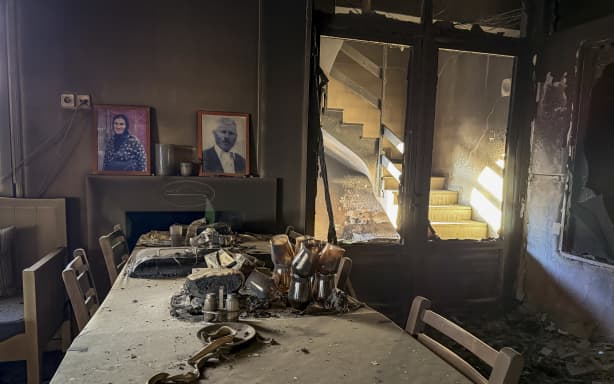
A destroyed hotel after a wildfire at the village of Agios Pavlos in the Greek island of Crete on 30 July 2026.
Will Vasilopoulos / AFP
In Boeotia, north-west of Athens, hundreds of residents and visitors were evacuated from a small coastal community aboard coast guard boats and fishing vessels as thick orange smoke blanketed the area.
Live images showed rolling hills dotted with olive trees in flames.
As night fell, red glows of towering flames were visible on the inaccessible hilly terrain above Porto Germeno, a seaside village which is a popular retreat for Athenians.
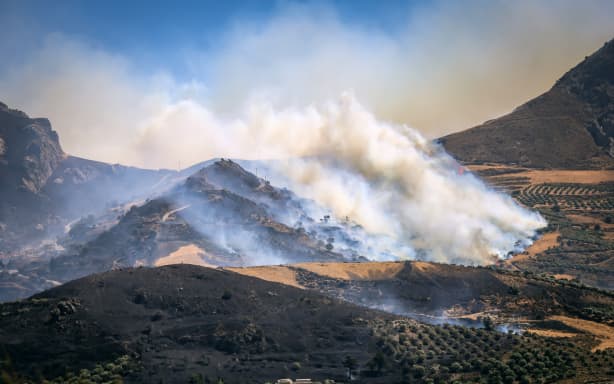
A burning area during a wildfire near the village of Asomatos in the Greek island of Crete on 30 July 2026.
Costas Metaxakis / AFP
Residents were advised to leave the area.
“The winds have died down; that might be the good news of the day. The intensity of the fire seems to have gone down a bit, but it’s still a big, uncontrolled front,” said Georgios Dasiotis, vice prefect of Boeotia prefecture.
Much of the fire was in an inaccessible area, Dasiotis told Greece’s SKAI TV.
More than 70 fires broke out across the country on Friday.
The Greek fire brigade said it was at the maximum level of alert, warning that the fire risk was particularly high in the Attica peninsula, the rugged basin where Athens is located, as well as Evia, an island east of Athens where fires are frequent.
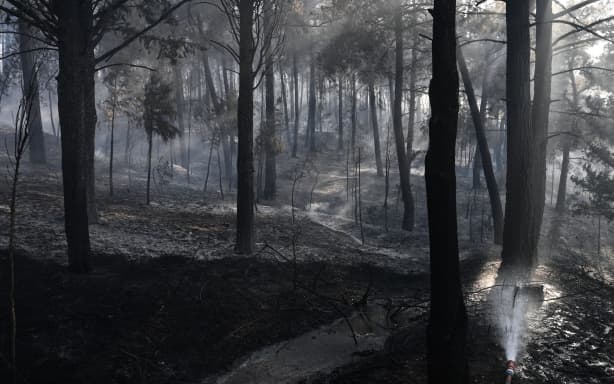
Smoke rises from a forest fire in Liti, a village north of Thessaloniki, in northern Greece, on 30 June 2026.
Sakis Mitrolidis / AFP
Improvements in France and Spain
In southwestern France, authorities began allowing people home after declaring that a major wildfire, which had burned for more than a week, was contained.
Evacuation orders were lifted in 12 districts west and south-west of Bordeaux, allowing 144,000 of the more than 220,000 displaced people to go home, Gironde prefect Sophie Brocas said in a statement.
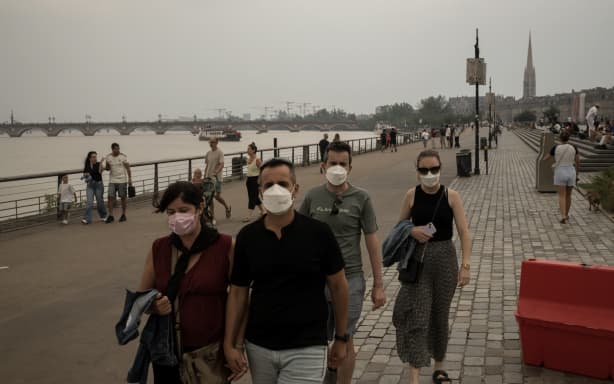
People wearing masks to protect themselves from smoke walk along the river in central Bordeaux, southwestern France.
AFP / Ed Jones
Europe is the world’s fastest-warming continent, with recent scientific studies confirming that human-caused climate change has created the hot and dry conditions experienced across the continent in recent months, leaving no respite for emergency crews.
Europe’s average temperature on Friday was forecast to be 24.9C, making the average temperature 3.3C above what was typical from 1961 to 1990, and marking the continent as the furthest from its historic norm, data from the Reuters Climate Monitor showed.
The plumes of smoke and ash pumped into the atmosphere in recent weeks have exposed millions of people to health-damaging air pollution.
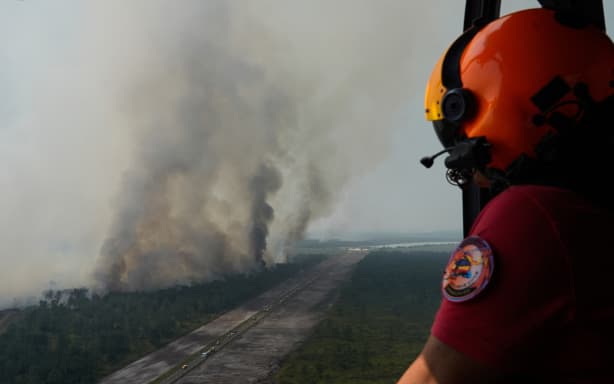
A Civil Security helicopter crew member looks at firefighting vehicles lined up along a road working to suppress a wildfire near Ares, southwestern France.
AFP / BAZ RATNER
Scientists have said they are particularly concerned about emissions of fine particulate matter, known as PM2.5, which is associated with cardiovascular diseases, lung cancer and respiratory problems.
Tourists evacuated
On the Greek island of Crete, crews were still tackling persistent hot spots along a 15km front and guarding against fresh outbreaks.
A fire that broke out in central Crete on Wednesday forced the evacuation of hundreds of tourists and locals, including by boat, from coastal communities.
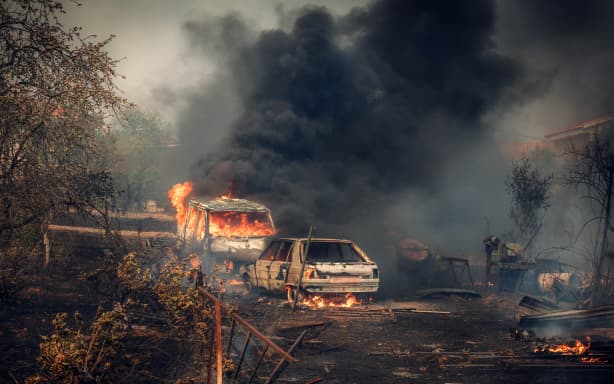
Vehicles in flames during a wildfire near Navas del Rey, 55km southwest of Madrid, on 27 July 2026.
AFP / Spain’s Military Emergencies Unit
“We are fighting a huge battle to contain the blaze and hope to bring it under control by the end of the day,” said Giorgos Tsapakos, deputy regional governor of Civil Protection of Crete.
Strong winds forecast until Saturday evening, with gusts of up to 115km/h, were making the firefighters’ job more difficult, Tsapakos said.
The International Federation of Red Cross and Red Crescent Societies, based in Geneva, estimated that 2,000 tourists were evacuated from fires on Crete, and said homes, farmland, olive groves and livestock were destroyed.
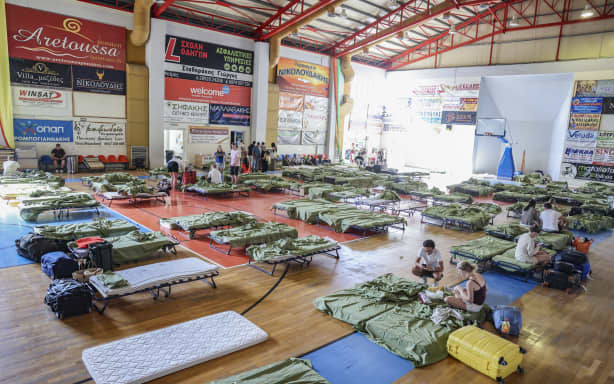
Tourists and residents from Agia Galini gather during a wildfire in the Rethymno area, in the Greek island of Crete, on 30 July 2026.
Costas Metaxakis / AFP
Spain on Thursday lifted its national emergency in Avila, central Spain, and in Madrid, returning control to regional authorities as conditions improved.
Fire crews remained on alert for flare-ups on Friday, while nearly 1,000 residents of seven developments in Pelayos de la Presa and San Martín de Valdeiglesias in the capital region were still unable to return home.
Further east, a fire at La Vall d’Uixo in Castellon province remained active but had not spread for 48 hours.
Some 7,000 residents are still displaced, although about 1,000 have returned home.
Strong winds hampered firefighters in Zamora’s Arribes del Duero Natural Park near the Portuguese border, where flames swept through the Duero and Tormes river canyons.
Fourteen villages were evacuated, and two others were told to remain indoors.