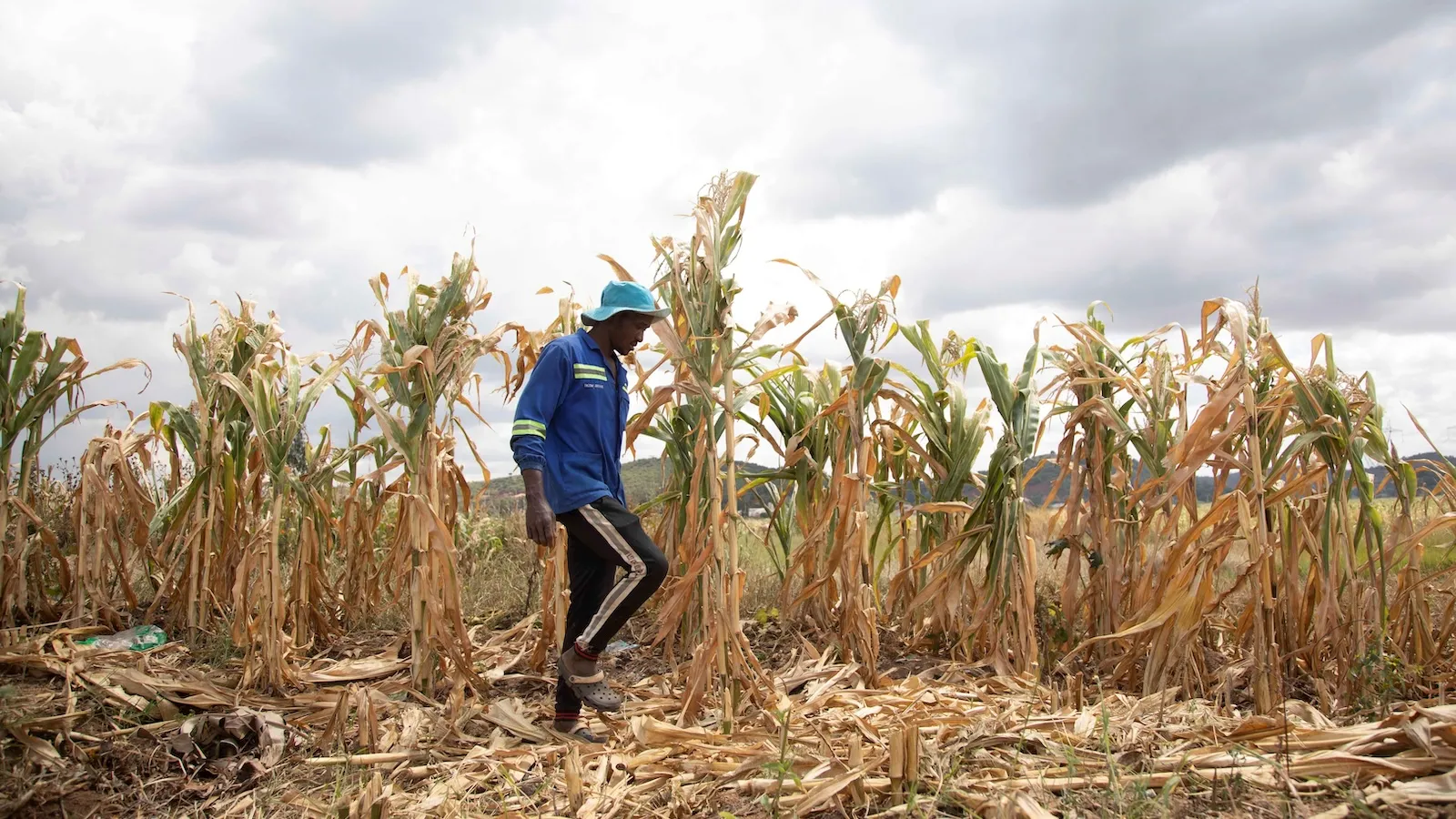
A potential super El Niño is unlikely on its own to trigger sovereign credit rating downgrades across Africa and other emerging markets unless governments’ policy responses significantly weaken public finances, according to S&P Global Ratings.
While severe droughts, floods and other extreme weather events could temporarily disrupt economic activity, sovereign ratings are designed to withstand short-term shocks, Joydeep Mukherji, S&P Global’s lead sovereign ratings analyst for Latin America, said in an interview with CNBC Africa.
“If it’s a flooding or a drought that disrupts economic activity, you assume it’s going to pick up in six months, 12 months. Ratings should be able to withstand that kind of stress, if that’s all that happens,” Mukherji said.
Instead, he added, the bigger risk to sovereign creditworthiness lies in how governments respond to the economic fallout.
Limited fiscal support for affected households and businesses would be manageable, but broader interventions—such as large-scale subsidies, fuel price controls or electricity support measures—could place additional strain on public finances and eventually weigh on sovereign ratings.
“If there’s just a small fiscal response to help people who are affected, that’s one thing,” Mukherji said. “Then suddenly you have a fiscal problem on the side, not just the disruption caused by natural events.”
He said policymakers face a difficult trade-off between allowing households and businesses to absorb part of the economic shock or shifting more of the burden onto government balance sheets through higher spending, wider fiscal deficits and increased borrowing.
“Policy response is key here. Do governments spare or share the costs, or do they take a lot of it onto themselves into their balance sheet through higher deficits, higher debt?” he said.
Mukherji also noted that countries with flexible exchange rate regimes are generally better positioned to absorb weather-related shocks than economies without independent currencies.
He cited Colombia and Peru as examples where exchange rate flexibility provides an additional buffer against climate-related disruptions. By contrast, countries such as Ecuador, which uses the U.S. dollar as its official currency, have fewer policy tools available to restore competitiveness following major external shocks.
Despite growing concern over the strength of the developing El Niño, S&P does not expect the weather phenomenon to trigger a broad wave of sovereign rating downgrades across emerging markets.
The comments come as African governments and development institutions step up preparations for what forecasters warn could become a “super” El Niño, bringing severe droughts, floods and extreme weather across parts of the continent, with significant implications for agriculture, infrastructure, food security and economic growth.
On Monday, the African Development Bank warned that a severe El Niño could inflict economic losses of between $10 billion and $20 billion across affected African countries while triggering displacement and migration in some of the hardest-hit regions.
“Just this event is going to reduce heavily affected countries’ GDP by one to two percent on average, which is about $10 billion to $20 billion across the continent,” Anthony Nyong, director for Climate Change and Green Growth at AfDB said in an interview.
The AfDB forecasts Africa’s economy will expand by 4.2 percent this year before accelerating to 4.4 percent in 2027, assuming geopolitical tensions ease, although a severe El Niño could pose fresh downside risks for some of the continent’s most climate-vulnerable economies.
Bunmi holds a degree in Economics from the University of Lagos and has over eight years of experience in content writing and journalism.
Her career spans roles as a financial and business journalist at BusinessDay Media and TechCabal, and as Head of Research at SBM Intelligence, an Africa-focused market intelligence and strategic consulting firm.
She also served as Editor at Finance in Africa, a subsidiary of Businessfront and is currently Assistant Editor, Finance (Africa), at BusinessDay.