
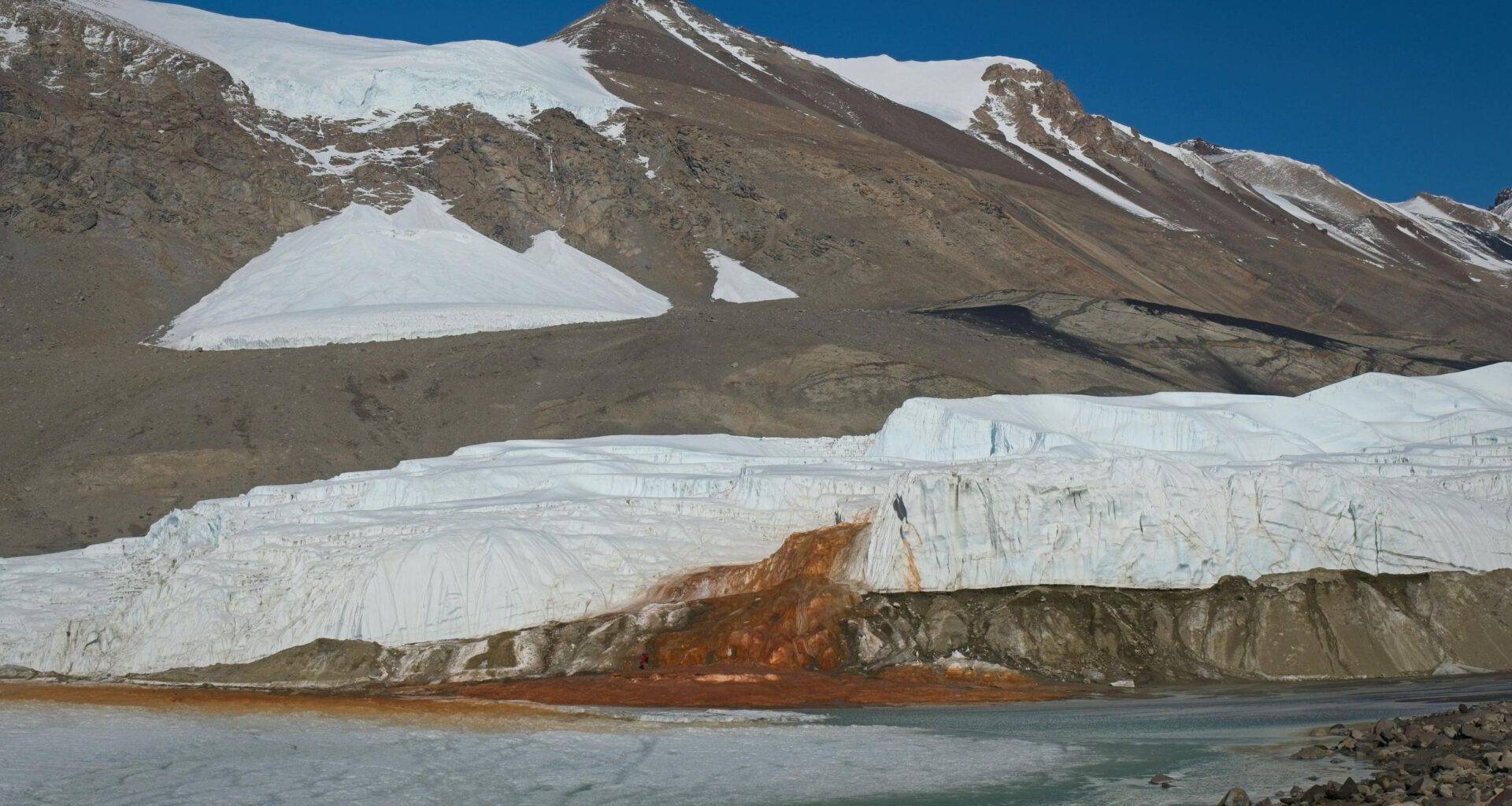
At the end of a glacier deep in East Antarctica’s Taylor Valley, there is a haunting waterfall that oozes red brine like a bleeding wound in the ice. Scientists explained the brine’s gory hue several years ago, finding that it is exceptionally rich in iron. And now, they may have identified the salty water’s origin.
Microbes in the crimson waterfall, called Blood Falls, suggest the brine is composed of ancient seawater that was trapped in a pool beneath the glacier when ocean levels fell and the glacier advanced. However, it’s unclear exactly when that happened, researchers noted. Previous studies had already proposed a seawater origin for the brine, based on various chemical signatures and bacteria detected in the liquid, but the new results add molecular and genetic evidence to the mix of clues.
You may like
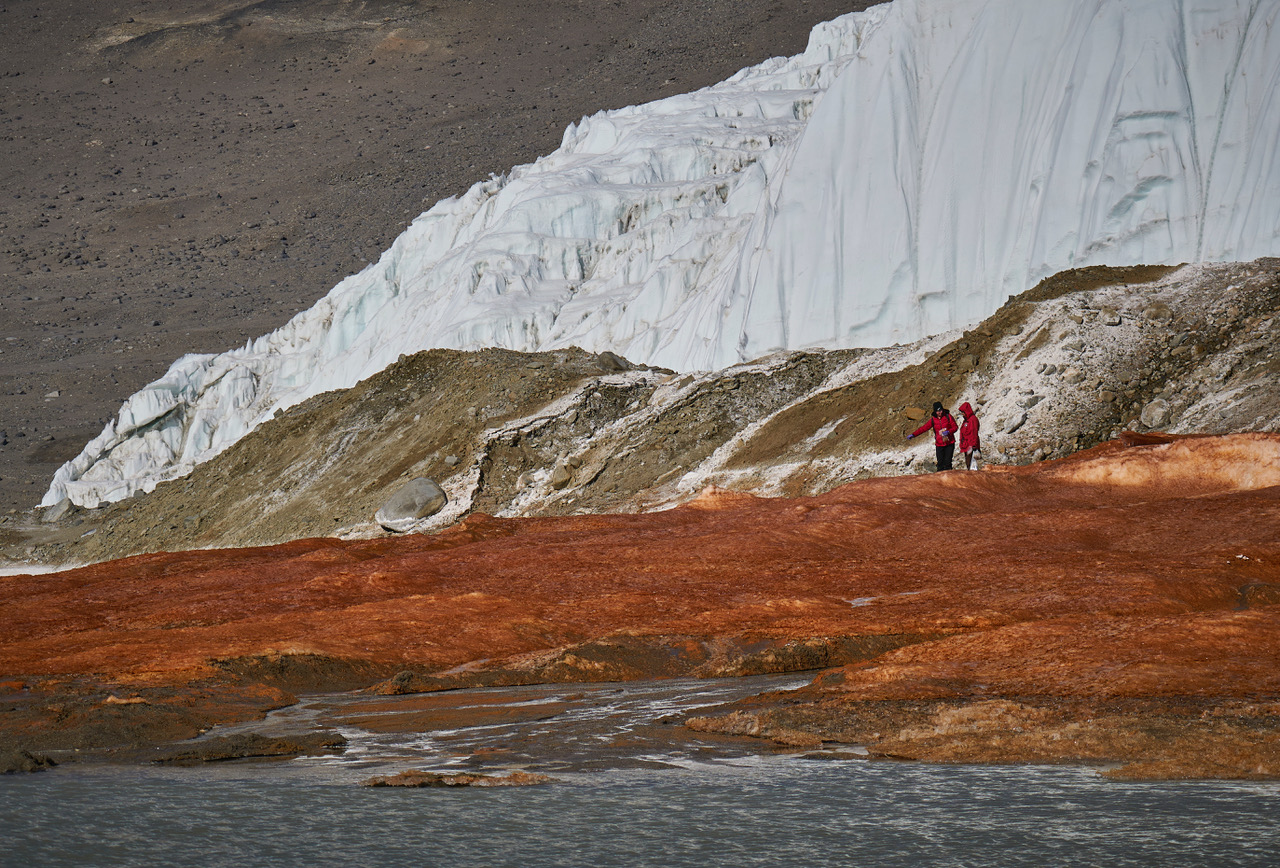
Researchers tried to determine if microbes at Blood Falls are distinct community from the surrounding region’s assemblages.
(Image credit: Bryan Minnea)
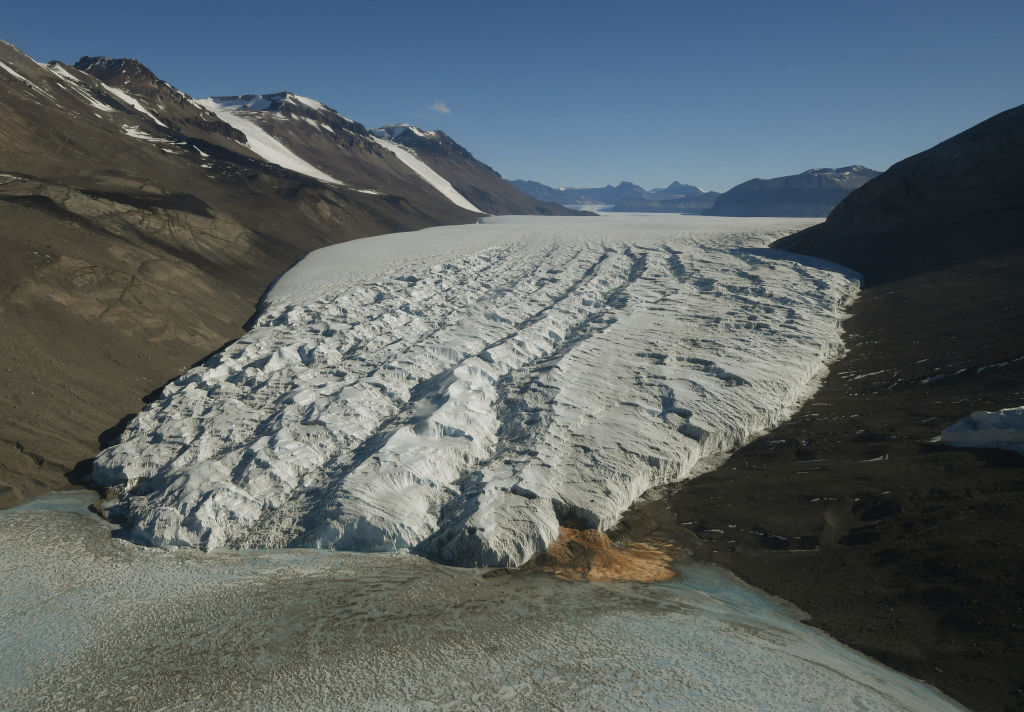
The most likely origin for the brine that feeds Blood Falls is ancient seawater that was trapped when sea levels dropped and the Taylor Glacier advanced, the study found.
(Image credit: MARK RALSTON/POOL/AFP via Getty Images)
Zoumplis, A., Füssy, Z., Kaul, D., Schulte, N., Zheng, H., Lampe, R. H., Brylka, K., Venepally, P., Mikucki, J. A., McKnight, D. M. and Allen, A. E. (2026). Molecular evidence for a relict marine community in an Antarctic Dry Valleys subglacial brine-fed system. Nature Geoscience. https://doi.org/10.1038/s41561-026-02054-6