

Listen to this article
Estimated 4 minutes
The audio version of this article is generated by AI-based technology. Mispronunciations can occur. We are working with our partners to continually review and improve the results.
More Canadian youth are reaching out for overnight mental health support by text, with Kids Help Phone reporting a 24 per cent increase in late-night conversations during the first half of 2026.
The volumes can be so high that responders sometimes cover the queue counter on their screens with sticky notes so they can focus on the person they’re helping instead of the growing number waiting for support, according to Donna Czosnek, who’s been volunteering with Kids Help Phone since 2019.
Kids Help Phone is a free, 24-hour national mental health support service for children and youth.
In Vancouver, the trend was even more pronounced. There were just over 2,817 text conversations between 8 p.m. and 8 a.m. in the first six months of 2026, up from about 1,929 in the same period of 2025 — a 46 per cent increase, a Kids Help Phone spokesperson said in a statement.
Limited overnight mental health services
Late at night is when teens start to process things and also a time when there are few other supports available, said Czosnek, who lives in Toronto.
“The quiet of the day sets on them and thoughts start to spiral and they just need that support at that most vulnerable time.”
 Donna Czosnek has been volunteering with Kids Help Phone since 2019. (Submitted by Donna Czosnek)
Some of the topics that come up in these late-night text sessions are not new, such as depression, anxiety, social acceptance and relationship stressors, Czosnek said.
“What I’m noticing now, maybe over the last year or so … is a lot of lack of self-worth, like sort of this deep self-loathing,” she said.
“I do think that toxic social media does fuel a lot of this sort of perfectionism, … unrealistic expectations that lead the young people to think that, you know, they’re less than worthy and that they need to be striving for some unrealistic goal.”
There are also larger, more existential worries about things like being able to find a job in the age of artificial intelligence (AI), afford a home, and how climate change might affect their future, she said.
“It’s that lack of control, that anxiety, stress, that’s all really very, very prominent,” she said.
Czosnek said she tries to actively listen and give youth the space to feel heard and supported rather than focus on trying to fix the problem.
Alternative to AI
The increase in youth reaching out for support is in line with findings from the latest BC adolescent health survey showing a reduction in the proportion of B.C. teens rating their mental health as good or excellent and an increasing proportion reporting thoughts of self-harm, said Jonny Morris, CEO of the Canadian Mental Health Association’s B.C. division.
However, the fact they’re reaching out is also something to celebrate, he said.
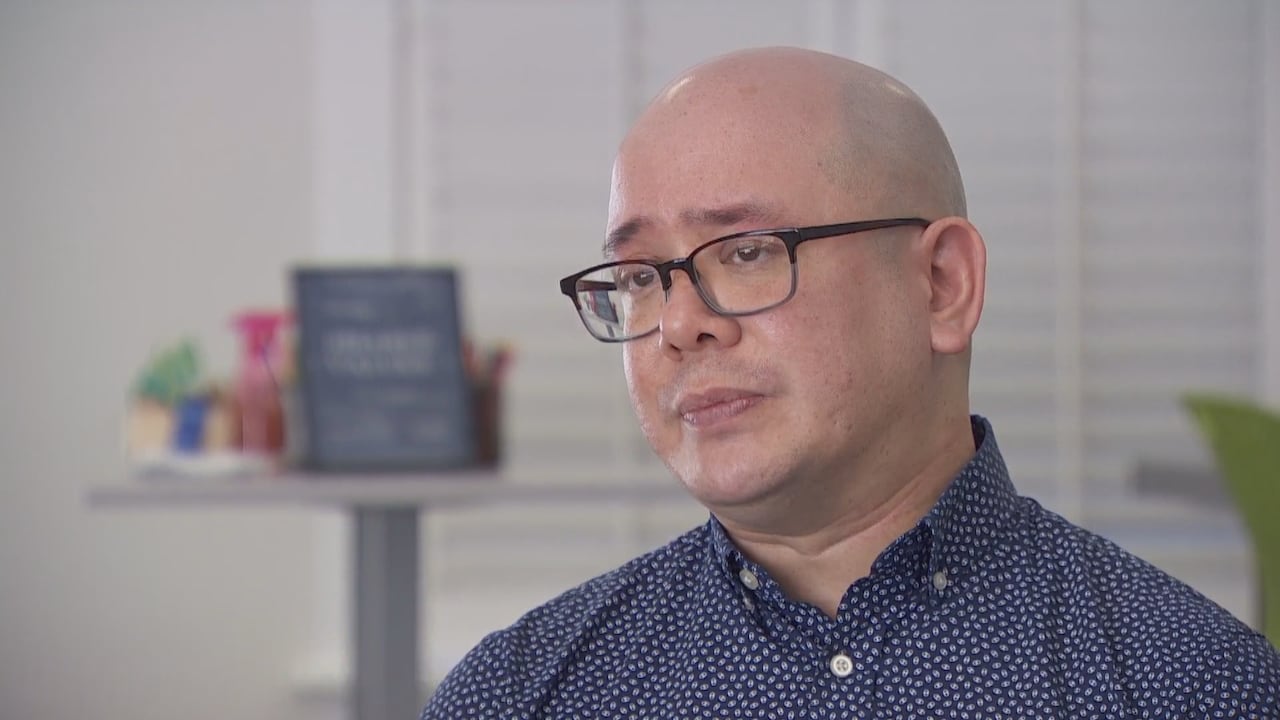 Jonny Morris, the CEO of the Canadian Mental Health Association’s B.C. division, says it is a good sign when youth reach out for support. (Mike McArthur/CBC)
“It’s encouraging to me that young people are reaching out for support, you know, asking for help as a sign of strength,” Morris said.
“And when a young person … sends that text, whether it’s two in the morning or three in the morning, instead of kind of keeping it to themselves and doing it alone, that’s such a positive step.”
Some are also turning to AI for mental health support at those hours because it is also a non-judgmental source of support that is available around the clock, he noted. And while it can be helpful for some kids “these tools were never designed to become, you know, crisis services.”
“In our view, until we make sure that they’re safeguarded and well controlled and well regulated, it shouldn’t replace a trusted adult, a trusted human being,” Morris said.