
Sam Cane is no stranger to concussion.
The former All Black captain began his career during a time when the issue was not treated seriously, and a ‘tape it up and get back out there’ attitude was rife.
“When I first started out, you could get knocked out on a Saturday and be playing again a week later, which now seems crazy. There’s a much better awareness of it.”
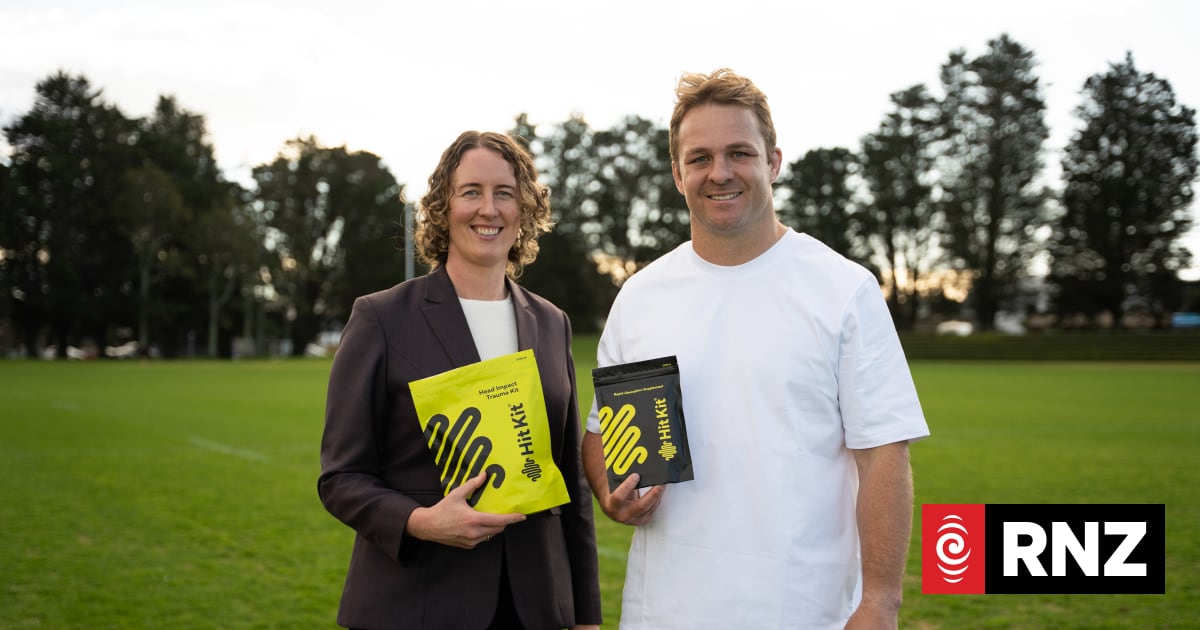
In a bid to help educate the public on treatment at a grassroots level, Cane has teamed up with concussion expert Helen Tufui to promote ‘Hit Kit’, an education and first-aid tool to help recovery from head knocks.
Cane said while the top teams are well looked after, it was the community game where there was serious concern.
“I know that there’s been a big change in professional sports around the approach to concussion. But I understand that we rely heavily on volunteers at grassroots level to make decisions, and sometimes it’s just not because they don’t want to do their best, but there’s a lack of knowledge around it.”
Figures released by ACC show there were about 33,000 mild traumatic brain injuries in 2023 and more than 12,000 sports-related concussion claims were accepted in 2024, costing more than $81 million.
Rugby accounted for over a quarter of those cases, while ACC also estimates that about 30 percent cent of sports-related concussions go unreported.
“I’ve seen a few team-mates over the years who’ve had to retire from it, If it’s looked after properly at the start, then you give yourself the best chance of making a full recovery,” Cane said.
The kits include a recovery guide for days one to three after the injury, a red-flag checklist, and medical supplies.
Cane said he saw what Tufui was doing so got in touch to congratulate her when she asked if he wanted to come on board as an ambassador.
“We’re pretty lucky to have physios and doctors on hand for things like this, but in the community game, we’re relying on parents and volunteers to do their best.”
Cane said the Hit Kit also helps to dispel myths about concussions.
“There’s a bit of a misconception that for a concussion, someone has to be knocked out, but we know that’s not the case. There are some really good basic questions to ask yourself, some guidelines around what to do for the next few days in terms of treatment and making sure you’re doing the best of recovering. it just helps people make good decisions in that critical first period.”
Despite several concussions during his esteemed career, Cane continues to play the game he loves.
“I’ve had my fair share, everyone’s brain’s a bit different, I’m pretty lucky at the moment. I don’t feel like I’m suffering from any longing effects, but certainly something we’re conscious of and we’ve seen other guys, Shane Christie recently, once he passed away, they were able to diagnose him with CTE. So it can be really serious.”
Cane wants to change the narrative around head knocks particularly at school and club level.
“The main point of this is that we don’t want anyone to to feel pressured to play if they’ve had a concussion and get New Zealand sport to the point where it’s treated seriously and everyone accepts that.
“We only get one brain and it’s important to look after it.”