
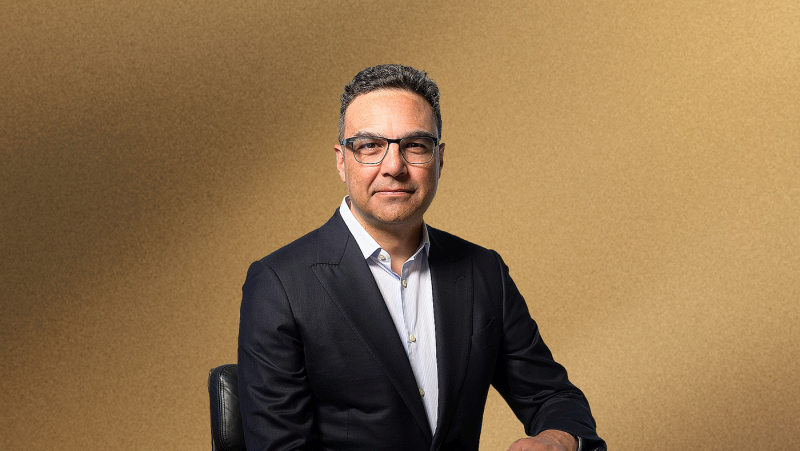
The BusinessDesk CEO Index, driven by Range Rover, has returned for its second year. Our newsroom and a panel of independent judges have hand-picked 24 New Zealand chief executives and business leaders making a real impact in their sectors and beyond. This profile features one of 2026’s finalists.
The legacy of Lloyd Morrison, founder of infrastructure investment company Infratil and Morrison, is still strong, says Infratil chief executive Jason Boyes.
Infratil, founded in 1994, is managed by global infrastructure manager Morrison and has no employees but benefits from Morrison’s 220-strong global team.
At the same time, its portfolio businesses employ 6,500.
‘Brave and ambitious’
Investing in ideas that matter was something Morrison instilled from the outset.
“One of the things that came from Lloyd that I think is still very true and a real big focus is being brave and ambitious.
“It’s quite a legacy to live up to,” says Boyes, who took on the CEO role from long-standing chief Marko Bogoievski in 2021 after nine years at Morrison & Co.
At Morrison, he led the IPO of Z Energy and was involved in investments in Vodafone NZ and the establishment of Longroad Energy in 2016.
Infratil has a current market valuation of $15.22 billion and is leading the way on AI and datacentres, with its investment portfolio which includes One NZ, CDC Data Centres, Longroad Energy and Wellington Airport, CDC announcing Australasia’s largest ever datacentre contract in early May.
Though Infratil is a major global player these days, one of Boyes’ favourite tasks as CEO is running the annual investor road shows in several regional New Zealand cities.
NZ makes up roughly two-thirds of Infratil’s ownership and Australia, around 10%.
“You meet people who have been shareholders since day one or certainly over 20 years. It’s really amazing, and I try and get as many of our team along as I can to meet these people and realise, these are the people you’re really working for,” Boyes says.
What touches him is that for many of those local investors, Infratil shares are intergenerational.
People tell him, “I don’t want to sell them, I’m going to pass them on to the kids.”
“There’s nothing more grounding, and you get the big questions,” the Infratil CEO says, adding he might do something similar in Australia as the business grows its retail shareholder base there.
“One of the things on my mind is how we could become as Australian to Australia as we are to New Zealanders.”
He is doing more podcasts.
“All of those things, both internally and externally, are important for not just the people at Morrison, but also within the portfolio companies, the people at One NZ or CDC who are curious about what their shareholder thinks.”
Boyes is a finalist in this year’s BusinessDesk CEO Index, driven by Range Rover, in the listed company category.
An independent panel of judges, experienced across business and government, as well as senior BusinessDesk journalists, have ranked all the finalists against five values: vision, impact, innovation, resilience and influence.
These criteria allowed the judges to evaluate the attributes that make a leader genuinely great and an example to others.
Vision
“Our vision is one we’ve had for a long time, and I think it’s still relevant; it’s about investing in ideas that matter.
“It encapsulates really well what Infratil has done and what we’re trying to do, and Morrison, and more broadly something that modern societies will need in the future.
“One kind of nuance that I’ve tried to add, and it’s still true, is this long-term approach.
“The future for us is a long time away, and that actually has quite a big influence on how you work.
“Infratil is still trying to do things that have never been done before. I try to encourage people to think about ambition to that degree.
“There’s another nuance I’ve thought about a lot since becoming CEO, and it’s important to be a good listener as well.
“We’re not trying to create solutions that are looking for problems – we’re trying to produce a set of outcomes for the market.
“The market can sometimes appear short-term and appear not to be thinking correctly, but at a basic level it’s always right too because that is the number, the price on the day. So I believe in being humble to that.
“At the end of the day, we are looking after other people’s money.”
Impact
“There’s internal and external ways of making an impact. Internally, the idea is to get great people, give them clear mandates, and let them create.
“And then you set the context, set your mandate, and give them the resources they need to be successful for you.
“When your key people keep coming back for more, pushing you harder than you’re pushing them, then that’s when you know you’ve got it right.
“External outcomes can be very meaningful. This year has been a good year, and I think we’ve added maybe $5 billion of market cap, which makes me think I’m actually doing something right.”
Innovation
“We were quite early investors in renewable energy 30 years ago, and in datacentres a bit over a decade ago now before they were really a thing.
“And there are numerous examples in our history where we’ve done something for the first time that’s created a lot of value.
“We consciously tell stories from our history to encourage people to have those ideas, to be curious and also bring them forward.
“I think that’s a huge part of the culture, and how we can remain successful. And also a tolerance for taking risks.
“Another way of attacking the problem is talking about ideas we’ve missed and why.
“I think a lot about how to continue to control the means of innovation.
“The future AI infrastructure will be so important to New Zealand’s ability to innovate in the years ahead, whether it’s optimising physical assets or creating new intellectual property, or all the amazing things that NZ is doing.
“I think we should take a lot more care about ensuring that we secure the means for being able to do that ourselves without becoming a tenant in our own country, or being controlled by others who control that technology.”
Resilience
“It’s our job to take risks, so you should expect setbacks. The trick is really to learn from them.
“You’ve got to remember hindsight is incredibly cruel and luck is a real thing.
“We faced a takeover bid for Infratil in December 2020 (AustralianSuper made an A$3.78b [NZ$4.5b] bid) just before I started as CEO in February 2021.
“It was sort of an existential moment. But what we found was how many friends we had out there. People said: ‘You are an important feature in the landscape.’ It was very humbling.
“This led to a change of stance at Infratil.
“We began to do more listening and became more engaged in the community because of the crisis. We got through it with help from our friends.
“We talk a lot with the wider market now, through investor days and investor communications.”
Influence
“One thing I know Marko wanted to continue and I think I have – is about being human first.
“Thinking first, having empathy, showing up to things, all these things are really important to what has made Infratil successful in the past and in the future.
“And attracting great people to do innovative things that have never been done before.
“How you turn up, being engaged and humble, are all important components of who we are and what we do.”
Book/documentary/film/podcast
“The Outsiders: Eight Unconventional CEOs and their Radically Rational Blueprint for Success, William N. Thorndike jnr, is a fantastic blueprint for how to think about compounding and creating value over a long period of time.”
A screen-free day
“I go and play golf with my 13-year-old son, which I love. It’s a good place to zone out.”
It’s an election year
“I do think the country needs a medium-term energy policy. How we don’t have a national energy strategy is entirely beyond me. And it’s so important for the next phase, which is AI into infrastructure.
“So I think we need to get on with it.
“I think resilience in energy within some of these key technologies and digital networks [are] all really important things to get on the agenda alongside education and health and other traditional things.”
More information and articles on BusinessDesk’s CEO Index can be found here.